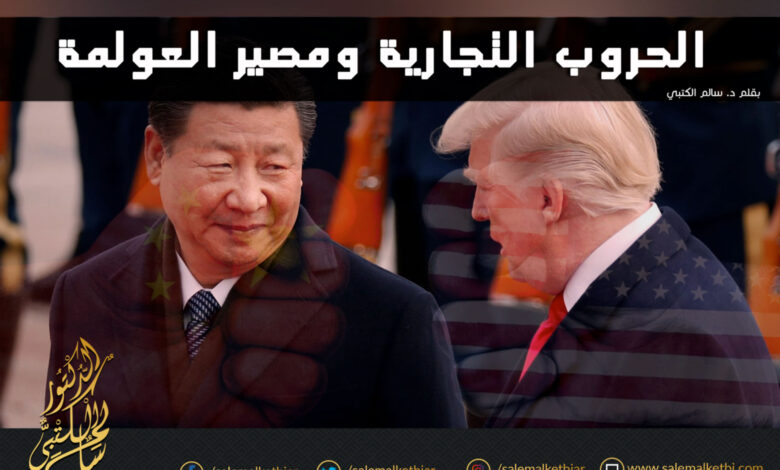
The world has been following what observers called a trade war between China and the US. Beijing accused Donald Trump of trade bullying as he imposed tariffs of $ 34 billion on Chinese exports to the US. The move was described as the biggest escalation yet in a trade war between the world’s two largest economies.
Trump threatened to impose tariffs up to $450 billion on Chinese exports if Beijing dared to respond by retaliatory tariffs.
Military concepts have now moved to be used in economic arenas. China has vowed not to issue the first shot in the trade war. But it has promised to retaliate to defend its people and strategic interests. Beijing accused the US of starting the “biggest trade war in economic history”.
News reports quoted Li Keqiang, China’s No. 2 leader, as saying “no one will win by fighting a trade war, yet China will take countermeasures in the face of [US] unilateral moves.”
Economy cannot be separated from politics and military. These steps coincided with the People’s Liberation Army (PLA) newspaper’s call to the two million fighters to be more ready to fight.
In recent weeks, researchers have been preoccupied with examining the potential effects of trade wars on the world economy, particularly in terms of economic globalization. Economic globalization is closely related to cultural, social and other spheres of globalization.
Experts warn of an economic recession similar to the one that hit the world economy in the 1930s as a result of trade wars. Others believe that the spread of trade wars and their expansion of its circle threaten of the outbreak of global military wars. This would lead to the collapse of the global security systems that have been established after two world wars that cost the world a high price. Globalization was based primarily on multinational economies and transnational corporations. It is difficult to assume the possibility of dismantling this system of complex international interests. The world will pay a high price if this happens.
Experts believe that a trade war between China and the US threatens not only the economies of the two countries. It puts at risk the economies of all the world’s countries as the economies have become intertwined.
Historical analysis of the current events necessitates recalling the two Opium wars (1839 and 1857) that broke out between China and the British Empire at that time. The two wars cost China a high price and taught it good lessons. At that time, China lost a lot for the benefit of stronger powers. Beijing will not repeat the mistakes of the past and pay a bill similar to what it paid in the 19th century. Another war is the Anglo-American War that began in 1812 because of trade war.
President Trump is careless about the dangers of trade wars. He tweeted: “When a country (USA) is losing many billions of dollars on trade with virtually every country it does business with, trade wars are good, and easy to win.” This conviction opposes historical truth and makes it difficult for US partners to reach understandings with the White House.
Certain signs indicate that trade wars will expand as protectionism spreads in many countries. Major trade powers will get into a series of reciprocal protectionist measures that will constrain global trade, weaken economies and reduce their competitiveness. This situation will cause large waves of high prices, leading to weak development and the spread of unemployment. New world wars are likely to break out of these potential developments.
The pillars of the relative security in international relations at present are not only based on turning the page of Cold War and the end of polar competitiveness. There is a need to benefit from economic globalization and the growing interest in cooperation and common interests. This situation is beneficial to the whole world. A world facing existential threats such as terrorism will not be able to return to isolated islands and to end the era of globalization.