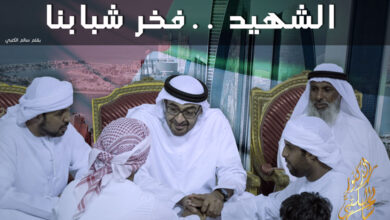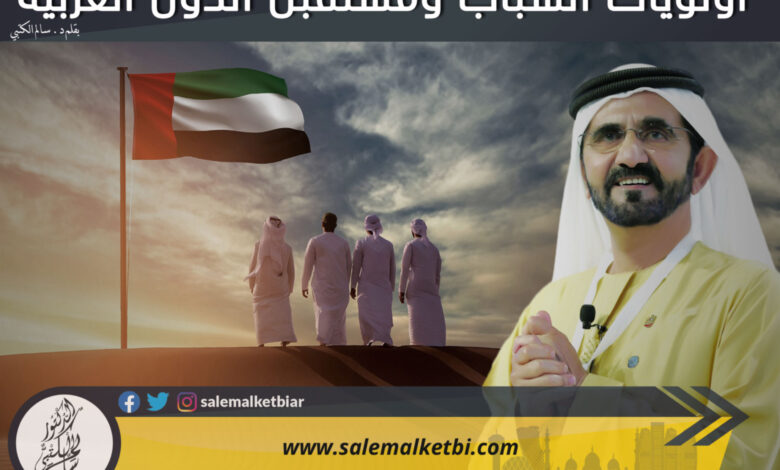
The speech of HH Sheikh Mohammed bin Rashid Al Maktoum, Deputy Prime Minister, Sovereign of Dubai, on the future of Arab countries and the role of youth in that future, undoubtedly diagnoses one of the most important dilemmas of development and emancipation in the face of the civilizational and economic decline that many Arab countries are experiencing.
“If the ruler is afraid of his people, then the people must fear for the future of their country,” said HH Sheikh Mohammed bin Rashid Al Maktoum, setting a benchmark for defining the nature of relations between rulers and peoples. The lack of trust between the ruler and his people necessarily leads to the building of a high wall of fear and anxiety.
Some leaders fear the anger of their people or their reaction to the poor living conditions, the deterioration of the economy and living conditions and the endemic corruption in the country. Some citizens want their leader to be absent from the scene for some reason. But both reflect an unhealthy relationship that cannot provide the appropriate conditions for building states and realizing the aspirations of the people. It is rather like a time bomb. It can be internal reasons or external interventions that use the underlying anger and try to direct it and use it to persuade strategic interests.
HH Sheikh Mohammed bin Rashid Al Maktoum was very frank and clear when he said, “The lives of millions of young Arabs are being shattered and their hopes evaporated by a leader who is afraid to sleep among his people.”
He drew everyone’s attention, in a discussion that demands only honesty and openness, to the limits of the leader’s responsibility. He quoted the righteous Caliph Omar bin Khattab who feared that if a mule stumbled, he would be held responsible on the day of the Resurrection. Leaders are responsible for the lives and hopes of millions of young people who have been disrupted by failed development policies and poor governance in many parts of the Arab world.
It could be argued that development requires enormous resources and that progress and development depend on the availability of sufficient economic resources to achieve it. However, some Arab countries in the midst of acute internal conflicts and crises possess vast natural resources, including oil, gas, human resources and skills.
Therefore, the issue has nothing to do with material wealth and poverty. It is closely linked to effective management, sound governance, transparency and the establishment of the rule of law, justice and human rights, as well as to the Government’s serious policy of fighting corruption and improving the effectiveness of the Government’s performance.
Young people make up 60 per cent of the population of the Arab region. Youth is a tremendous energy that can be used to make progress. In the absence of plans to do so, opportunities for conspiracy and ambition seekers can easily attract young people and direct their energies towards destabilizing goals.
HH Sheikh Mohammed bin Rashid called for a wake-up call to all leaders and officials in our Arab region. It is necessary to listen to the voices of young people, communicate with them, and work to engage them to take responsibility for national action.
Youth is one of the pillars of the UAE’s development model. For years, the UAE has focused on empowering young people and harnessing their potential. A 22-year-old Minister of State for Youth Affairs has been appointed, becoming the world“s youngest Minister. The Emirates Youth Council and the Federal Youth Foundation have been established.
The PCW annual survey, which measures the opinion of Arab youth on many issues, has repeatedly indicated in its annual results that the UAE is the preferred country in which Arab youth aspire to live and want their country to follow as a model of progress and global competitiveness. In the 2019 survey, 44% of Arab youth said they prefer to live in the UAE. This is more than twice the number of young people who chose the UAE as their ideal country in 2012.
This has many connotations. The first is the failure of all the tendentious media campaigns carried out by the terrorist organisation Fraternity and the channels financed by the Qatari regime to discredit the UAE, as Arab youth have become aware of the objectives of this propaganda.
These malicious campaigns may have inadvertently contributed to raising awareness among Arab youth of the enormous development achievements of the UAE.
This issue places on our leadership a great national responsibility to defend the dreams of Arab youth and to seek the ingredients of a decent life for them. We must support the capacities of their countries and help them emerge from the crises, in order to take into account the aspirations of the youth of those countries and benefit from their powerful human energies, instead of leaving them prey to the lures of terrorist organizations or to the holders of agendas financed by regimes that seek only evil for the UAE and the rest of the Gulf and Arab nations.
Speaking of the need to heed the voice of young people, listen to them and work to realize their aspirations is a crucial issue, because of its impact on security and stability in our Arab world. The main guarantee for this is to improve the quality of life, to work towards the realization of the aspirations of youth and to open the windows of hope for a better future, but above all, education.
The UAE’s interest in education and its emphasis on developing the skills of young people and preparing them adequately to enable them to have the tools of competition and the necessary skills to occupy future jobs is something that Arab youth admire.
Arab youth value the UAE because it”offers a wide range of employment opportunities,“it is known for its security, and its labor market offers lucrative salaries and decent jobs. All of these are aspects of economic planning and development.
Arab youth place employment, security, good education and accountability in government sectors among their main interests, along with the rejection of terrorism, extremism and corruption. These are all issues that require more serious and quality planning and implementation than money, wealth and availability of resources.