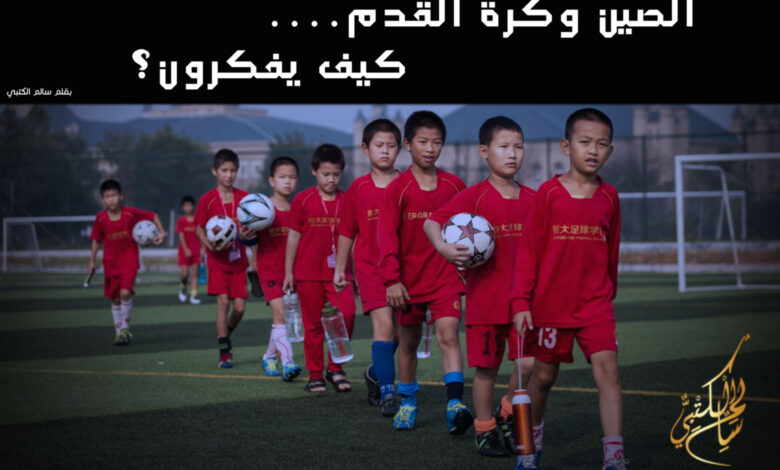
China recently announced plans to create 50,000 association football schools by 2025. Vice president of the Chinese Football Association, Wang Dingfing, said in a press statement that each school will undertake to train an average of one thousand young men. We are talking about 50 million young people that will learn association football skills in these schools only. A while ago, China had announced a plan to create 20 thousand schools by 2020, in an effort to become an ‘association football superpower’.
China is developing in association football at a pace as accelerated as in the rest of the sectors, American author Thomas Friedman has pointed out in a recent article criticizing the Trump administration. ‘I suspect they’ve added another high-speed rail line just since Trump’s election,’ he writes.
Chinese officials view association football not merely as a game but a source of future influence. They are talking about players as ‘prospective resources’, requiring planning. Chinese experts are designing 360 soccer training and skills development programs for middle and high schools.
The Chinese association football team did not qualify for the World Cup more than once, but today they are planning to win the World Cup in 2050, and they would rather make it. Sport became a huge complex professional industry. Chinese President Xi Jinping is personally following up this planning, and his government included among the strategies to set up 70 thousand association football fields in order to make up for the shortfall in the area.
In recent years, we hear about professional senior players going to China after years in international tournaments and European leagues. Perhaps the Chinese Super League would become a new destination for fame players in the coming years, due to a noticeably increasing spending and investments in China. Antonio Conte, the manager of Chelsea F.C. talked about Chinese clubs becoming a threat to other clubs, as one of his players signed on £60mil contract to join a club in Shanghai in January.
Chinese clubs made record-breaking purchases of players from Europe. This transitional phase is aimed at spreading the football culture in China, as the leadership is aware of the impact of the most popular game worldwide ‘model marketing’ and is building a global mental image of China in the coming decades. Many famous players will contribute to the success of plans to promote soccer in China and attract millions of young people to play, which could someday turn into another Chinese international export business.
For the Chinese, paying huge sums of money to buy players now is a good investment. They know that it will generate enormous revenues in the future. Turning into a major or regional power requires comprehensive strategic thinking in all fields. Even in sport, randomness and planning are incomparable. To build a comprehensive State power, all sectors must generate revenue according to detailed plans, including football. The Chinese approach is in line with the fierce competitiveness of the 21st century. The global economy will witness huge competitive conflicts. We know that the Indian economy is a candidate to outperform the US economy in the next two decades and rank second in the world after China.
The Chinese approach in the world of association football is succeeding, just like it did in the Olympic and Paralympics Games in the last decade. The Chinese soccer association has published on its website a strategic plan that includes short, medium and long term goals, including ensuring the provision of an association football field for every 10 thousand people in China in 2030. Football associations in Arab countries, for example, put in their websites only just pictures of officials next to souvenir pictures of the cups or shields won by teams.
The reality of Chinese football did not cause frustration, as is the case in some Arab countries. Although Chinese football clubs experienced many corruption scandals, the planning is moving forward and so working to change this grim reality.
Western experts say that China is seeking to invest in new areas such as association football for a start. Association football may be the only area in which its name is not worth mentioning, which can explain the long-term planning. The size of the association football industry in China is expected to jump from $400bil today to $840bil by 2025.