In the world of politics and international relations, things do not go in accordance with the logic of the ordinary and the naive as each and every gesture or behavior may have a number of implications and/or connotations. Among the most famous of those who used sign language in diplomatic affairs in modern times is US former Secretary of State Madeleine Albright, who spoke in her book Read My Pins: Stories from a Diplomat’s Jewel Box about ‘behind-the-scenes” of the sign language she had used in a remarkable profuse way during her mandate as Secretary of State. Her book was widely recognized and brought to light a unique diplomatic language that the Foreign Affairs Minister of the world’s superpower used to convey political messages as she politically used her jewelry box during eight long years to lead US diplomacy from the United Nations as well as US Department of State. An item of the jewelry she was keen to wearing was a snake-shaped pin in all of UN’s sessions on Iraq.
In her book, Albright revealed that she sent a political message to the Russians when she found out about their espionage on US embassy in Moscow as she had put a bed-bug shaped pin necklace to send a double message to the Russians to let them know that she is aware of their espionage on the Americans and that the spy style fits the insect’s chosen type to convey the message.
Interestingly, world leaders and states’ officials were expecting pins to decipher the messages. Upon a visit to Russia with former president Bill Clinton in 2000, president Putin said that ‘we notice what Secretary Albright is wearing -she wore a three-monkeys brooch as an indication to ‘I’m blind, I’m deaf and dumb’ expression- Putin did not quite understand the point of the brooch or maybe wanted to make sure that what he had understood was correct and asked Albright of the brooch’s meaning. The US then Secretary of State replied that she pointed out to Russia’s policy with regard to Chechnya, only then was he relieved.
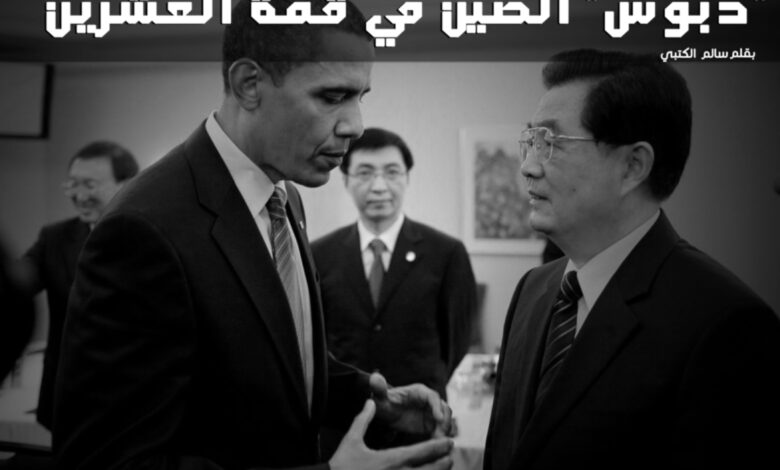
Many are the diplomatic stories, their indications and messages. What I think happened following US President Barack Obama’s visit to China to take part in the G20 Summit belongs to the ‘language of signs and signals’” same logic. Despite of China’s media denial of insulting messages towards President Obama during welcoming ceremony, which Global Times newspaper (mouthpiece of Chinese Communist Party) refuted, saying it’s the Western media who fabricated the story of the ‘insult” towards President Obama, the ceremony’s messages were obvious. It is unconceivable for the Chinese to admit that such insult was deliberate, or even allow it to happen, as the US would necessarily protest and China will have to officially apologize, which would have left inevitable dire consequences on global poles’ relations.
As opposed to what the Chinese newspaper said, which reflects official views at times, several news reports have quoted Chinese academics saying that China’s attitude was calculated and deliberate and could not have been spontaneous, and that such an attitude represents Beijing’s objection to US interventions in China’s affairs and the South Sea.
Some say that what happened was mostly an administrative or protocol related error, but to give in to the idea of the occurrence of such errors in a major event of this importance in China with the head of the most powerful nation in the world involves excessive political naivety, particularly after the verbal altercations that took place at the airport, which resulted in US national security Adviser, Susan Rice, losing control.
Apparently the Chinese did not expect things to go out of control as US President’s participation atmosphere was strained following the incident. Still it is hard to believe the incident was a transient error.
In their interpretation of this incident, specialists, even Facebook analysts discussed different topics including China’s deliberate insult of US president. However, followers of American-Chinese relations fully recognize that it is difficult for Chinese leaders to risk insulting the US President even if he was hours -not months- before he leaves office. He is the symbol of the most powerful nation in the world after all. Strategic interests between two superpowers like the United States and China cannot be exposed to risk following media bickering.
What happened, then, as long as the issue was not about a deliberate insult? It is possible that it was a mere transient message to notify the American side that China is not pleased with Washington’s policies towards it. This particular incident should be discussed and scrutinized in light of China’s growing stature, mounting self-recognition and global status; China is no longer a developing country in the conventional sense of the concept, it has become a major global power with an impact on the balance of world powers. Actions or behaviors of any member of the US delegation should be monitored in situations like these, even those of US national security Adviser.
The incident should be also put in the G20 summit context that China considered a formal gateway to the inauguration of China’s situation in the global economy, which consequently resulted in behaviors and reactions from the hosting country organizing committee members who were enthusiastic enough to deal with countries’ visiting delegations according to the place their country has ascended to. Effervescence and unforeseen reactions, as the reply to Rice with ‘this is our country and this is our airport” should be understandable and normal in similar contexts.
The problem lies in the speech of some ‘gloaters’ who are unaware that what they consider as ‘insult’ to president Obama is in itself an insult and a disrespect to the power and status of China; they have forgotten that China is not a small country seeking silly media scores by ‘insulting’ the symbolic head of the world’s most powerful nation. China is a major force and an international economic superpower that acts in accordance with its new responsibilities in the global system, it owns the largest reserves of foreign currencies, and it is the first creditor of the United States and a controlling force in the world’s financial and business markets. In contrast, it is possible that China could opt to send political messages, which is common between world powers, but not as some have understood. China might have followed Albright pin’s logic and put a ‘small pin’ whose meaning and implications the Americans have certainly understood.