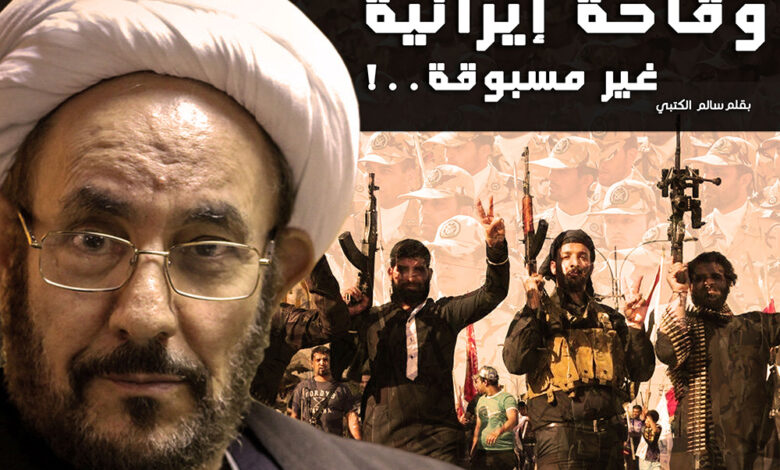
Days ago, Iranian President’s Advisor for nationalities and religious minorities Younesi made a speech marking the death of the eighth Imam of Twelver Shi’ism, Ali ibn Musa al-Rida, unveiling Iran’s intentions and real plans for the region, and Iran’s historical hostility to the Arabs. Younesi spoke of historic crimes, saying, “when Iranians killed the brother of Mamun (Amin) they took power from the Arabs forever,” which explains the aggressive attitude of Iran toward the Arabs, and confirms that the ambitions of Persian expansionism is the main motive behind the terrorist practices in the region, and that the issue had nothing to do exactly with Tehran claims to help the vulnerable and the oppressed.
This statement was made by a senior Iranian official, the presidential adviser who claims to adopt a moderate trend towards the Arab neighbours. If this was the conviction of Iranian President’s Advisor for nationalities and religious minorities, who is responsible for affairs of ethnic and religious minorities, including Sunni Arabs in Iran’s Ahwaz province, then we can imagine the size of racism rooted in Iran’s political discourse toward the Sunni Arabs and other ethnic groups in the country. Iran is a State with many ethnicities, where the Persians represents only 51% of Iran’s population, while the Azeris represent 24%, Mazendaranis 8%, Kurds 7%, Arab 3%, Baloch 2%, Turks 2%, and Lors 2 %. This odious racist view explains the fairness of demands by Iranian minorities regarding the growing injustice, the cultural and economic discrimination against them, and also explains the reasons behind the separatist demands for Baloch and Ahwaz autonomy, and demands by the Azeri minority to join the Azerbaijan State, or have their own State, which is also claimed by the Kurds. Minority’s nationalism is growing in the Iranian society.
There is no doubt that the usual tone of Ali Younesi reflects Iranian social intolerance. The society is not able to integrate other minorities.
Younesi explains all events from a historical racist perspective. He speaks of Daesh as a representative of the Sunni Arabs and accuses the organization of seeking to “regain control of the Arab element on the Islamic world,” which means that the risk of Daesh for Iran is not terrorism, which Iran claims to address in Syria and Iraq, but the motive is the concern of Arab control of the Muslim world.
Iran’s hostility for Daesh is motivated by racism not the defence of the Islamic religion which had its image distorted by the organisation. The first sponsor of terrorism in the world cannot suddenly turn into a staunch opponent of terror organizations. Iran cannot be fighting terrorism when it is still hosting Al Qaeda members and their families.
Iran’s real crisis is a crisis of identity. The regime has sensed the isolation of ethnic groups since ancient times. This Shiite State lies within a massive Sunni demographic context, making the State constantly anxious. The historical heritage they share with Sunni Arabs specifically exacerbates this security dilemma which the regime deals with through the display of power and similar colonial policies.
There is no doubt that this appeal to historical and sectarian differences reminds us of religious wars in Europe in the Middle Ages and what the Muslim world suffered in various periods of history. Younesi’s statement reflects an irresponsible political stance. He was not aware of the seriousness of his speech as he bragged occupying the Arab capital of Baghdad and evoked old historical conflicts and sectarian animosities. In my opinion, such frequent statements target igniting new wars in the region, a goal Iran shares with terrorist organizations such as Daesh and Al Qaida. The mask fell off the face of Iran revealing its hostility for the Arabs, and refuting claims it is possible to establish an alliance of interests or normal relations with Iranians.