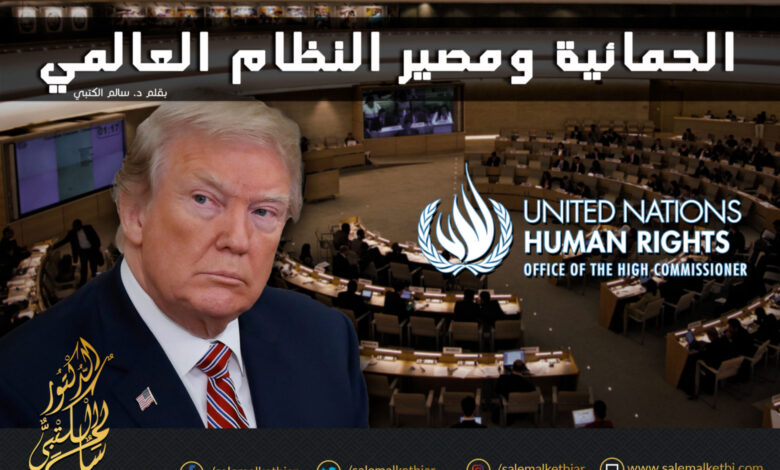
The withdrawal of the US from UN Human Rights Council was shocking news. The US’ justification was that the council is biased against Israel and that there is a systematic campaign against Tel Aviv. Nikki Haley, the US envoy to the UN, described the council as “a hypocritical and self-serving organization that makes a mockery of human rights.” The pullout was expected as Haley threatened last year that Washington would review its membership. She said the US would withdraw from the council if it did not stop “its chronic bias against Israel”.
Indeed, the US relationship often conflicted with the Human Rights Council. For reasons almost identical to those of the Trump administration, the Bush administration decided to boycott the council when it was first founded in 2006. Then, the UN ambassador, John Bolton, Trump’s national security adviser, was critical of the UN. The US did not rejoin the council until 2009 with President Barack Obama.
The UN Human Rights Council was established in 2006 to replace the Office of the United Nations High Commissioner for Human Rights (OHCHR). The council is facing a fate similar to that of the OHCHR and for the same reasons and justifications. The OHCHR had long allowed countries with poor human rights records to join the previous commission.
US Secretary of State, Mike Pompeo, said the Human Rights Council was a “weak defender of human rights.” The US’ withdrawal from any international organization has a negative impact on its effectiveness and achievements. Washington holds powerful means of pressure and implementation of international resolutions. The US holds control over the world order, not to mention providing grants, assistance and even military support if needed.
With the absence of the US, resolutions issued by international organizations will lack means of pressure even in the presence of influential international powers such as Russia, China and the EU. Some of these countries lack these tools of pressure. Others will avoid the use of pressure policies in the application of UN’s resolutions.
The US decision is in full accord with the Trump administration’s approach to relations with Israel. Tel Aviv was the only capital to welcome the US resolution. The resolution included other dimensions related to Trump’s policies towards international organizations and agreements previously signed by previous US administrations. The Trump administration has been reviewing many of these institutional frameworks. The issue is beyond supporting Israel.
Recently, Trump pulled out the US’ approval on the joint communiqué issued at the end of the G-7 summit. He accused Canada, one of the US’ most important allies, of not being honest.
There are features of a global trade war that the industrialized countries are preparing for. There is a reciprocal imposition of import tariffs. The rapid decline of free-trade and the rise of protectionist policies will undermine one of the most important trade bases of the World Trade Organization. The WTO is an important pillar of the new world order.
Trump looks at free-trade from a different perspective than the previous US administrations. He called for the abolition of tariffs among the G-7 countries. “The United States has been taken advantage of for decades and decades,” he said, describing America as a “piggy bank that everyone keeps robbing”. He continued that retaliatory measures by his allies would be a “mistake” and warned that if it gets as far as a trade war, then the US would “win that war.”
The US imposed a 25 percent tax on imported steel and a 10 percent tax on imported aluminum from the EU, Canada and Mexico. The EU announced it would impose retaliatory tariffs on US products. China, Canada and Mexico have taken similar countermeasures. This gap in thinking between the leaders of the G-7 will not be easily bridged as some expect. It is difficult to foresee an impending agreement on this controversial point. It is something that endangers the international consensus over issues of security and stability.
President Trump is determined to establish a new approach to international trade. He makes any possible consensus over international trade hard to reach. He deals with this file as a businessman. During his campaign he raised the slogan of “America first”. Recent polls confirmed the rise in Trump’s popularity, meaning that he is on the right path. This is what matters to him. The growth of the global economy as a whole does not matter to him unless it is compatible with the factors of growth of the US economy.
Some studies confirm that economic protection ultimately leads to reduced job opportunities and higher prices. Trump believes that this depends on the elimination of all tariffs and ensuring full flow. He is primarily concerned about providing US markets with job growth by importing cheap products. He believes that free-trade is in the interest of developing economies and at the expense of developed economies.
Some experts say President Trump is not concerned about long-term economic risks as he is about short-term realities. WTO’s recent recognition that profits from free-trade are often unfair justifies Trump’s position to many US citizens. Some believe that Trump’s policy moved from the slogan “America first” to America decides and defines the method of trade. But all this criticism does not matter much to the White House. Trump is re-positioning his country and rewriting the rules and standards governing the new world order.