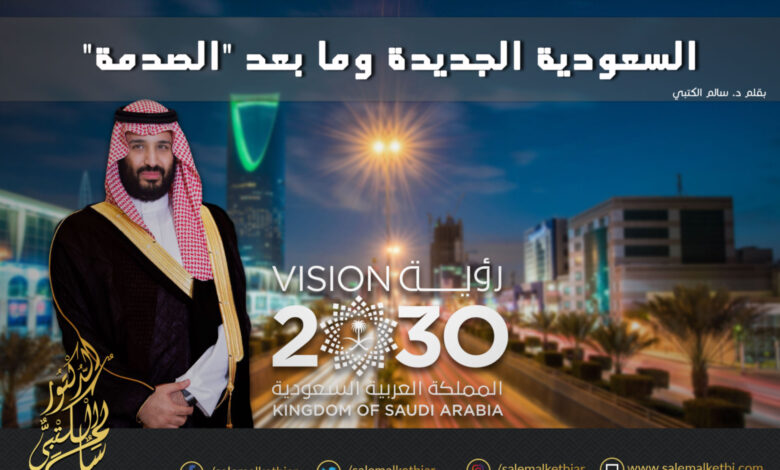
The Saudi Crown Prince’s last tour has received an intense media focus. Mohammed bin Salman’s visit was on top of media coverage. The Saudi role has become important at the regional level. The Kingdom’s policy has shifted from being reactionary to taking the initiative to address the strategic challenges that threaten Arab national security.
The Crown Prince’s blueprints contribute to the process of taking the kingdom towards modernity in the 21st century. In recent years, the KSA has flourished through the young Prince’s vision and efforts. He carries the ambitions of about 33 million young people in the kingdom. Saudi young people dream of a better Saudi Arabia where they can mobilize their skills, knowledge and abilities.
The Saudi Vision 2030 is an ambitious yet achievable blueprint that constitutes the roadmap for the kingdom’s development, and economic objectives. Through this vision, Saudi Arabia leadership pledged itself to take the region out of the quagmire of violence and extremism into a new era of peace and tolerance.
The UAE supports the Saudi effort to combat terrorism and disassociate Islam and extremism through encouraging social tolerance and human development.
The new Saudi agenda is highly interested in promoting culture, art, education and healthcare. The current Saudi internal policy is aimed at addressing development. It is no longer captive to a specific orientation but is learning from the developmental experience of countries seeking self-development.
In a joint statement, the UK said that SA “will transform into a pioneering investment power,” serving as a focal point for dialogue with the rest of the world. This is not only about neither the Neom project nor the inclusion of a Saudi Aramco stake in the financial markets. The Saudi leadership has a participatory developmental vision to improve the region.
Pragmatic to some, for others the founder of the “fourth Saudi State”, Mohammed bin Salman is seen by many in the Middle East as a modernizer capable of introducing change.
Backward visions cannot understand the speed of change in the Kingdom. They look at the present through the eyes of the past. They cannot perceive that for the Arab world to achieve modernity requires a shock. There is a need to speed up the process of development based on a wise strategy to bridge the gap with the developed world.
The world, including Saudis, had supported what Mohammed bin Salman called the shock therapy in dealing with the Saudi social reality. There is a positive anticipation for the post-shock consequences. The world is now watching the next Saudi Crown Prince’s strategic steps to execute his agenda.
Saudi Arabia is blatantly making a positive progress. Prince Mohammed bin Salman’s tour reflected the international enthusiasm of the young leader to bear the burdens of the Arab Nation. This tour has drawn an optimistic vision about the future of the region.