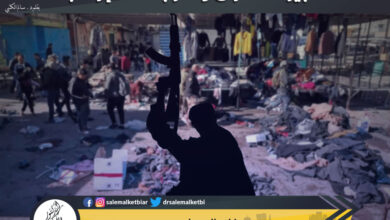
Russia has achieved great successes in the fight against terrorism and freeing large Syrian areas from the hands of Daesh. Russian officials recently confirmed the freeing of about 95% of the Syrian territory. Russia has played a vital role in eradicating and eliminating the threat of the alleged State of al-Baghdadi, which has raised concern in the region and the world over the past years.
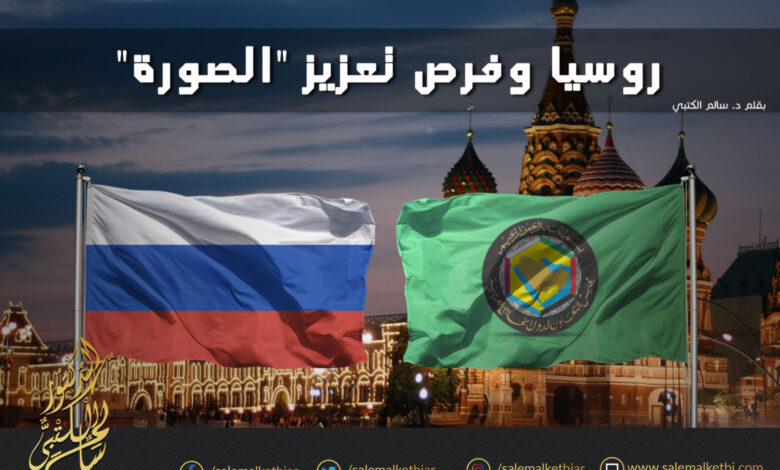
These successes can be a basis for Russia’s strong return to the Arab region, provided that its role in the fight against terrorism is positively invested. The Gulf and Arab relations with Russia recovered during the recent period. The UAE, Egypt and Saudi Arabia are the leaders of the Arab collective work in the current stage.
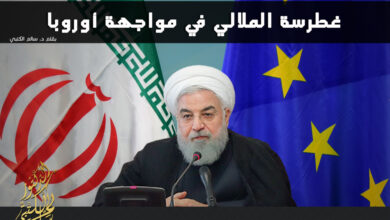
Strengthening Russia’s role in the Middle East is a vital strategic goal for the Kremlin. This goal has its roots. First, Russia should re-introduce itself to the Arab peoples. This requires new entrances. Russian should re-position itself within the network of regional relations and avoid the absolute bias of Iran. Moscow must consider the interests of the Gulf and Arab countries, which are concerned about the Iranian expansion in several countries including Iraq, Syria, Lebanon and Yemen.
The fight against terrorism is not the only ground that Russia can build on. There are other important rapprochement with Saudi Arabia, given its strategic weight and large regional status. King Salman bin Abdulaziz’s recent visit to Moscow was not an ordinary event. The visit is a regional and international development, reflecting shifts in the international coalition and in the rules of the political game at the current stage.
Some observers think that Putin will not change his positions and policies to please the GCC countries. A major State will not shift its policies without strategic interests. Instead of ideologization and populist slogans, international relations are governed by looking for common interests in positions and policies.
There is a precious opportunity for Russia to re-present itself to the Arab and Gulf region on new bases. However, this is not a top priority in the calculations of the Russian decision-maker, who vetoed a UN Security Council draft resolution to extend the mission of the International investigation committee into the use of chemical weapons in Syria.
By this Veto, Russia has supported Syria for the tenth time in the UN Security Council. But the last time seems to be motivated by many reasons, not only to give absolute support to the Syrian regime. Regardless of the reasons and motives, Russia’s policies in the region must take a different direction and operate according to a different way that takes into account the interests of the Arab countries.
Russia is trying to establish its position as a loyal and supportive ally. But things in the region require a more neutral Russian role in dealing with regional issues. The Kremlin already has an opportunity to use its capabilities, influence and network of relations and alliances to achieve security and stability. For example, Russia could curtail Iran’s expansion and pressure Tehran to stop pro-Houthi interventions in Yemen. Moscow could also play a vital role in curbing Iranian influence in post-war Syria.
Russia has an opportunity to enhance its role as a key diplomatic partner in the security equation in the Gulf region and the Middle East.