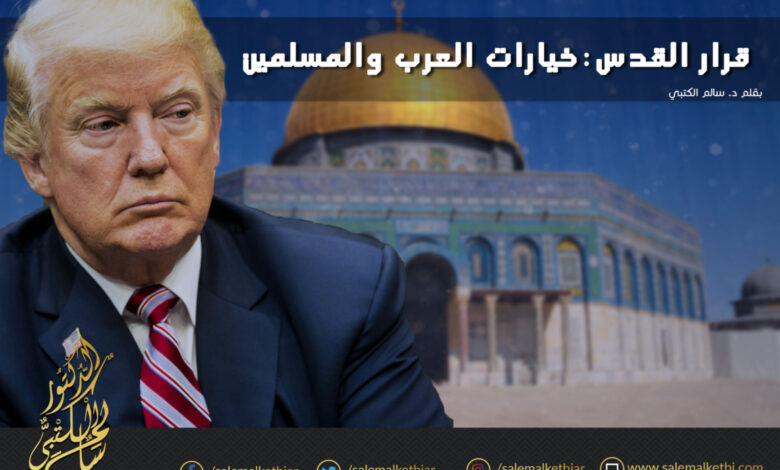
President Trump’s recognition of Jerusalem, a significant city to millions of Muslims, as the capital of Israel, has produced an unprecedented situation in the Palestinian-Israeli conflict.
However, there are aspects of the decision that Arabs and Muslims should know. The decision brought back the Palestinian cause to the international scene for the first time in years. This valuable opportunity can be exploited through collective diplomacy to raise serious and active international support for a just and negotiated settlement necessary for stability in the Middle East.
The decision has united most of the world behind the two-state solution, which had started to seem unrealistic. Major countries were talking about the need to push for a serious negotiated solution. This unprecedented international sympathy with the Jerusalem cause and the Palestinians can be exploited to counter the Trump administration’s clear bias towards Israel.
Trump’s decision serves the interests of his administration but the Arab and Muslim world put the US administration in front of its international responsibilities while paying attention to what is coming next amid news reports on a potential settlement of the Palestinian-Israeli conflict. But a just settlement is unlikely, meaning that a source of terrorism and extremism would remain in the Middle East. To prevent that, we need to shape an international public opinion that could pressure the Trump administration.
The Trump administration does straightforward politics and no maneuvers. Arab and Islamic countries must prepare alternatives and options to deal with their own crises. While international relations are based on each party’s strategic interests, you cannot wait for the other party to lose its interests in order to serve yours. In a strategy game, each player could have pressure cards.
The Palestinians have been steeped in internal conflicts for many years without serious interest in the very issue of Jerusalem or without taking into account the regional changes and the diminishing impact of influential Arab countries after pressing regional circumstances.
We need to deal with the situation with due attention and seriousness, not turn it into a political football.
Despite its enormous influence on the status of the USA as the global superpower, the decision is not the end of the world, nor does it grant an international legal status to Jerusalem as a capital for Israel. Finally, it is necessary to work quickly and seriously to prevent other countries from following suit and politically legitimize the US decision.
Trump won’t probably take back his decision, but that doesn’t mean we have to recognize the status quo. Rather, we must work quickly to develop an integrated strategy to prevent the decision from starting a new wave of extremism and terrorism in the region. If the US administration is unaware of the nature of the relationship between the Jerusalem declaration and terrorism, it’s the Arab countries that pay the heavy cost of terrorism.