In 1997, Iranians elected the “reformist” President Mohammad Khatami, and many rejoiced at his presence in the presidency of Iran, and ignored that this post does not guarantee to the person holding it real control over the joints of Iranian policy and its orientations, and that the president is not the top of the pyramid of power in Iran’s theocratic system. But the vast majority, regionally and internationally, was carried away with the soft political discourse of former President Khatami, and I thought that his proficiency in Arabic language and his studies of philosophy mean, necessarily, a qualitative shift in Iranian foreign policy. But Khatami remained for two terms, during which he practiced a political dissimulation that made the world sense numbness in its limbs. And among what contributed to that is the initiative that was saturated with controversy and debate, the “dialogue of civilizations” initiative, launched by Khatami from the rostrum of the United Nations at the beginning of his first term, leaving it interact and cause a lot of fuss in the research and political circles without a real implementation plan that translates it.
But soon everyone woke up to the news of the arrival of former President Ahmadinejad to the presidential chair, following a completely different political line from his predecessor, turning the page of dialogue among civilizations after it had achieved its goals, and the bulk of Iran’s nuclear program was passed and the international community and major powers were distracted from what was going on in the reactors of Bushehr, Natanz, Isfahan, Arak and Fordow, away from that “cover” initiative. And then came Ahmadinejad and made his famous statement: “the nuclear issue has ended, and enemies can only play with scraps of paper, and will not be able to do anything.” Two years later, he returned to New York to make fun of Washington, calling Barack Obama to a “face to face, man to man” dialogue from the same platform on which Khatami spoke of coexistence and global dialogue.
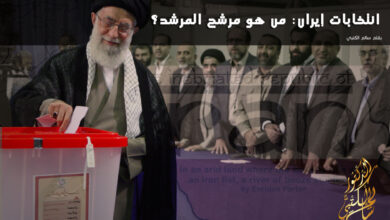
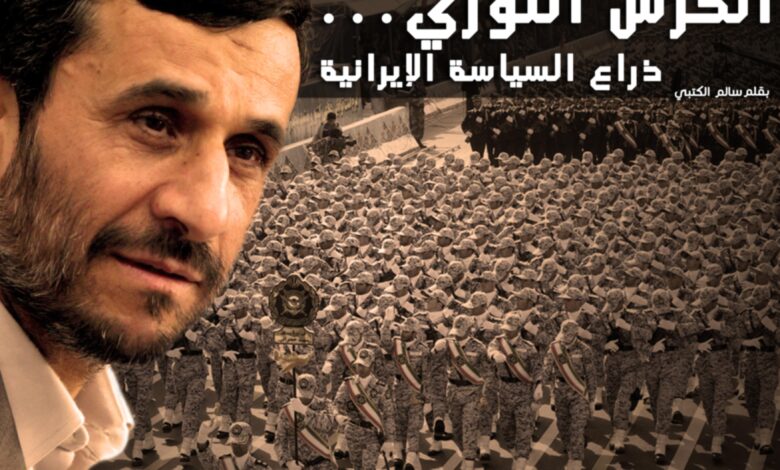
Iran chose Ahmadinejad, a member of the Iranian Revolutionary Guard, as a successor to Khatami, and ignored Hashemi Rafsanjani. We all know how the political game works in Iran, according to strict standards to ensure the arrival of the right person for the Supreme Leader to the chair of the presidency, not the person whom the Iranian people want, the Supreme Leader did not want Rafsanjani at the time after his strewn comments about his support for the establishment of good relations with Washington and negotiation with the West.
In 2013, the Iranians elected the chief Iranian negotiator on the Iranian nuclear program as the country’s president in an orientation that did not reflect as much a change in Iran’s strategies as it involved changes at the tactical level. It was not a coincidence, since things do not happen by coincidence in the country of pistachios and carpets. Indeed, the Iranian Supreme leader Ali Khamenei gave the green light for the coronation of the secret negotiations Marathon with major powers by a final agreement.
Remarkably, some were deceived for a second time by the messages and indications of Rouhani’s arrival at the post, and analyzes, reports and studies spread about the significance of the arrival of the man to the presidency of Iran, and the implications of that for security and stability in the Gulf region, but Rouhani did not disappoint those who are aware of and deeply familiar with Iranian politics. At the end of last year, he launched statements in which he criticized a Foreign Minister of a major regional country like Saudi Arabia, saying in a language not worthy of a head of State and not preceded by his predecessors “there are youths with no experience in one of the countries of the region who will amount to nothing by addressing grownups bluntly,” in reference to Adel al-Jubeir, Saudi Foreign Minister, and that was a completely different tone than another statement of him, which Rouhani himself has launched upon his arrival to power, in which he described Saudi Arabia as a “brotherly and friendly country to Iran in the region,” stressing at the time his desire to remove minor tensions between the two countries.
The password behind these changes is not in the people, who are tools to implement the will of the real architect of Iran’s foreign policy, who is the Supreme Leader Ali Khamenei. It is he who chooses the right man for each stage.
In this case, some may say “How to understand the compass of Iranian foreign policy?” And the answer to this question is very simple, those who want to understand the compass should follow the Iranian Revolutionary Guard commanders’ remarks. The steps and the statements of its leaders clearly reflect the will of the supreme leader, who is the direct and actual head of the Guard, who supervise directly Iran’s nuclear and missile program, as well as Iran’s chemical and biological arsenal.
In light of all of the above, we can understand what is behind the hostile statements made recently by Mohammad Ali Jafari, commander of Iran’s Revolutionary Guard, against both Saudi Arabia and Bahrain. Indeed, Iranian media, including Tasnim agency, which is close to the Revolutionary Guards, quoted Jafari’s statements at the first meeting of the Supreme Council of the leaders of the Guard in the new Iranian year, where he threatened that his country would respond to any action, especially by Saudi Arabia and Bahrain. The matter here may also seem normal to some as answering any issue related to punitive measures is intuitive, and the answer may be punitive within the measure-for-measure procedures recognized internationally. But what should not be ignored is that Jafari spoke about the response in the context of the talk about Iranian missiles, which “have become more accurate and more destructive than formerly,” which is a clear message of threat to the Gulf Cooperation Council. And what supports that is that Jafari’s statements were issued after the decision of Saudi Arabia to ban the Mahan Company for Civil Aviation, which is linked to the Revolutionary Guard, from its airspace and airports, and the accusation by Saudi Minister of Defense adviser Ahmed Asiri to Iran that it is no longer a factor of “instability in the region”, but is also seeking to prolong the conflicts in the Arab countries by supporting militia linked to Tehran. Jafari’s remarks followed ruder and more rugged threat statements uttered by one of the leaders of the Iranian Revolutionary Guard, Saeed Ghasemi, who demanded last March the annexation of the Kingdom of Bahrain to Iran, claiming that “Bahrain is a truncated Iranian province.” Not to mention that Jafari himself waved in defiance of the Gulf Cooperation Council with what he called “the sword of Hezbollah,” when he said that “the sword of Allah supporters will remain sharper than ever”, describing the party, which is one of the arms of Iran, which require amputation and excision, as “the greatest phenomenon in the eastern Mediterranean “, declaring that his country would continue to support the party with all of its strength.
Iranian arrogance spoken by the Revolutionary Guard commanders is the true mirror of Iranian foreign policy to those who seek to understand what is behind the false Iranian mask, and who are not beguiled by the “political dissimulation.” Iran, which speaks a lot about the need to open a new page regarding relations with the GCC countries, is the same that releases venom from the mouths of the Revolutionary Guard snakes.