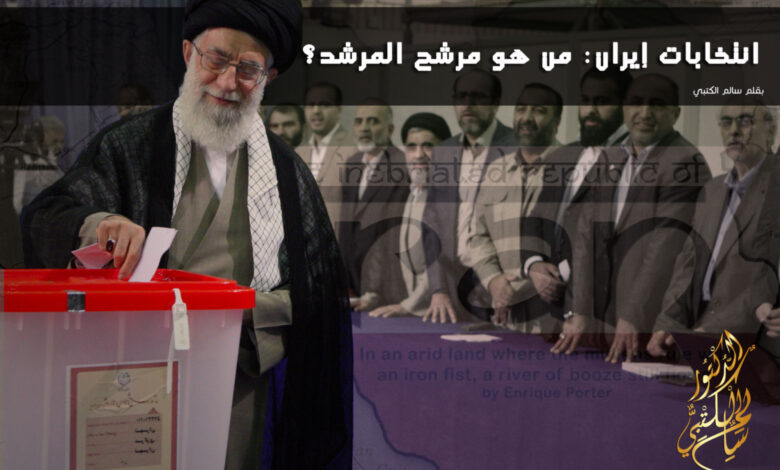
Iran’s presidential election on May 19 may be the most ignored and least of the world’s attention for a variety of reasons and considerations. There is now an international conviction that the president of Iran is only a figure and that the real and actual power is in the hands of the supreme leader of the Iranian regime.
The world has been following the Iranian elections in previous sessions, which included controversial candidates, such as Ahmadinejad, who make media statements that provoke regional and international controversy. The upcoming elections are devoid of any political flavor, and it is difficult for any candidate to launch exciting random statements especially about Israel. Iran has been cautious in its statements against Israel since US President Donald Trump took power last January, given Israel’s position within Trump’s agenda and its foreign policy. Iran will not take a risk concerning this particular file nor will it test Trump’s intentions.
Although the upcoming presidential elections in Iran are thought to be decisive in what concerns Iran’s foreseeable future, the reality is that Iran’s foreign policy is controlled by the Supreme Leader Khamenei. The president and the rest of the state apparatus are just in charge of implementing the decisions and guidance of the Leader. The leader exercises his authority and control over the electoral fund through proactive filtering procedures implemented by the Guardian Council, which only allows those who are absolutely loyal to the regime. Iran’s direction on any issue is not going to change.
Nothing is going to change in Iran if President Hassan Rouhani was elected to a second presidential term or if one of his rivals won. Political labels have proven to be a kind of exchange of roles and no more.
Some argue that President Rouhani had an important role in Iran’s nuclear agreement with the West, and that Khamenei was not entirely satisfied with the agreement and reluctantly accepted it, like Khomeini’s “poison cup” in the war with Iraq in 1988. This is not accurate in its entirety. What Iran achieved behind the signing of the nuclear agreement far exceeds what the West gained. There is no way to say that the Leader was unsatisfied with the signing of the agreement then.
The mullahs are good at political maneuvering, exploiting and using papers for their interests, and they have a great deal of experience. Guessing who the next president is depends primarily on the strategies of the Leader, whether by placing a new president and claiming that he has a different direction in Iranian foreign policy or keeping the current policy.
Some may say it is the Iranian ballot box that will determine the winner from among the six contenders to win the post. This is true, but the rallying for a particular candidate through the IRGC, pro-mullahs media and other state organs is the main compass of these polls.
The most prominent candidate for President Rouhani is Ebrahim Raisi, a candidate of the conservative current, with an influential personality among the clergy and the judiciary in the country, he is a cleric in the first place. His victory might mean further tightening or a message to the West that the mullahs are in power interface and don’t just run things from behind the scenes.
Iran is at a sensitive stage in the history of its revolution. Ebrahim Raisi, who was widely expected to succeed Ayatollah Ali Khamenei and has been suffering for several years, is running in the presidential elections. It is becoming difficult for him to lose the election and then be elected as a successor to the leader in the event of his death. It is obvious that the chances of Raisi becoming the leader diminish if he loses in the elections, but his victory may help his opponents whether after the end of his presidency or through other mechanisms. This makes his candidacy for the presidency a political speculation only if there is a “deal” behind the scenes. Everything on the political scene in Iran happens for a reason and is subject to the mullahs’ meticulous planning. However, he is still young for a president — he is around 56 years old.
If there is indeed a different Iranian position on the agreement, it is already established and defined by the Leader. What will be decided is the choice of the official spokesman who will formulate the new position, after Rouhani implemented his part of the Iranian nuclear deal.
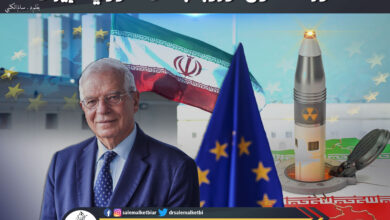
It is likely that any change in the position of the mullahs toward the nuclear agreement will be linked to the position of the other party (specifically the United States) of this agreement and then to the outcome of this agreement in Iran. The agreement did not achieve what was expected for the Iranian economy, perhaps because all revenues have been used to support the expansionist project of the mullahs in the Arab region. A US-backed Sunni alliance is on the horizon to counter Iran’s regional influence, making the clash somewhat predictable. Iran will certainly not venture to end the deal unilaterally, but the mullahs are trying to capture and decode the messages from the Trump administration, which will determine if Rouhani will continue as president or some new president will be chosen to counter the growing US hostility towards Iran.