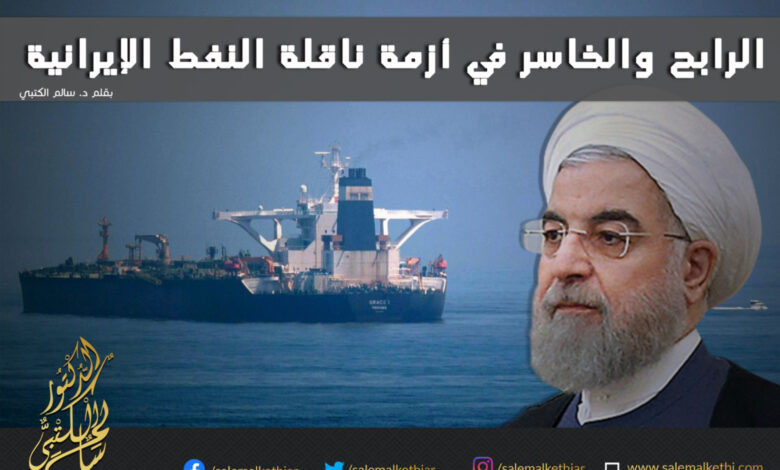
Whether the Iranian oil tanker Adrian Darya 1 sold its cargo off the Syrian coast under a secret understanding with the United States as reported or in defiance to it, as some news suggests, Iran’s goal of sending the tanker has been achieved.
What has not been achieved is what was said following the release of the tanker, which was seized by the British navy and then released under “written guarantees” from the Iranian authorities that the tanker would not go to Syria.
The story of the Iranian oil tanker is part of many accelerating events in the Middle East. What goes on behind the scenes is what matters most.
The United States has pledged to impose sanctions on anyone who buys Iranian oil carried by the tanker. “We will continue to put pressure on Iran and as President [Trump] said there will be no waivers of any kind for Iran’s oil,” Sigal Mandelker, U.S. Treasury Under Secretary for Terrorism and Financial Intelligence, told Reuters. But days later, satellite imagery confirmed that the tanker had appeared two nautical miles from the Syrian port of Tartus.
The oil tanker incident also involved interesting facts, such as the United States offering millions of dollars to the captain in exchange for taking the ship where the US authorities could detain it.
The British Foreign Office, for its part, did not pay much attention to the sale of the Iranian oil shipment, probably because of internal developments and Brexit kept it busy. Britain has merely accused Iran of taking a “morally bankrupt course of action,” after reports that the tanker was heading toward Syria again, in violation of Iranian promises not to go there.
All these events and reactions are part of the game of politics. The game is full of maneuvers, lies, accusations and all legitimate and illegitimate means serving interests and goals.
So there are virtually no surprises in this case. The case was summed up by US national security adviser John Bolton, commenting on pictures published of the Iranian tanker near Syria. “Anyone who said the Adrian Darya 1 wasn’t headed to Syria is in denial,” he said. The United States was sure that the tanker would continue to its destination. US Defense Secretary Mark Asper had announced that his country had no plan to seize the Iranian oil tanker.
The United States does not want a direct confrontation with Iran at this stage. Everything said otherwise is far from reality.
Media reports said that the tanker stayed a few days in the Mediterranean awaiting a deal between the mullahs’ regime and the United States, brokered by a third party. Allowing unloading of the tanker oil and releasing the British-flagged ship held in the Iranian port of Bandar Abbas was part of the deal.
Iranian oil tanker drama came to an end – the one mullahs wanted. The incident should be studied as an instance of micro-crisis managmenent between Tehran and Washington. In a way or another, the two sides achieved their goals with little or no losses.
The United States did not want from the beginning to seize the tanker but to send a strong message of intimidation to the Iranian regime that the freedom of movement and the margin of maneuver in the sale of Iranian oil is very limited, or rather can be “zeroed.” The mullahs’ goal was to prove their ability to defy and bypass US sanctions, support their allies and sell their oil while American fleets are watching.
Another page was turned in the battle of wills between the mullahs and the administration of President Trump who is only interested in moving, albeit slowly, toward his strategic goal—a comprehensive understanding that can be politically marketed to the American public on Iran.