Hardly mentioned in political forums, the Arab League is subject to debate about its effectiveness, past and present roles. Arab countries have conflicting views about the pan-Arab institution, while some specialists say The Arab League is only a reflection of its own Member States.
Others argue that the league suffers chronic disease manifesting in structural and regulatory imbalances that weaken its role and limit its impact regionally and internationally. Others believe that the unstable Arab reality caused atrophy to this institution. Nonetheless, political figures in the league have helped limiting its decline and present it, at least rhetorically, as an influential international actor.
The public opinion in most Arab countries often blames the Arab League as represented by its Secretary General, although this may not be fair to him. The head of such a large institution cannot be take the blame of a whole management board. Regardless of who was the Secretary General, the United Nations, too, has been of limited influence in the arena of international collective work and weak in the face of the influence of the superpowers. The times when the current Secretary General Ban Ki moon expressed ‘concern’ about international events and crises are countless.
Historically, the performance of the Secretary General of the Arab League has been associated with conditions experienced by the joint Arab action, and the nature of relations between Arab States during his term. The positions of former Secretaries-General of the League underline severe hardships in the areas of political maneuvering, because of the sharp contrast in the attitudes of Arab states about some of the issues and files on the agenda of the institution. Therefore, the output of the Arab League is the result of collective efforts, and is not linked to the performance of its administrative and political apparatus.
It is mostly true that there were historical phases where the Arab League experienced a surge in its political role regionally and internationally. But the extrapolation of the situation confirms that this boom in performance resulted directly from factors in the regional environment. In the ’50s, ’60s and early 2000s, the Palestinian issue was at its peak, and there was not inter-Arab conflict of view. Before that was the outburst of Arab nationalism and the scene was less complex and entangled than it is today.
Inter-Arab relations determine the role of the Arab League and that is undisputable. The scope of functions of the Secretary General has been also constrained, so far, by the relationships between Arab states and the State where the league was headquartered. Besides, there are obstacles that are well known, but also skeletons in the closet.
Today, Arab issues are complicated and crises multiplied. The Palestinian issue is no longer the center of Arab attention, although there were sharp differences about interests and compromises. Disputes have become a major feature of the Arab political scene and the Arab summits ‘occasions’ to show the Arab shortfall in many pointless meetings.
After seven decades since it was founded on March 22, 1945, the Arab League failed to address many issues due to the weakness of the Arab regional system, moving from making historical and positions into wishful thinking. In its early years, however, it had a key role in supporting some Arab independence movements and decolonization efforts and was an active actor in battles for national liberation. At least, it has a moral and symbolic meaning and remains the house where Arab States take refuge in times of crises and hardships.
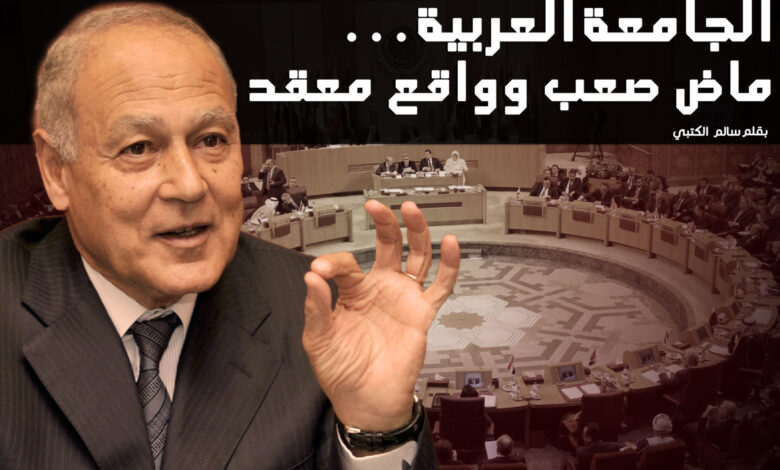
Although no plans were made so far to restructure the Arab League, we hope the 70th meeting marks a new beginning for reform under the new Secretary General, Mr. Ahmed Aboul Gheit, so that the organization becomes more responsive to the aspirations of the Arab nations, and more resilient and strong in the face of extremely dangerous strategic challenges and security threats.
The Arabs need their league now more than ever before, especially in light of calls for dismantling it and engaging in a wider regional system that would open the door for the erosion of Arab rights and further fragmentation, disintegration and division.
As an institutional mechanism, the Arab League still embodies the Arab dream. It constitutes the regulatory framework of this dream. Pushing towards reforming its institutional and regulatory structures remains the best strategic option available in order to have a space for collective Arab action in the age of globalization.