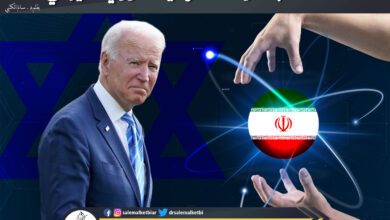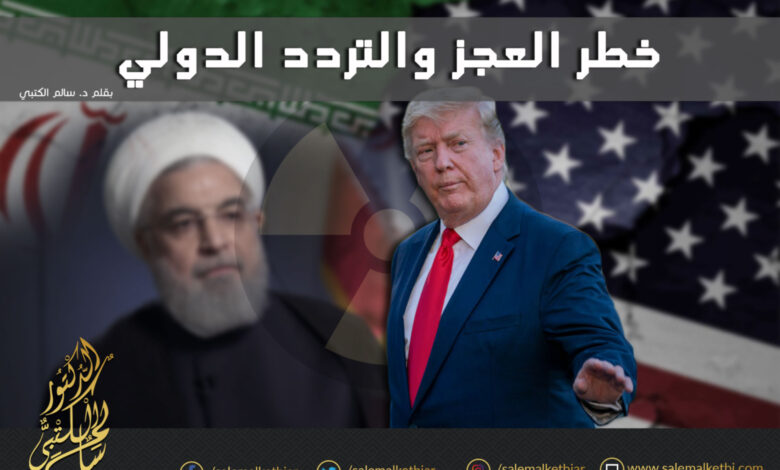
Faced with the Iranian mullahs’ regime’s decision to raise the uranium enrichment rate above the percentage set by the nuclear agreement signed with the major powers in 2015, the Western powers reacted in a way that can only be described as unfit.
All reactions, European and American, seemed to express concerns and warnings about the consequences of this flagrant violation of the agreement by Iran.
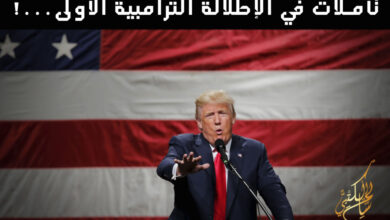
President Trump was the most polite leader towards the Iranian regime, asking it to be “careful.” He pointed out that Iran was doing a lot of bad things and that its actions suggested the pursuit of a nuclear weapon. But “America will never allow Iran to develop nuclear weapons.” His Minister of Foreign Affairs, Mike Pompeo, promised further sanctions and international isolation.
Britain called on Iran to immediately renounce its decision to increase the enrichment rate, but declared its “full commitment to the agreement.” For its part, France accused Iran of violating the agreement signed with that country.
The European Union also urged Iran to cease any action that would contravene the signed nuclear agreement and stated that it was in contact with the other parties to the agreement with a view to establishing a joint committee to examine this issue. Germany voiced its “deep concern” and asked Iran not to take any further measures that could jeopardize the agreement.
Two key points can be drawn from the Western reactions. First, everyone is looking for what “should be done.” Second, there is a clear emphasis that the deal is still fine and that the mullahs’ regime must avoid putting it at risk.
I believe that the situation of fragmentation and the obvious powerlessness of the positions of the major powers in the face of Iran’s violations of the nuclear deal terms are the most telling proof that the deal itself cannot be respected. It does not provide for any effective measures to ensure that the signatory parties comply with the terms of its commitments.
One could say that the US administration has withdrawn from the agreement and the other signatory parties have not taken any position or action in this regard. That is quite right. However, the White House withdrew from the deal without violating its provisions.
It is a sovereign decision of any state to meet its commitments to an agreement or to withdraw entirely from it, taking into account the strategic consequences of such withdrawal.
International agreements are not absolute restrictions on state sovereignty, but are signed voluntarily and in accordance with their strategic interests, positions and gains. Withdrawing from an agreement is also a decision based on precise calculations of interest. President Trump has done so in other international agreements and not only in the Iran nuclear agreement.
The situation of the mullahs’ regime is completely different. This regime did not pull out of the agreement, but blackmailed the other signatories and violated its agreement with the P5+1.
The withdrawal of the United States does not mean that Washington does not respect the will of the rest of the international powers and violates the standards and conditions set out in the unilateral agreement on the grounds that the states have not done their part to protect the Iranian regime from US sanctions.
International agreements are treated according to the rule of “take it or leave it.” Signing means accepting without reservation and withdrawing from the agreement implies, however, a total or partial refusal.
On the other hand, the mullahs act in an opportunistic manner, demeaning the international community. They are exploiting the difficulty for these countries to decide to wage war on Iran at this time.
The decision of the war is complicated by the sensitivity of the position of US President Donald Trump and the approaching date of the US presidential elections. In addition, the major powers fear a military conflict in the Gulf region that could harm energy markets and regional and global security.
For specialists, all these complex strategic calculations seem reasonable. But particular attention is nevertheless needed: the international community’s hesitation and powerlessness in the face of Iranian blackmail can only harm security and stability and encourage other countries to challenge international law. This situation also encourages terrorist organizations to be even more disruptive, exploiting the state of flaccidity and confusion that dominates the international political mindset.
An international commitment does not necessarily mean war. The real challenge is not in deciding on whether to go to war or maintain peace, but in seeking a collective international consensus that makes the Iranian regime understand that the international community is united in maintaining global security and stability.
No one is calling for war, which, as we all know, was eventually going to end up with a negotiating table. The most important thing is to demonstrate the determination and willingness of the international community to address such violations.
Many in the world are observing the situation and actions of the mullahs. We can expect that the mullahs’ revolt against international law will be copied in other regions and by regimes that are watching what is happening in the Gulf.
The entire international collective security system is at stake, and it is regrettable that the will of the international community has reached such a state of helplessness and hesitation.