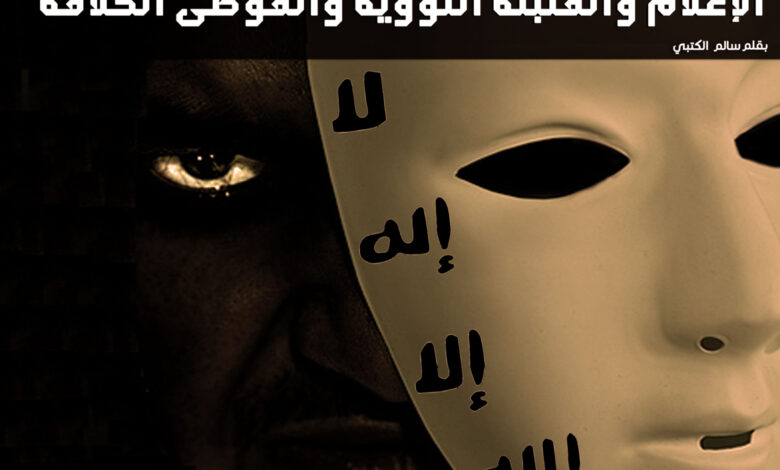
For the past recent decades, the imminent danger of nuclear bombing has been threatening global security and stability. If one follows the situation in several Arab countries since chaos erupted in 2011, one can easily realize that the negative impact of the media on national security and stability is of effect comparable to atomic bombs.
Analyzing the course of events in the past few years made me realize a few matters about the media. The media apparatus has become a spearhead of the creative chaos that engulfed several parts of the region. There are thousands of Arab satellite channels, some of which one can easily know who is behind their financing, but most keep this information confidential.
Media financing confidentiality is puzzling and strange at the same time. It appears that satellite companies sometimes make contracts with ‘ghost’ channels, without consideration to the material or message the channel is expressing. This becomes clear as dozens of channels are promoting sectarian and ethnic incitement without the slightest control, accountability or reproach.
Some argue that satellite channels are, however, being displaced by new media platforms such as Facebook and Twitter. This is true to some extent, but the traditional media still attracts and influences a broad segment of the public, given prevalence of e-illiteracy in several Arab and Islamic countries. The conversation about the media in those countries should, therefore, not be limited to social media.
In a way similar to commercial dumping, the unfair, non-transparent and internationally-prohibited practice, ‘media dumping’ aims at ‘wining’ the hearts and minds by any means possible. To that end, a country can harbor or host channels or groups hostile to other countries. Furthermore, it can allow them to constantly broadcast deceitful propaganda, in order to deepen internal division and spread chaos in other countries, under the pretext of freedom of speech.
In fact, hosting satellite channels targeting other states or countries can be as dangerous as hosting military bases that threaten the security of other nations. In this sense, security is a broad concept that encompasses not only physical but also social safety and stability.
Freedom of the media should be granted; to prevent its negative impact, nevertheless, rules and standards of responsibility and transparency must be applied. Under the given circumstances, the impact of the media transcends any casual discussions about media freedom. No freedom-of-expression law or convention can tolerate that an organization, group or individual attempt to harm the security and stability of communities.
The media does not talk in a vacuum. Otherwise, we would not find enormous financial investments being pumped continuously in media channels. Sprouting like mushrooms across the region, those widespread channels are not rivaled in size except by problems like diseases, epidemics, rates of unemployment, corruption and high illiteracy, exploited by owners of said investments to serve their own sectarian, political or ideological agendas.
Our enemy is not just ideological media, oriented to spread chaos, but also the type of media that anesthetize the sense of awareness in communities, through channels of interpretation of dreams, games of chance and dissemination of ignorance and superstition, only deepening the wounds of ordinary people and gradually paving the way for extremism and militancy.
The media-sphere has become another arena of conflict, added to the conflicts tearing the region apart. There are Sunni and Shiite channels. There are channels speaking for terrorist groups and organizations. There are also sub-national channels as is the case in Libya, Iraq, Syria, Yemen and elsewhere.
With the spread of ignorance, the absence of road maps for the future, cluttered national identities, foreign interventions, conspiratorial plans, the weakness of the voice of loyalty and patriotism over sectarianism and ethnicism in several Arab countries, the region is a highly toxic zone.
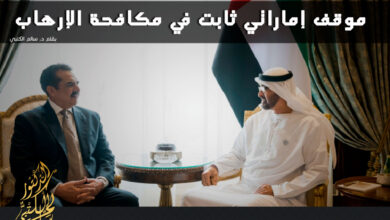
From here stems the importance of what His Highness Sheikh Mohammed bin Zayed Al Nahyan, Crown Prince of Abu Dhabi, has recently expressed convening the media role to counter advocates and promoters of extremism, terrorism, violence and the ideology of hatred. The media is essentially a partner in construction not destruction, he said, and its role is vital to highlight the visions of construction, informed consent and to stimulate innovation and creativity. He added that its role also includes immunization of the youth from subversive and extremist ideas that the forces of extremism/terrorism seek to disseminate.
Right now, the media is as responsible as soldiers in the battlefield. Everyone shall defend the nation in the face of terrorism, violence and radical groups eyeing to undermine the sovereignty of nations and engage them into endless wars.
Saving what is left of our Arab and Muslim world requires paying attention to the role of the media. The impact of mass media can be as devastating as that of nuclear bombs. It can cause major harm to present and future generations, and instill in the soil of homelands seeds of social discord, strife and conflict. Instead, the media-sphere can be a fertile ground for the national message to grow strong.