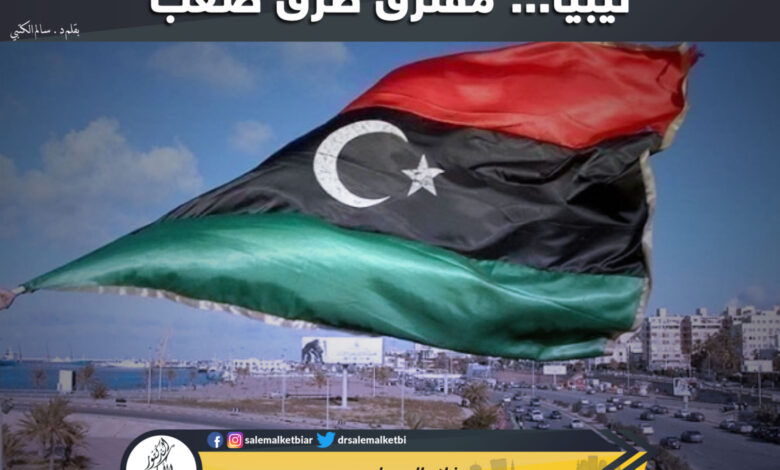
The interest of the global collective in ending the root causes of the chaos in Libya, by once and for all pulling the mercenaries out of the country to establish a climate of sovereignty, stability and unity, is a positive point that adds to the chances for peace in this Arab country.
The latest sign of international interest is the recent presence of the foreign ministers of France, Italy and Germany in Tripoli and their joint visit to the Libyan capital, where they met with the foreign minister of the national unity government, Najla Mangoush.
After the meeting, everybody stressed the need to get the mercenaries out of the country for good. Two important challenges await Libya in the coming period. The mercenaries must be cleared out and the presidential and parliamentary elections held as scheduled in December.
All agree that the withdrawal of foreign troops and the departure of the mercenaries are preconditions for the upcoming elections. Hopes are high for an end to Libya’s turmoil after parliament voted by a large majority to give confidence to the new national unity government proposed by Prime Minister Abdel Hamid Dbeiba, who the world is very optimistic can end the conflict.
For a decade, the Libyan people have suffered chaos, war and hecatomb, and their country has become a breeding ground for radicals, terrorists and foreign mercenaries.
Despite doubts about whether it will be possible to drive out foreign mercenaries and dismantle the terrorist organizations that have found Libya a fertile ground to operate and proliferate, international and regional attention and support for the Libyan national unity government is helping it achieve its goals, including bringing back control, unity and sovereignty.
There are clear and firm American and European positions that foreign troops and mercenaries should leave Libya immediately. We all know that Turkey will not easily exit Libya. The Turkish president can maneuver a lot before succumbing to international pressure in this regard.
But Erdogan has no choice but to comply with the Libyans’ and the world’s demands to walk away. I believe that the Dbeiba government, on the basis of its national legitimacy and substantial international support, will work to get the Turkish forces out through a “deal” with Erdogan.
Erdogan feels the international pressure to pull out of Libya. But he is going to stall to get agreements or make arrangements with Dbeiba regarding Turkish companies’ share in reconstruction plans as well as arming the Libyan army in exchange for withdrawing Turkish troops out of Libya.
He is particularly aware that his dreams of maintaining military bases in Al Watiya and Mitiga will not withstand growing regional and international pressure. Libya’s stability and security are also linked to collecting large amounts of weapons that have spread across the vast Libyan geography, limiting the arms to the Libyan state and uniting the Libyan army and security institutions.
Proliferated arms in the hands of local militants are no less dangerous than the presence of foreign troops and mercenaries on Libyan territory. After 10 years of conflict and chaos, the Libyan state faces great challenges. Getting rid of local and foreign militias will not be as easy as some imagine.
As fighting and bloodletting become a source of mercenaries, the task of controlling the chaos and restoring stability becomes more difficult. The continued attention and support of the international and regional community is pivotal to avoid a backslide that would send Libya out of the frying pan into the fire.
I am confident that the most serious challenge facing the current Libyan government and its successors after the December elections is gun control. The experience of Iraq shows that arms proliferation is an incurable disease that threatens state sovereignty in the post-conflict phase.
For Libya’s conditions to be sufficient, international pressure must coax Turkish troops out of the country and international support must sustain efforts to rid Libya of militias.
What has been achieved so far may be promising. But in order to get the job done, work must continue in the same national spirit supported by the international community, so that hardship and challenges could be beaten.