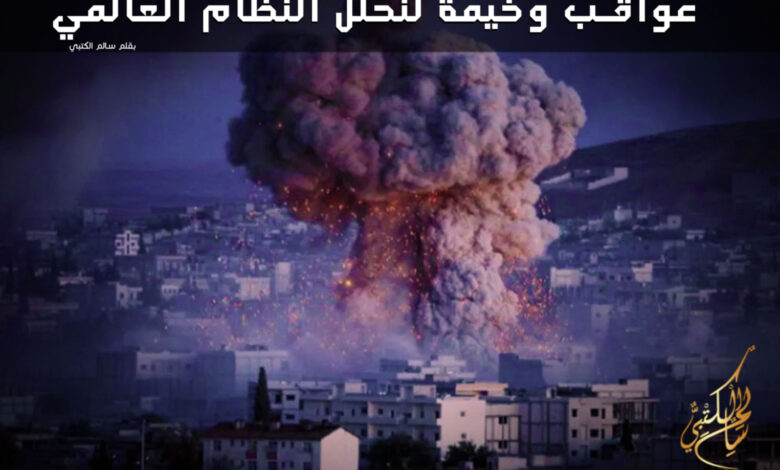
There is no doubt that the world is going through a juncture like the post-world war period, at the end of the eighties and nineties, when the former Soviet Union broke officially, and the United States had not yet tightened its control of the world order at the time. In those periods, serious disasters occur and the world pays the price for decades.
For example, after the disintegration of the Soviet Union, the former Iraqi regime led by Saddam Hussein sensed the presence of a moment of appeasement in international relations, and tried to use the opportunity to occupy Kuwait, but in contrast to this bad strategy thinking, former US President George Bush the father was studying the exploitation of Saddam Hussein’s crimes in tightening the US grip on the existing world order, and announced the US as the single dominant power of this system.
Today, there are similar symptoms of appeasement in international relations. Its manifestations are reflected in several cases, including what is happening in Syria, especially in relation to the absence of the United States for the first time in decades from the leadership of the settlement process. This is a major crisis for its strategic interests, with Russia leading the negotiations, in coordination with Turkey. The new US administration, led by President Donald Trump, did not show any ability to provide a strategy to resolve the Syrian crisis, except for its proposal on the establishment of safe zones in Syria.
Among these manifestation is that Daesh is still in control of large parts of Iraq and Syria. Some media reports have confirmed that the organization lost in 2016 only about 25% of the territory it controls despite the military strikes of almost all countries of the world.
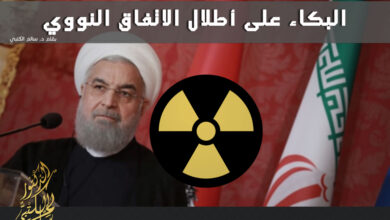
There is also the turbulent situation in the Middle East, where Iran exploits the power vacuum in the region, which the United States left by receding its influence and role. Tehran is seeking to fill it through the revival of colonial expansion plans, to the extent that Iran now boasts its influence in the Mediterranean Sea, along the Russian influence in Syria.
The change in the US leadership mode of the new world order is not the only reason for all what we see of regional and international chaos, but it is disastrous that this development coincides with other variables of grave strategic impact. The regional influential powers are in turmoil and isolation because of economic, security and political crises and problems. Because Egypt lost its regional weight and influence and prestige, Iran enjoyed strategic expansion in countries such as Syria, which affected the regional strategic balance that has been established since the mid-twentieth century. Syria was part of the United Arab Republic during the period of unity in the era of former President Jamal Abdel Nasser, as we all know, and Syria had special accounts and estimates with respect to Egypt’s national security. Egypt would not have allowed this chaos inflicted to Syria, either by terrorist organizations or by Iran, if it still had regional influence. Since the 2011 unrest, Egypt, the most influential Arab country, is still trying to mend its wounds.
Now, the world tends to follow another development related to the status of chaos prevailing in the global system. A major military crisis is to erupt in Africa, especially after the Senegal massed its military forces on the Gambian border, threatening of military intervention if Gambian President Yahya Jammeh refuses to hand over power to President-elect Adama Barrow.
The political crisis in Gambia is exacerbated in the recent period, almost causing a major crisis in West Africa after ECOWAS intervened in order to impose the respect of the results of elections in Gambia, threatening to resort to military force to dislodge the outgoing president, who has been in power for nearly 22 years. These countries have already formed a military force led by the Senegal that is likely to intervene in Gambia.
The Gambia crisis is the embodiment of the global system crisis. There is absence of the international institutional order in parallel with the decline of American influence, both for the strong US desire to lessen its strategic role and the re-emergence of the isolationist idea on the American political scene, or because the idea of hegemony itself no longer fits as globalization makes room for the emergence of new powers that compete with the US.
In all cases, details of the international scene suggest that the world is on the verge of more suffering and turmoil, chaos and instability, especially if ideas of the new US administration on isolationism are implemented. The world will have to face an unprecedented appeasement and degradation of the existing world order. Of course, some geopolitical zones like the Middle East will see more chaos than others