In the run-up to the US presidential election in November, experts and specialists are studying the presidential doctrines of the only superpower in the current world order regarding certain countries and major blocs. The GCC countries stand at the center of attention. These countries, I have often read in recent days, strongly support the re-election of President Donald Trump for another term.
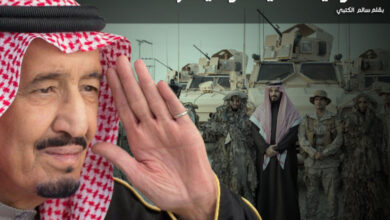
For the Gulf capitals, a victory for Democratic candidate Joe Biden would be “unpleasant” news. Looking at the reality of relations between the Gulf countries and the US during Trump’s final years as president, Washington developed special ties with the GCC countries, especially Saudi Arabia and the UAE.
This has been manifest in the White House’s visions and positions on the vital strategic concerns of the bloc countries. The Republican President’s views converged with those of the leaders in Riyadh and Abu Dhabi on the Iranian threat brought about by the mullahs’ sectarian expansion into some Arab countries in recent years.
Besides, the US and the rest of the P5+1 have converged on the nuclear deal with the mullahs’ regime in 2015, yet without putting any real check on Iran’s nuclear ambitions or making any reference to its ballistic missiles; the deal has not addressed the Iranian situation in a comprehensive and integrated manner, thereby overlooking Iran’s direct and indirect interventions in neighboring countries.
A striking feature of President Trump’s relations with the GCC countries is that they came after a period of tension and a dramatic decline in their relations with Washington. His predecessor, Barack Obama, ignored the concerns of the Gulf countries about Iran’s nuclear ambitions and sought to speed up the signing of a flawed deal without understanding the positions of his country’s Gulf allies.
In truth, however much one says about the institutionalization of US-GCC relations, or that these relations are strategically institutionalized and uninfluenced by changing people, experience tells otherwise.
The legacy of American presidents, in foreign policy in general, is hard to get around and ignore. The periods of former President Obama and current President Trump reflect a strong emphasis on the role of individuals, not institutions, in shaping the relationship between the Gulf states and the US.
In addition to the chemistry that unites some leaders, there is a charisma and a strong influence on their country’s policies, even in a direction that is not really compatible with the assessments of other foreign policy institutions in these countries.
In any case, you cannot say that President Trump has flattered the GCC to the detriment of his country’s interests by pursuing a maximum sanctions policy against the Iran mullahs. Everyone knows that such was his attitude towards the mullahs’ regime before he won the presidential election. His categorical rejection of the nuclear agreement and his notorious promise to reform it for a better deal or to withdraw from it if he wins the US presidency are not unknown either.
The importance of President Trump’s attention to US-GCC relations cannot be understated, especially in recent months. He played a key role in the signing of two agreements to establish formal relations between the UAE, the Kingdom of Bahrain and Israel. For his administration, this is a major diplomatic win.
And yet, in their strategic assessment for the next phase, the political leaders of the GCC countries cannot afford to rule out the eventuality of Joseph Biden winning. Relations may vary somewhat in light of Biden’s remarks and positions in his campaign. But we may not expect radical changes.
US foreign policy towards the Gulf region is marked by compelling constants. If Biden wins, he will not be able to pick up where Obama left off in his agenda for the Gulf and Middle East region. Things have changed and are still changing in this pivotal region.
What must be kept in mind is that the US national security is the number one concern for the man in the White House. It is also important to understand that President Trump’s current positions are different from the Democratic candidate’s promises.
Promises are not a blank check, but rather perceptions and visions that must align with American reality and strategic interests and must be accepted in their effectiveness and usefulness by the President and his staff before being officially implemented.
Promises have to be tested and cannot be used to make definitive comparisons. In the case of the UAE, a victory for President Trump or his rival will not result in a major turnaround. Relations between two allies are well placed to strengthen in the near future, according to calculations of common strategic interests, regardless of who wins the November election.