Saudi Arabia is celebrating these days the 86th National Day, which marks the anniversary of the unification of the Kingdom. This national occasion is an important event in the light of regional developments and variables, and the influential role played by the Kingdom regionally and internationally. The National Day of the Kingdom this year comes amid complex and interrelated regional conditions relevant to the strategic interests of Saudi Arabia, particularly with regard to the Iranian strategic expansion threatening national security in Arab countries, especially in the GCC.
The Saudi-Iranian relations were not so good over the decades and years that followed the Iranian revolution in 1979, oscillating between tug of war and cautious calm, due to Iran’s expansionist and colonialist policies. Promising ‘the export of its revolution,’ Iran has been awaiting the opportunity to actualize its slogan, despite the false claims and misleading studies alleging Iran’s transition from the revolution to the State.
Since last year, Iran provoked a crisis with Saudi Arabia over pilgrimage and was involved in arranging a tragic accident that took the lives of hundreds of pilgrims in order to accuse Riyadh of not being able to control and maintain the security of the masses of pilgrims. But Tehran’s plan failed to catch the attention of Islamic countries, so Iran resorted to other schemes and prevented pilgrims from visiting the holy sites this year, claiming the intransigence of the Saudi authorities towards Iran conditions on its pilgrims. Saudi Arabia has dealt cleverly with the Iranian plot, which was only meant to promote an old ‘Persian’ demand to preclude Saudi Arabia for administrating the Hajj season and to ‘internationalize’ authority over the Holy places.
The Iranian plot was exposed when the mullahs issued fatwas to mobilize nearly a million Iranians to visit Shiite holy places in Iraq, promoting them as ‘substitutes’ for the legitimate pilgrimage to the holy places in Mecca.
Seeking neutrality, Saudi Arabia did not involve religion in political conflicts. It has maintained a distance between its role towards the sacred sites and the service of the pilgrims throughout the year, and its political and strategic role, which require it to maintain a leading position in the Gulf and Arab affairs. Certainly, the rapid strategic developments in the years after the so-called ‘Arab Spring’ prompted the Saudi leadership to reinforce its regional role and take control of the current situations as the role of certain pivotal Arab powers declined and others completely vanished from the political and strategic scene in the region.
The Saudi move in the region was, therefore, not based on expansionist goals and new ambitions, as alleged by the enemies of the Kingdom, despite the fact that the strategic ambition is legitimate and customary in international relations. Nonetheless, in the case of Saudi Arabia, reality dictated specific strategic responses to preserve what remains of the Arab national security and the interests of Arab peoples, some of which have witnessed waves of asylum in millions.
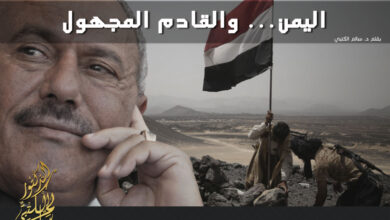
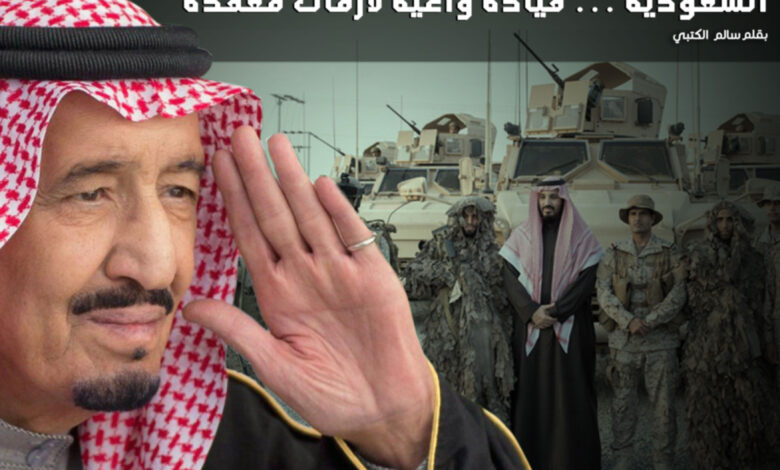
The current Saudi leadership, headed by King Salman bin Abdul Aziz, has succeeded in formulating a new strategy of foreign policy to face the current regional developments. In order to avoid any predictable strategic loss and confront external ambitions, The Saudi political actions and influence shifted from reactive to proactive. Implementing the strategy of security and military preventive defense, the historic decision to launch the Firmness Storm operation was made. The operation succeeded in thwarting an Iranian expansionist scheme to add the capital of Yemen to Baghdad, Damascus and Beirut, other Arab capitals that Iran boasts occupying.
In my view, the Saudi-led ‘Firmness Storm’ and ‘Restore Hope’ operations, which influential Arab countries took part in, including the United Arab Emirates, represent a historic turning point to preserve Yemen as an Arab country. The importance of the operations was not reduced by claims about their effectiveness on the part of parties and forces against the idea of prosperity and stability in Saudi Arabia and the GCC countries.
Strategy shows that Saudi Arabia and the UAE seek to establish security and stability in Yemen and safeguard the interests of its people. The Decisive Storm operation was intended to prevent oppressive plotters from taking power and controlling the future of the Yemenis. The absence of security and stability cannot be accepted by the Arab Alliance operating in Yemen, after many efforts to protect the foundations of the Yemeni state.
In the light of the regional conditions and current international conflicts, no one can deny the Saudi role in maintaining peace in the Arab and Gulf regions. Saudi Arabia represents the centerpiece of Arab national security as huge internal and external pressure is being put on major Arab countries such as Egypt.
Saudi leadership has succeeded in re-establishing regional balances of power in a historic moment when Arab capitals were in the fringe of falling under the ‘Persian’ influence, or submitting to the rule of extremist/terrorist organizations with agendas serving the interests of external powers. The objective of the Saudi strategical rise in recent years was not regional leadership or replacing traditional Arab powers absent for internal circumstances. The Saudi involvement reflects engagement in the issues of Arab nations, despite all pressures and costs, to preserve the interests of Arab populations that have been long waiting for more active involvement of the GCC countries, led by Saudi Arabia.
Saudi Arabia has changed, indeed. The leadership of the kingdom is now aware of the seriousness of the current circumstances. The young leadership, represented by Crown Prince Mohammed bin Salman, has been increasingly influential internally and externally. The Saudi Vision 2030 promises a bright future for millions of young Saudis, and promises that the fight against extremism and terrorism is not only through effective ‘traditional’ means, but also through human development and economic openness, for a third millennium of optimism in the Kingdom.
As the Kingdom celebrates its National Day, the GCC countries honor the Saudi regional leadership that helped the Council overcome the most difficult situations and minor obstacles.
It is wrong to assume that the pressures of Iran’s mullahs on Saudi Arabia is a Saudi internal affair. Saudi Arabia is one of the most important building blocks of balance and stability in our Gulf and we have no choice but to support Riyadh as the central actor for security and stability in the Gulf.
On the occasion of Saudi Arabia’s National Day, Gulf and Arab countries should be aware of the unprecedented strategic challenges. Saudi Arabia and Iran are not in a sectarian struggle, but in one of identity in which the mullahs recall their Persian history. Plots against the cornerstone of the Arab World are not allowed. As His Highness Sheikh Mohammed bin Zayed Al Nahyan, Crown Prince of Abu Dhabi and Deputy Supreme commander of the armed forces, said, the Arab national security is an interconnected and inextricable whole, and that it is the base and essence of reasoned strategic thinking.