Although issues and crises in the Middle East region have a direct strategic impact on the EU’s security and stability, European reactions and attitudes to these crises range from weakness and hesitation to official statements leading to no decisive action in line with the interests of the European parties.
One of the reasons for this European reality is that the EU’s foreign policy has difficulty in developing a common position on certain issues. The interests and positions of some EU Member States clearly diverge, especially with regard to the Libyan crisis.
However, the most worrying crisis for the European side, due to the relative weight of efforts, remains the Iranian crisis. The EU has been paying great attention to it since the signature of the 2015 P5+1 nuclear deal. Since then, Europe has always provided the Iranian regime with a lifeline to avoid its collapse due to the strong economic pressure and blockade imposed by President Trump.
The European trio, made up of Germany, France and Britain, activated the trade cooperation mechanism called INSTEX between Tehran and the trio in response to US embargoes and sanctions.
In March, a consignment of medical supplies was sent to Iran through this mechanism. Established in January 2019, the mechanism aims to secure trade between the two sides and protect European companies from US sanctions against the mullahs. In December 2019, Belgium, Denmark, Finland, the Netherlands, Norway and Sweden joined the mechanism.
Although the implementation of this mechanism is still at the stage of testing the robustness of the US response, it is an important signal that Iran is a subject of controversy among transatlantic partners. Iran, for its part, is putting pressure on Europe for what it describes as the liberation from US influence.
But the European side is perhaps trying to buy time before the results of the US presidential election in November to find out what direction US foreign policy has taken under President Trump.
The EU was at a sensitive stage because of Brexit and the effects of the coronavirus pandemic, which opened the way to deep existential fears about the fate of the Union. This partly explains the slow progress of the INSTEX mechanism, supposed to facilitate trade between European and Iranian entities by paying for European goods in exchange for the price of Iranian oil exports to Europe.
The deal set out an initial trade of $1 billion in oil in return for Iranian medical, food and agricultural products, which would help contain Iran’s reaction to President Trump’s pullout from the nuclear deal.
It should be noted that the European tone towards Iran began to change after the mullahs announced that they had gradually abandoned the terms of their international obligations.
But Europe has always preferred to advise and call on the mullahs to avoid the scenario of the collapse of the agreement.
However, the agreement is theoretically dead since the US backed out of it in May 2018. European diplomacy has relied heavily on mediation to defuse the crisis and tension, convinced that the agreement, if its terms are respected, is the only mechanism capable of preventing Iran from acquiring nuclear weapons.
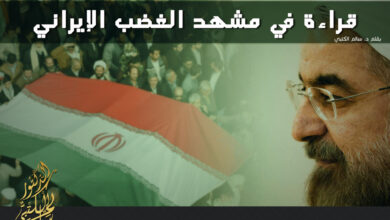
Although the mullahs do not want to sever ties with the European trio and are content to accuse them of succumbing to American influence, it seems that relations are turning towards a clash over how to handle the nuclear issue.
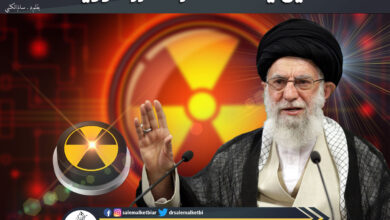
The Iranian Parliament’s Committee on National Security and Foreign Policy has passed a bill to be submitted to parliament, asking the government to suspend the voluntary application of the additional protocol. This follows the recent decision of the International Atomic Energy Agency (IAEA) Board of Governors, supported by Europe, which condemned Tehran.
The IAEA Board of Governors adopted a resolution presented by the UK, France and Germany condemning Tehran and calling for greater cooperation, as well as the opening of two sites suspected of nuclear activities. This was denied by Tehran.
Although the mullahs have become accustomed to the threat of withdrawal of the additional protocol, which allows IAEA inspectors to conduct sudden and full-scale inspections of Iranian nuclear sites, since the signing of the nuclear agreement, the agency’s ability to verify Tehran’s nuclear activities has greatly increased.
If the threat is declined and Iran effectively withdraws from the protocol, the Iranian crisis could enter a new phase in which Europe will not play a supportive role in maintaining the nuclear agreement while the mullahs are rigid and want to blackmail the European trio.
Iranian-European relations are undergoing a test of mettle in which European diplomacy is expected to proceed in a more assertive and rigorous manner in order to respond to Iran’s growing challenges for regional and global security and stability.