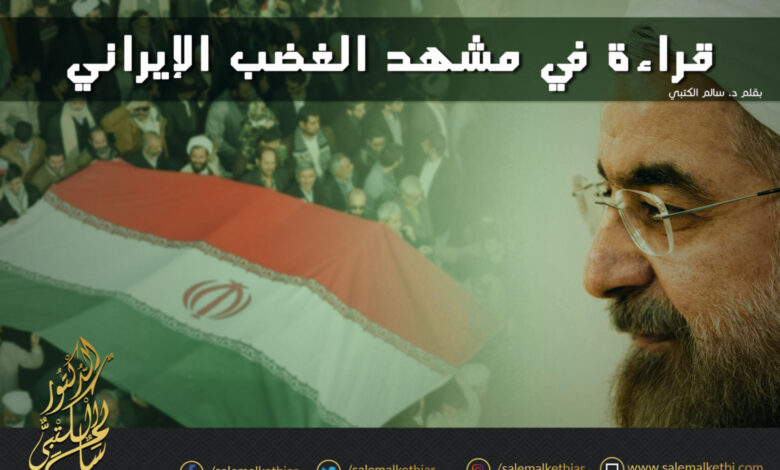
We cannot imagine, should the Iranian regime fall, seeing Khamenei and Rohani flying to another country. No country in the world would want to host the mullahs. Khamenei is not Khomeini, who was hosted by France, nor is Rouhani like the Shah of Iran. The Iranian regime is not a conventional regime that would collapse under given circumstances. It is a theocratic regime with a militarist and security-centered ideology rather than a deep State.
The mullahs depend not on a protection of the army or the MoI, but on powerful military and security arms such as the Basij,made up of over 100,000 militiamen loyal to the clerics and IRGC commanders. Demonstration would not be effective on these forces as they could resort to killing and escalating violence against the demonstrators, careless about the numbers of victims.
The mullahs would not give up easily. The regime’s officials are speaking about anti-revolutionary elements, although their leaders often refer to the notion of the State in their statements. Thus, the system is still adopting the revolutionary approach, failing every time to transform the country from being in a revolution to being a State. Although many researchers debate the nature of its policy, Iran has not been acting as a State since 1979.
The current Iranian revolution is a popular one. It’s been called the Egg Revolution, as it did not break out because of external factors as claimed by the mullahs, but because the prices of eggs went up after the government got rid of millions of chickens infected with bird flu.
Moreover, the demonstrators raised slogans mostly protesting against political corruption, high prices, the fears of young people and anger at the financial expenditure on external interference, coupled with a fear of isolation that’s worse than it was before the signing of the nuclear deal.
Some observers compare the current wave of anger in Iran and the 2009 unrest following the manipulation of the presidential election. But this comparison is missing a key and pivotal element: the impact of what happened in several Arab countries since 2011. Young Iranians saw that regimes have been overthrown under the pressure of ongoing demonstrations, international isolation and demands to abandon power and loss of legitimacy.
The Iranian regime has not been giving any attention to the international pressure to bow out. But it did the same thing when it tried to export the idea of having popular support, but since that failed, it turns out that international pressure works.
The Iranian people are aware that the oil revenues are spent on the sectarian militias in Yemen, Iraq and Syria, unable to see why their regime is engaged in many wars and conflicts. Millions of Iranians are left suffering from poverty and hunger while the corrupt IRGC generals have billions of dollars of wealth from illegal profiteering and the monopoly of the Iranian economy to their advantage.
Within a few years, Iran’s inflation rate has reached about 40%. The Iranian people don’t see any prospect of improvement after the mullahs failed to fulfill the promises they made them after the nuclear deal.
The IMF has already called on to officially declare some Iranian banks as bankrupt because of the worsening debt problem, and called for major economic reform to address the impact of years of economic recession. But corruption keeps increasing especially with the kleptocracy’s and the IRGC’s monopoly of the Iranian economy.
On the backdrop of dark economic and social problems, the future of the regime looks uncertain. But sooner or later, the regime will fall and time and the determination of the Iranian street demonstrators are determinants.