The policy of the Kingdom of Morocco, under the leadership of His Majesty King Mohammed VI, has demonstrated its great capacity to respond wisely to the changes that have been taking place in the North African region since 2011. These changes are not limited to one part of the Arab world, but include many countries in both East and West.
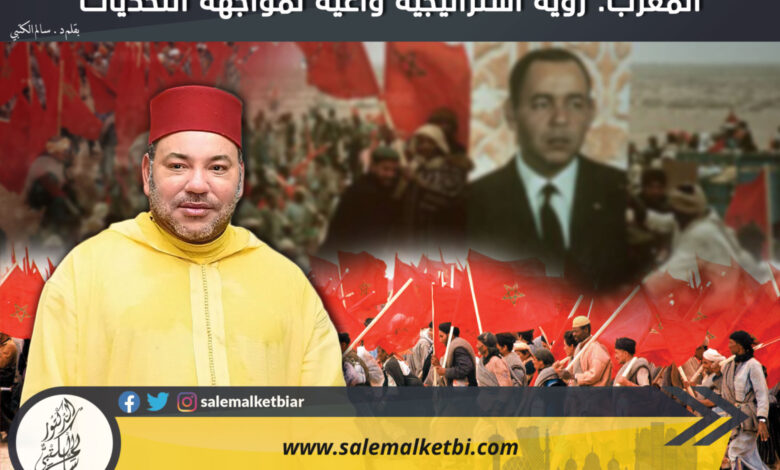
The speech of King Mohammed VI on the occasion of the 44th anniversary of the Green March presented the pillars of Moroccan policy on various internal and external subjects. The Moroccan question of the Sahara is of course at the forefront.
In his speech, the king called for “a realistic, practical and consensual political solution” to this just and legitimate Moroccan cause. This solution is in line with the decisions of international legitimacy, namely the United Nations approach and Security Council resolutions, through the adoption of the autonomy initiative.
The initiative is confirmed day after day that this is the only serious and sincere strategic option that will make it possible to reach a fair settlement of this issue within the framework of respect for the territorial integrity of the Kingdom of Morocco.
The fact that 163 states do not recognize the imaginary entity in the Moroccan Sahara means that talking about alternatives to autonomy is a waste of time and effort.
Given the centrality of this national issue and its priority in Moroccan strategic thinking, the spirit of the Green March continues to play a central role in understanding the relationship between leaders and the Moroccan people.
The march continues to embody “the best expression of the strong cohesion between the throne and the people,” as His Majesty King Mohammed VI said in his speech.
One of the most important advantages of the spirit of the Green March is that it continues to strengthen the brilliance of Moroccan identity and contributes to the deepening of loyalty and national belonging. This renewed spirit is mobilized because it still inhabits the collective Moroccan consciousness. It is a driving force for development challenges.
King Mohammed VI’s speech addressed issues revealing the interest of leaders in various aspects of the life of the Moroccan people. Some parts of the speech focused on the development of basic infrastructure in various parts of the kingdom.
Stressing the close relationship between strengthening the geographical link between the different regions with advanced road networks and promoting development and economic recovery, in particular in the field of exports and tourism All this was linked to the equitable distribution of wealth in a clear strategic effort to consolidate social justice and close any regional development gap.
This is what Her Majesty emphasizes by saying: “Morocco as we want it must be based on harmonious and integrated entities, which also benefit from infrastructure and major projects, which should benefit all parties.”
Regional development depends mainly on highlighting the comparative advantages of each geographical area.
Development planning is based on the idea of integration and takes into account the specificity of each region and the nature of the economic activities centred there so that the Moroccan economy can benefit from all these elements, which are supposed to contribute to the Kingdom’s GDP.
In his speech, His Majesty King Mohammed VI struck a solid balance between vital issues. His Majesty stressed that “the achievement of balanced and equitable development in all parts of the Kingdom is only matched by our commitment to building strong and solid relations with the Maghreb countries.”
These are indeed two important strategic challenges for Morocco in the coming period. Wise leadership was right to emphasize the importance of balancing efforts on these two issues, not only for their importance, but also for their interdependence. The development and promotion of the economy can be a driving force for the promotion of cooperation and integration in the Maghreb.
In his speech, His Majesty highlighted several factors that confirm that the situation in the Maghreb offers many opportunities.
Maghreb interaction and cooperation should play a vital role in exploiting the development opportunities available in these countries and in building effective Maghreb partnerships with both Northern Europe and Southern Africa.
It is also necessary for the Arab collective system to play a vital and effective role for the Maghreb countries in restoring the system of security and stability in the Arab regional body, which is facing stormy dilemmas.
The construction of Maghreb unity and integration is necessary to face major international challenges, in which the major geopolitical entities play a leading role in the management of policies and relations.
As a researcher, I fully support His Majesty King Mohammed VI’s proposal to identify the impasse and low development as a common enemy of the people of the Maghreb. I consider it to be the real enemy of most Arab people. This enemy, combined with widespread corruption and waste of resources, is the real reason for the lack of security and stability in some of these Arab countries.
Her Majesty’s speech on the occasion of the Green March anniversary is an extension and confirmation of Her Majesty’s speeches on other national occasions.
These include activating reforms and monitoring development plans and projects, honouring the interests of Moroccan elites and institutions for the continuation of work, and “the need to achieve results that have positive effects on the lives of citizens” by performing all tasks and fulfilling their role and ensuring the effective implementation of decisions and plans.
In his speech to parliamentarians, he talked about “positive competition” in order to serve citizens and meet their aspirations.
Her Majesty called on parliamentarians to “monitor what the government is doing on all matters related to the management of public affairs in various areas and take into account the extent of its response to the real concerns of citizens.”
Year after year, the Green March remains an inspiration from which the Moroccan people and leadership draw strength and patriotic spirit to continue the process of development and construction, while preserving the principles and territorial integrity of the Kingdom.