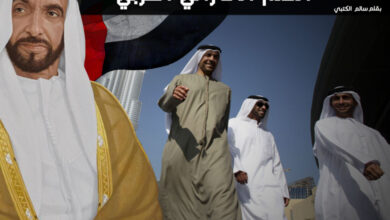
In its history, the United Arab Emirates has always maintained rational, credible diplomatic positions that respect the rules and principles of international law. The late Sheikh Zayed bin Sultan Al Nahyan instilled the virtues of this diplomacy into the UAE political spirit and collective consciousness.
The UAE’s regional policies reflect the seriousness of the country’s efforts to preserve Arab and Gulf national security and the remainder of the Arab collective security system, which has been under malevolent plots since the unrest that broke out in 2011.
Yes, the UAE has indeed had a role to play in several Arab crises. But it is a role that all Arabs who care about the interests of their country and other Arab nations should be proud of.
The United Arab Emirates stood with all seriousness by the side of Egypt’s big brother country until it had overcome its test, surpassing the plots led against it by some regional and Arab plotters.
Today, the UAE stands behind the stability of Libya, Sudan and is working to free our brothers in Yemen from Iran’s proxies and supporters. The surrogates planned to take control of an history-rich Arab country, exploit its capabilities and strategic position, and make it a thorn in the side of Arab national security and the Gulf. But their plans were thwarted by the Saudi-led Arab coalition.
Yesterday, the world once again witnessed the integrity of the UAE.
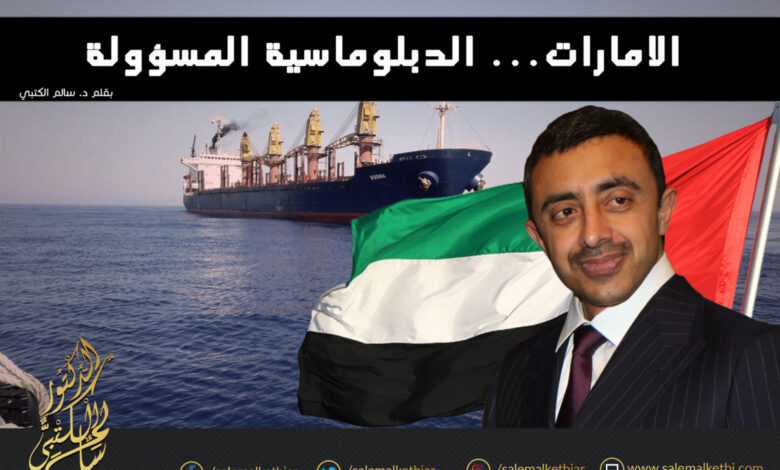
Foreign Minister Sheikh Abdullah bin Zayed Al Nahyan said that the attack on four trading ships last month was “state-sponsored,” noting that the UAE has not yet pinned down on a particular country because it did not have enough evidence to substantiate its claim.
“The evidence we have gathered, as well as our colleagues from other countries, clearly indicates that the attack came from outside the ship, below the water level,” said Sheikh Abdullah. “The technology used, the timing, the information gathered before the operation and the choice of targets were precise enough that the ship did not sink and leak out oil. »
The full transparency with which His Highness the Minister of Foreign Affairs presented the results of the ongoing investigations further reinforces such honesty on the part of the UAE. Knowing the sensitivity of current regional situations, the UAE is mindful of identifying responsibilities and avoiding any confusion.
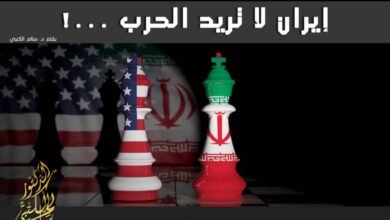
Transparency has destroyed everything the mullahs’ regime has repeatedly claimed about a conspiracy in which the UAE is allegedly involved to wage war on Iran.
If these Iranian allegations were true, the UAE would not have waited a moment to point the finger at the Iranian regime. The aggressive behaviour that this country adopts makes it easy to accuse it of all the crimes committed in the region.
Furthermore, the United States had accused the Iranian regime of this crime and provided evidence of its involvement in the recent attack on two oil tankers in the Gulf of Oman.
This objective attitude of the United Arab Emirates reflects the wide moral difference between the UAE leaders and the Iranian mullahs.
The Emirati leaders have an ambitious and forward-looking development project that mobilizes all the resources, income and energies of their countries and even the energies of the citizens of other countries in the process of human and civilizing development. They look after the well-being of the Emirati population and contribute to the well-being of other nations by providing opportunities and jobs for millions of expatriate workers. For their part, expatriates are helping to build the future in the UAE and, to the same extent, contributing to the prosperity of their countries through the billions of dollars they remit each month from their salaries.
On the other hand, the mullahs have wasted billions, perhaps trillions of dollars, of the wealth of the Iranian people on failed plots and plans for sectarian expansion. They are bringing in mercenaries from several countries to carry out a conspiracy that is the mainstay of the political spirit of this terrible regime.
The differences have more to do with the human side than with the political side. There are radical differences in the value system underlying the political hierarchy in the United Arab Emirates and Iran.
What the late Sheikh Zayed bin Sultan Al Nahyan left us is quite different from what was left by those who swallowed their pride when they stopped their war against Iraq. Zayed, the generous man whose humanitarian actions have affected the whole world, differs essentially from the mullahs and their abominable Khomeini ideology in a country that has not yet transformed itself into a normal State.
Khomeini still lives in the minds of his mullahs, with all his hostility towards his neighbours and his hatred of everything Arab. His dream was to dominate the Middle East and spread his failed revolution among the Arab people who really just dream of a decent and stable life.