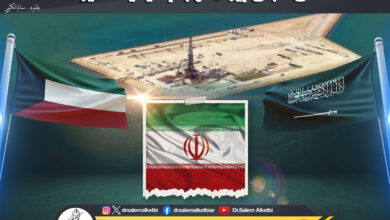
Many people are mistaken when they think that the pressure of American attitudes about Iran’s missile program and the attitude of Washington towards the frozen Iranian funds, are the reasons behind the return of the tone of threatening to the Iranian political discourse.
Certainly, the threat launched by the deputy commander of the Iranian Revolutionary Guards, Hossein Salami, about closing the Strait of Hormuz to the American ships, is not a return to Old Iran. The changes and transformations that happened last year at the level of the Iranian political discourse toward the West are nothing but a kind of “political dissimulation” or an act of hiding behind the mask of a mild lamb, while the truth confirms that what is behind the mask is only cunning wolves that are good at deception, fraud and political hit-and-run.
By virtue of my modest knowledge of politics and its corridors and requirements, I do not think there is a problem in mastering the art of political maneuvering, this is the most basic political rule of the game in international relations. But the problem lies primarily in “deception” and lying and distorting facts. These attributes can affect the credibility of States and their leaders, and there are positions that do not allow for political auction and media rhetoric, including countries’ orientations and foreign policies, either toward compliance with the law and international rules and norms, or toward the violation of all that and behaving according to the logic of the law of the jungle, which causes confusion and cancels the logic of wisdom.
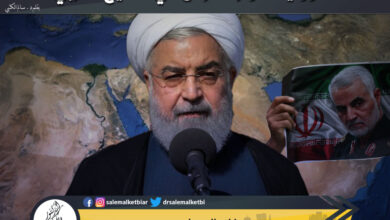
I realize that Iran is good at role distribution in its foreign policy, as the Iranian scene varies from radicals to those classified as “reformers”, and between these two categories there are common denominators, which are the constants of the revolution and the convictions of the mullahs and their interests, which are not a subject to compromise or neglect. In light of the above, one can understand the disparity in the political discourse of President Hassan Rohani, and Iran’s diplomatic institutions on the one hand, and the radical escalating statements of the Revolutionary Guards leaders on the other hand.
Rohani, on his part, speaks with a quiet tone about the West and the United States, particularly since the signing of the nuclear deal, and even when he senses a threat to the fate of this agreement from the American side, he deals with it in a language of diplomatic rhetoric, reminiscent of the discourse of former Iranian President Mohammad Khatami, leaving escalation and threats and intimidation to the ideologized military commanders in Iran’s Revolutionary Guards.
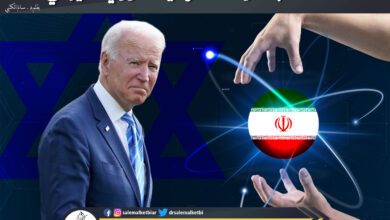
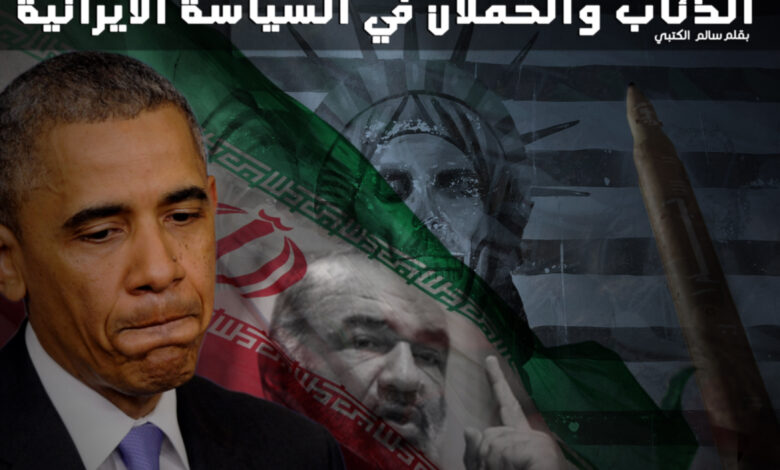
To well understand the details of the evolution of the relationship between Iran and the United States, we have to retrace the events regarding this relationship. President Barack Obama has been in a difficult position over the last months of his second term, and he is no longer able to defend the idea of rapprochement with Iran in the face of the attacks befallen on it inside the United States, and on the part of both the Democratic and Republican parties. What exacerbates Obama’s crisis is that Iran has put itself in the same box with his political opponents and behaves in the same way they do, and is seeking to use the “lame duck” status of the US President to draw new strategic gains, rather than helping him and giving him information that promotes his internal position. When Iran decides to go ahead with the development of the ballistic missile program and continues to conduct tests within this program, claiming that the nuclear deal does not include what states the freezing of the program, it therefore behaves according to the opportunist merchant logic, which may bring quick guaranteed gains, but fails to build the required credibility in the market.
It is true that the nuclear deal does not include clauses stipulating the freezing of Iran’s missile activities and programs, but the political alignment base is not consistent with the activation of this program in a politically sensitive time, and at a “bottleneck” stage for Iran. Upon the issuance of the decisions to implement the agreement and the lifting of international sanctions imposed on Iran, parallel instructions were issued by the mullahs to conduct missile tests, thinking that the game was over and that the ball had moved to the Iranian court, and this was a bad strategic estimate of the matter and even a reckless one, because restoring and building confidence between Tehran and the West will not be based on the ground of Western economic interests and the amount of the shares of Western companies from the awaited economic and commercial Iranian “cake” only, but is also based on Tehran’s regional and international policies during the period of “testing the waters”, which the mullahs were hasty in resolving with the reckless language they are accustomed to, as nature defeated nurture, when they ignored that the decision to raise the sanctions does not mean automatically the transfer of the frozen funds to the Iranian channels and banks. This Iranian political recklessness caused the loss of billions of dollars and returned the ball to possibly a rear box, if not to the first box of the crisis.
Has Iran made the “mistake of smart people” as the Arab saying goes, or is the renewed escalation toward the United States expresses an internal rejection on the Iranian part and a victory for the militant forces of the Iranian arena? Is the return of threatening represents just a hint to the return to the “old ways” or has Iran not found in the nuclear agreement what achieves its ambitions and desires so it wanted to play according to the rule of “win everything or nothing”? Or is Tehran anticipating the next US administration approaches, regardless of the identity of the president who wins the next election, and wants to exercise maximum pressure through unlimited escalation in accordance with the policy of “brinkmanship” in order to draw new gains and concessions from President Obama before his leaving of the White House?
What concerns us as Gulf and Arab people primarily is that the logic of power is not absent from the minds of policy-makers in Iran. Indeed, the mullahs spring from the ground based on the threat of violence and the use of hard power, and only respect the one who has the ability to curb their hard power. Their marathon negotiations with international powers were only a product of the Iranian strategic estimates that Tehran may lose all its nuclear facilities and capabilities, and even more, its ruling system may be ousted in the event of continued hostility with the West, and this was the real cause behind the “strategic patience” and the resorting to the diplomacy of “carpet weaving” drawn from Iran’s historical heritage in order to overcome real trouble, no more no less.