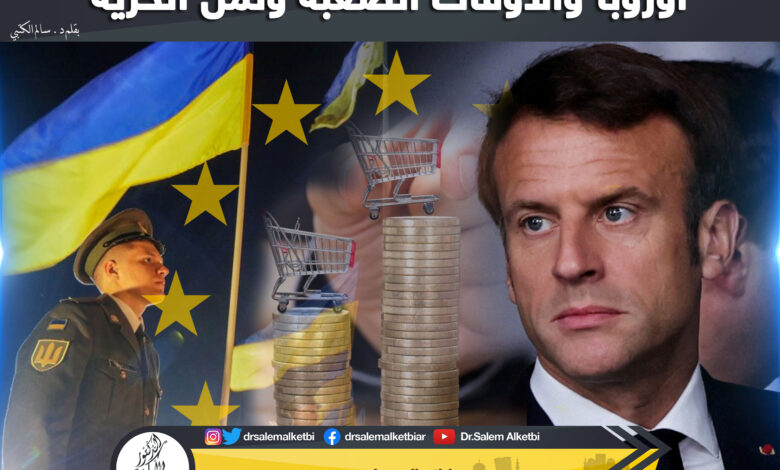
Recently, warnings and appeals from European leaders to their citizens to prepare for the difficult times ahead have been on the rise.
French President Emmanuel Macron recently stated that tough times are ahead as French households struggle with inflation due to disruptions in production chains, rising energy prices, and interest rates with no improvement in sight – just a few of the many things coming their way.
Macron said what is unfolding is a major transformation that marks the end of an era of abundance, whether it be in the form of money, tech products, raw materials or water. Josep Borrell, EU commissioner for security and foreign affairs, also said hard times lie ahead and called on Europeans to “must be prepared to pay the price of defending our common freedom and security.”
“Yes, the coming weeks and months will be very challenging. First of all for Ukrainians, who are paying with their lives, but also for all other Europeans. But we cannot reduce our commitments or lessen our resolve, even when the price goes up. At stake is the future of a fellow democracy and the wider principles of European and indeed global security. We must be prepared to pay this price: the price for our common freedom and our common security.”
This speech will certainly not be received warmly by European citizens
Macron’s statements, made at the weekly cabinet meeting and broadcast live, were only answered by several organizations with a call for mobilization and strike later this month. Opinion polls also show declining support among the French public for pro-Ukraine policies against Russia.
A French radio station recently conducted a poll on its website about French support for Ukraine in the war against Russia. Some 87% of respondents opposed continued military support for Ukraine, a mere 8% voting in favor. No one in Europe would entertain the idea of going through rough patches for what the West calls the price of freedom.
But what will happen in reality could be the end of many things. The reverberations of the crisis in Ukraine are there: recovery from the coronavirus pandemic has not materialized only to coincide with the worst drought in Europe in nearly 500 years, according to the Joint European Research Center.
More than half of the EU (64%) is affected by the drought, cutting into the lives of Europeans in a variety of ways. The result is a slippery slope effect across the EU that will worsen over time. France and Germany want to end the war in Ukraine diplomatically as soon as possible.
But this goes completely against the desire of Central and Eastern European countries to continue to support Ukraine against Russia. This position aligns with the US stance. So, for the time being, Paris and Berlin are sticking to the line in order to preserve European unity.
But to what extent will they remain silent and put European interests first? The fallout from the Ukraine crisis will not stop in the short term, even if the war does today. The war, which according to the World Bank will cause the biggest sudden increase in commodity prices since the 1970s, will not end with a stroke of the pen or the signing of a political settlement agreement.
The war’s significant economic and humanitarian toll on a global scale will be slow to be overcome. The withdrawal of Western companies from Russia, the supply chain crisis, and rising energy prices are factors that will not be easily remedied.
In addition, bad weather in China and North America is exacerbating the effects of the Ukraine crisis. Ahead are not only trying times for European societies, as politicians expect. They also await the leaders. This is a momentous test for the EU as the umbrella under which a united Europe has come together.