I can now write mostly sure that before the G7 summit is something, and after the summit is something as far as the Iranian crisis is concerned. The rapid developments in this summit came as no surprise to me and many specialists in Gulf affairs.
The scenario of the deal is on the table and the option is inevitable for all parties. What happens, as I said in previous articles, is that it is chugging along to the satisfaction of each party.
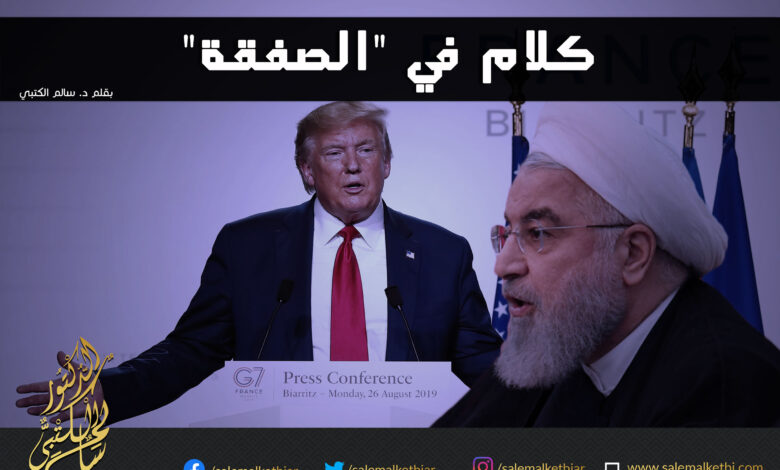
After the exchange of threats and Iran’s stated rejection of dialogue with the Trump administration, the Iranian and US sides, with the help of French President Macron, appear to have climbed down. The US president is ready to meet President Hassan Rouhani in “the right circumstances.”
The Iranian response came at a good clip. Rouhani, for his part, said he was ready to meet anyone if he felt it would benefit Iran. “If I am sure that attending a session or having a meeting with someone will help develop my country and solve people’s problems, I would not hesitate to do so.”
His words are clear and need no analysis or explanation. We remember President Trump’s summit with North Korean leader Kim Jong Un, when the two sides moved from trading barbs to praising and welcoming a bilateral meeting.
For a similar scenario with Iran, what remains is for Tehran to approve to meet with the U.S. president and fix the time and place.
The response may take a little or a lot of time. This depends on the Supreme Leader’s government surrogates getting a green light from the top of the power pyramid who has the final say in the country higher affairs.
The difference between the North Korean and Iranian situations is that in Pyongyang there is one man who threatens, calms and talks. There’s also one man in Iran who’s in charge. But he does not always appear in the foreground, but prefers running the game behind the scenes.
He distributes the roles very carefully in order to extract the maximum strategic gains from the other side. Thus, he has the opportunity to maneuver, circumvent, and undermine any understanding or agreement reached with the Iranian president or his foreign minister.
What is important now is that we have new developments in the Iranian crisis. Following the G7 meetings and Mr. Zarif’s surprise visit to the meeting, President Trump now has what he calls “good feelings” about a possible new nuclear deal with Iran.
More important than these “feelings,” “Iran is not the same country it was two and a half years ago when I came into office,” Trump told reporters at a joint G7 press conference with French leader Emmanuel Macron.
This certainly means that some “understanding” has been reached about the main outlines of the deal. Trump’s statement means that he accomplished the mission, subdued the mullahs’ regime, and achieved the goal behind economic sanctions. He is now fully prepared to sign an agreement, now that he has the case to convince the American people of the planned agreement.
It is also understood that there was concurrence on the substance of the agreement. What will happen next is an agreement on the details after obtaining Iran’s final opinion.
Of course, the approval of Iranian Foreign Minister Javad Zarif does not imply the approval of the Supreme Leader. The ball is now in the Iranian court. Khamenei has yet to launch the preparations for the deal.
So, is a scenario of understanding between the West and Iran in the 2015 deal repeating itself without any role for the Gulf states? Probably, the voice of the GCC countries still needs a strong boost to be heard from major Western capitals.