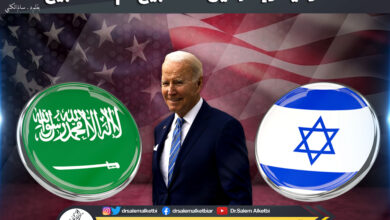
Since US President Donald Trump took office, many things have happened that have taught us to look beyond his words and rhetoric. The president has a high degree of political flexibility and the ability to move beyond the positions and directions he takes, establishing new strategic paths in line with his vision to achieve his goals.
Some make a mistake by forming an analytical view of the scenarios of the crisis between the US and Iran based on President Trump’s remarks in Tokyo. The statements did not imply a retreat from all his tough positions towards the Iranian regime.
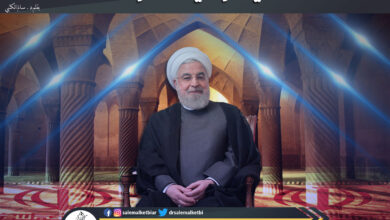
Trump has specific intentions, the most important of which is to force the Iranian regime to comply with the law and sit down to negotiate and accept the terms of the White House. He is working to achieve his objectives either through military mobilization and escalation or through calling for negotiations and keeping open doors as part of a carrot and stick strategy.
He does politics in his own way, not following the rules of the game as perceived by experts and analysts, but at a very fast pace between escalation and calm. Political analysts most of the time fail to follow the rhythm of his statements and explain the transition from calm to escalation and back.
The Iranian side is betting on President Trump’s unwillingness to go to war because Iran believes it will compromise his chances of winning a second term in the event of a military conflict with Iran before the year of the elections. But this bet is a sort of uncalculated risk.
President Trump has done quite a good job in taming and cornering the Iranian regime no previous president had done before. Trump actually made the Iranian regime sense a real threat to its very existence. This prompted it to send its envoys to several countries, calling for the signing of a “non-aggression” agreement with neighbouring countries and other attempts to absorb the effects of unprecedented US pressure.
Even before the ban on Iranian oil exports came into effect on 2 May, Iranian oil exports fell to around 400,000 barrels per day, losing about 1 million barrels. Iran was betting on the positions of China, Turkey and India, which had rejected US sanctions against Iran. But they ended up complying with the US decision and stopped buying Iranian oil.
The truth is that President Trump is pressing Iran quite smartly. US media reported that he postponed new US ban on Iran’s petrochemical exports, as planned for the second half of May. The idea was to give the Iranian regime an opportunity to consider negotiations before denying the Iranian Treasury the right to export Iran’s second most valuable commodity after oil.
Against the backdrop of Trump hot and cold approach to Iran, it cannot be said that the war scenario has been ruled out. Anything can happen.
Strategically speaking, starting the confrontation with Iran will obviously require proactive arrangements as well as political, military and logistical preparations that can take up to several months. To give the opportunity to talk about negotiations and whatnot does not mean to give up on confrontation.
Everything that has been going on is to make a case that would convince the US Congress and public opinion that all means of dialogue and negotiation with the Iranians have been exhausted before the administration takes a step forward towards a military escalation.
What makes the war scenario likely is the attitude of the Iranian regime itself. The Iranian Revolutionary Guard has insisted on the provocation and threatening statements. The most recent confirmation is from the Deputy Commander of the Guards, Admiral Ali Fadavi. He said that his country is supporting the Houthis as much as possible in Yemen and that what prevents Iran from sending forces to Yemen, as it is the case in Syria, is the siege. More defiantly, he said: “We are not present in Yemen, and if we were there, the Houthis would have controlled Riyadh. Saudi Arabia knows that if Iran can reach the Houthis, the situation would have been different.”
How can security and stability prevail when such leaders nourish this much hostility and hatred? How can the world buy into the statements of Iranian politicians on non-aggression agreements or the claim of a will to establish balanced relations when such heavy-handed statements are made?
In fact, the tension scenario will persist unless the Iranian regime renounces its behaviour, regains political rationality and demonstrates its commitment to UN principles and responsibility in maintaining international security and stability.