The era of intense war between the fourth and fifth generations witnessed a retreat of cyber threats.
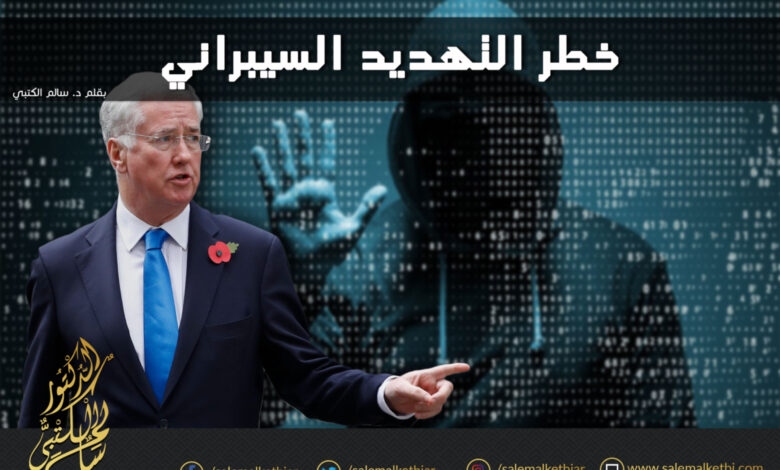
The UK’s Minister of Defence brought the cyber threat back to the spotlight.
Gavin Williamson, British Defence Secretary, warned that Russia could “kill thousands of people” by disrupting UK’s infrastructure. The minister told the Daily Telegraph that Moscow was spying on energy supplies, which if cut off could cause chaos in the country. It is the actual threat that the country faces at the moment, he said.
This important statement brings back the cyber threat to the spotlight after being forgotten due to the growing threat of terrorism.
The return of the cyber threat does not mean the retreat of the threat of terrorism. Each of the two has a specific nature and requires specific plans and strategies to maintain national security in various countries.
The cyber threat is an inevitable priority to the UK. The UK’s submarine lines supply the country with electricity and gas that can be subject to this threat. British Defence Secretary said last November, that Russia had been researching these types of connections. These plans are potential Russian strategies against its opponents in future wars.
“The plan for the Russians won’t be for landing craft to appear in the South Bay in Scarborough and off Brighton beach,” said the Minister. “They are going to be thinking, ‘how can we just cause so much pain to Britain?’. Damage its economy, rip its infrastructure apart, actually cause thousands and thousands and thousands of deaths, but actually have an element of creating total chaos within the country,” he added.
The head of the National Cyber Security Centre in the UK, Ciaran Martin, confirmed that Russia had already organized attacks against the media, telecommunications and energy sectors in the UK during the last year.
The Russian threat did not stop at the military level. Boris Johnson, the UK Foreign Minister, demanded Moscow to stop destabilizing Europe. He said,”Britain will retaliate to any future cyber attacks”. Johnson riled Russian officials by likening Russia to the ancient Greek city-state of Sparta. He said that Moscow was “closed, nasty, militaristic and anti-democratic – like Sparta.”
The Kremlin believes that these statements are a justification to increase UK’s military funding. The Russian Minister of Defense, Sergey Shoygu, stated that the NATO activities have increased on the Russian borders in the recent ten years. Russian Foreign Ministry mocked on the statements of the British Foreign Minister. The statements thrilled Russian laughter and are not disturbing because they were issued by Boris Johnson, said Spokeswoman Maria Zakharova.
A war of words between Russia and the UK reflects that tension has become the only feature of relations between major powers. Concern and fear are no longer linked to the development of conventional military and nuclear capabilities. Cyber threat capabilities have a growing capacity for economic destruction.