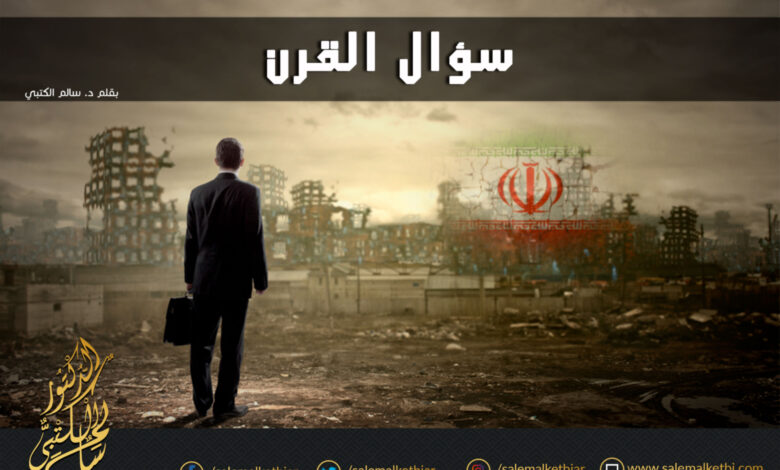
In an opinion piece recently published by the Sunday Telegraph, Janet Daley highlighted an important issue about global security and stability: How can the world deal with a rogue State that defies international law and spreads chaos?
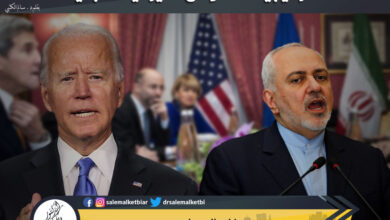
The question came against the background of Iran’s violations of the international law. The author thinks that Western countries are unable to formulate a unified solution to this fundamental issue. Daley believes that the nuclear agreement between Iran and the superpowers did nothing to address Iran’s support for terrorism both regionally and internationally. The author also thinks the agreement did nothing to limit Iran’s development of ballistic missiles capable of carrying nuclear weapons. The deal gave Iran the right to produce these ballistic missiles. She believes that the world knew the agreement’s main objective was to gain more time.
The lack of international cooperation has played a major role in deepening the crisis in dealing with Iran. The Trump administration dealt with Iran superficially. It only addressed some Iranian officials’ statements without looking at their ideological framework and strategic goals. The deal came as an attempt to defer the Iranian threat for a decade. Its aim was to achieve two basic goals. According to Niall Ferguson, the first goal was to improve US and its allies’ strategy by 2025. The second goal was to prepare for the opportunity to overthrow the mullah’s regime. A supposition concluded that a civilizational conflict will result in the decay of this regime, as happened to the former Soviet Union. The plan was supposed to spread support for the alleged reformist trend within the regime and strengthen it at the expense of the hardliners. This would result in a leadership that will reconcile with the West, pushing the country towards a radical change. However, this assumption ignored the balance of power inside the mullahs’ regime and initially recognizes the idea of reformists and hardliners inside the regime. It also disregarded the nature of this authoritarian regime, its extreme centrality and the tools of oppression and control it possesses to subjugate the Iranian people.
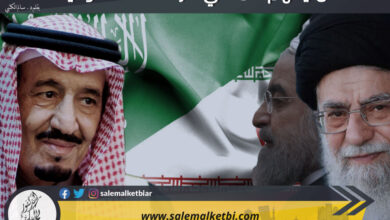
Obama had expected that Tehran will tend to rationality under the influence of the economic gains of the agreement, leading to ending regional tensions and crises. But what happened was the escalation of armed conflicts. The mullahs’ regime spent about 150 billion dollars on militias and sectarian armies instead of improving living conditions, reducing poverty and disease, education and providing jobs for millions of young Iranians. The Iranian-backed militias triggered many crises and conflicts in several countries in the Middle East. Tehran had long boasted about its occupation of four Arab capitals.
In response to the issue of dealing with rogue States, Daley said that there is an option of imposing harsh international sanctions on them. Rogue States will be thus overthrown by the people through protests or forcefully pressed by regional allies. Another option is to propose political bribes in the form of trade agreements. This option may have the mullahs’ regime to abandon its plans in return for ensuring its survival and providing the means of life for its people so that the latter does not revolt against the regime.
The writer believes that Trump has chosen to sanction North Korea. These options must be coupled with international consensus in order to pay off. China and Russia’s commitment to apply unprecedented sanctions by the UN against North Korea have had a role in arrangements for a summit between Trump and Kim. And Pyongyang has shifted its behavior.
Certain reports confirmed that North Korea has completed its nuclear arsenal, joining the nuclear club and not requiring further nuclear and missile tests. But it is likely that North Korea’s disobedience will continue to spark crises. However, the sanctions have strongly contributed to prevent this scenario.
In the case of Iran, US sanctions are already in place and will be implemented within the next few months. Washington’s allies in the European Union and other countries have shown their incompatibility with these sanctions. A third party completely rejects the American approach in dealing with Iran and puts its strategic interests above any calculations related to Iranian threats.
International relations currently witness a state of chaos. Rogue States take advantage of this situation to escape the impact of sanctions or at least to minimize their negative effects. This is not in the interest of international security and stability. Imposing security has historically been a result of international consensus and cooperation.
Security and stability can be achieved and the behavior of rogue States will be undermined if all major States agree to uphold the value of adherence to international laws, principles and covenants. Recognized International institutions should set a well-defined description of what is meant by violating international laws.