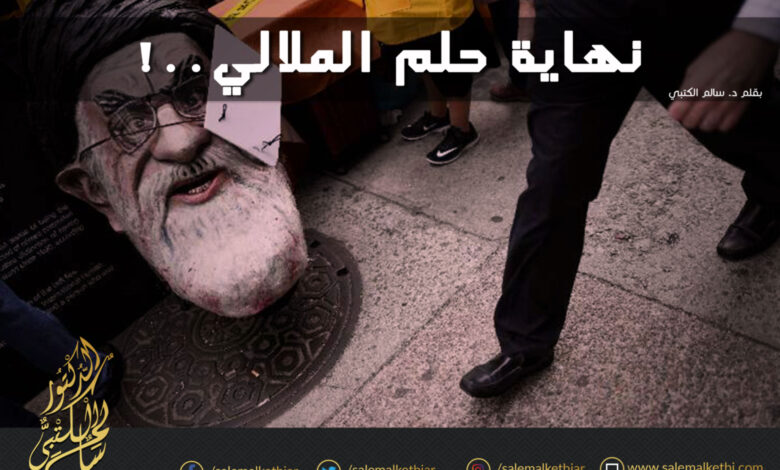
The recent events in Iran promise the end of the dream of the mullahs. If the regime does not fall tomorrow, it will fall the day after. Those who say otherwise do not know the nature of what has been going on in Iran over the past decades and years.
The crowds took to the streets to fight back against the oppressive and violent revolutionary guards (IRGC), marking a turning point in the history of Iran, especially that the protests covered all the cities in Iran.
The mullahs did not learn much from what happened in the Middle East since 2011, strangely repeating the same mistakes that led to the fall of some Arab regimes. But all the Iranian Supreme Leader Ali Khamenei could do is accuse foreign powers of providing the demonstrators with money, weapons and information platforms.
Foreign interference may have led to situations of “creative chaos” in some Arab countries. This was done through various means such as training dozens of young activists in so-called academies for change. But the situation for Iran is something else. The Internet and civil society organizations are controlled, foreigners cannot travel there easily, and arresting foreign journalists is not unusual.
Censorship is imposed over many websites by a higher council for cybersecurity, a body that tightens control over users. Iran applies the world’s most stringent restrictions on the use of the Internet and prevents access to social networking sites like Twitter and Facebook, not very different from North Korea’s total ban. Iran has already pressed for access to the data of Telegram users, a service used by a quarter of the population, to censor the content of messages. Telegram was banned when the company didn’t cooperate with the authorities on user data, finding popularity among young Iranians for that reason. It has been used in many calls for demonstrations, especially among school students. The use of social media to express anger and rally demonstrators has nothing to do with foreign interventions.
On the wrong side of history, instead of addressing the mistakes in its internal policies, the Iranian regime is thinking backwards.
The mullahs pushed for the establishment of a local network instead of loosening the restrictions on freedoms and connecting to the World Wide Web. The block of social networking services only increased their usage, leading to a “Streisand effect”.
The ambitions of the mullahs are soon coming to an end. Set to fail from day one, Iran’s anachronistic regime has long forgotten about the millions of Iranian youth longing for an open and dynamic modern-day country.