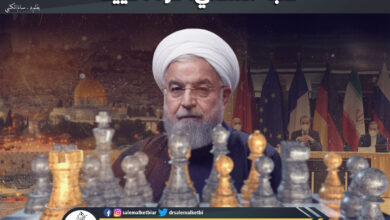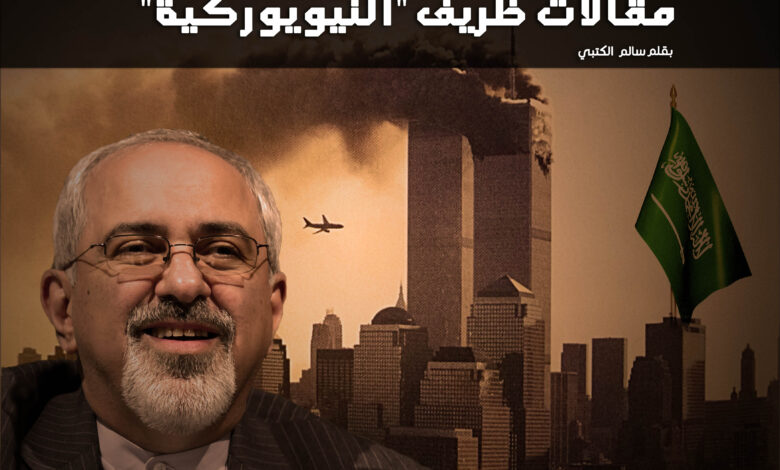
A few days ago, Iranian foreign minister, Mohammad Javad Zarif, wrote an article in New York Times, which did not mention the ‘Great Satan’, nor did it talk about the Iranian regime’s usual accusations to US, but spoke politely about the ‘free world’ being threatened by what he described as ‘Sunni militancy’.
Zarif knows that his article, which was published during the commemoration of the attacks of September 11, 2001, may be well-received by an important portion of the American public opinion. But he ignored that such temporary reception will not succeed in ‘building a case’ as it is known in political science, especially that Zarif played the role of the devil’s advocate unconvincingly, only repeating flimsy allegations and illogical analyzes. Also, he did not find it embarrassing to incite the United States against a Muslim country despite Iran’s self-proclaimed defense of the Islamic nations and countries.
Zarif and the Iranian mullahs know that the political climate in Washington may be favorable to undermine the Kingdom of Saudi Arabia at the moment, so they did not miss the opportunity to attack Saudi Arabia through the American media outlet.
Strangely enough, Zarif did not find it wrong to accuse Saudi Arabia, as usual, of supporting militias and spreading Wahhabism, the ‘ideology’ embraced by the armed terrorist movements around the world, he claimed. The problem, Zarif adds, is not the conflict between Shiites and Sunnis, but between Sunnis and Wahhabis.
His conjectures cannot deceive a young child’s mind, let alone the ‘Western mindset’. And where is the Wahhabi Sunni conflict Zarif is referring to? If the Americans cannot believe his lies, how can he explain the Shiite militias causing destruction in Iraq, Syria and Yemen?
His article also revealed that Zarif can convince diplomats with his lies, but he cannot convince the general public because the arguments he provides are weak, not to say spurious. He argues that Saudi Arabia adopts a vision based on a ‘wrong’ assumption that ‘sowing chaos in the Arab world will weaken Iran,’ — is that so? Personally, I don’t think so. Saudi Arabia, or any of the GCC countries, never initiated regional chaos. Everyone knows the responsible for spreading disorder in Iraq, Syria, and Yemen and tried to extend its sphere to other countries, including Saudi Arabia.
The article of the Iranian Foreign Minister Javad Zarif is part of a public relations campaign for polishing Iran’s reputation in the US media, a campaign based on the active effort of the Iranian lobby in the United States.
Zarif is falsifying history when he says that Saudi Arabia is trying to revive Saddam Hussein’s model in Iraq. His claim confirms that the Iranians are living in the past, being haunted by the ‘ghost’ of Saddam Hussein, and acting on the bitter memories of that bygone era entrenched in their minds, which explains their determination to wreak revenge from the free people of Iraq, specifically from the Sunnis, to whom Saddam Hussein belonged.
Speaking of Saddam Hussein, Zarif revealed the subconscious motives of the Iranians towards Iraq. Revenge/retaliation is the cornerstone of their policy towards this Arab country, and they want to erase the memories of that era from the memory of the Iranian people to take revenge from the Sunnis of Iraq and then occupy its territories.
Zarif demands the United Nations to stop the financing of extremism and to investigate the channels that are used to transfer funds to terrorist groups, we add our voice to his. We want that investigations uncover more scandals and crimes in which Iran was and still is taking part. It seems that the man did not read the investigations that have condemned Iran’s leaders and politicians of bombings and terrorist operations around the world.
The article of the Iranian Foreign Minister Javad Zarif is part of a public relations campaign for informational polishing of Iran’s reputation in the US media, a campaign based on the active effort of the Iranian lobby in the United States. But it is unreasonable to refer to allegations and accusations his own country is charged with, nor is it prudent to try to pass the buck. Terrorism and Iran are inseparable. How can you, Zarif, convince the world that Iran has turned overnight into a defender of security, stability and anti-terrorist countries? Such media efforts may succeed in alleviating the charges against you, but it is utterly absurd to try to achieve two goals in one article: polishing your reputation and distorting the reputation of others.
Zarif needs to remember that the world knows Iran is a theocracy, not a democracy as Iran’s rulers are holding. The number of ‘turbans’ in all positions of the state should be enough for everyone to know that the Iranian regime is theocratic. Trying to play the victim will not deceive anyone, nor will the articles of Zarif or the Iranian lobby’s efforts to put Saudi Arabia in Iran’s stead as the sponsor of terrorist crimes that US authorities know for sure Iran is behind. If Saudi Arabia did in fact fund terrorism, it would have supported bombing Tehran. On the contrary, several Saudi cities suffered from terror crimes, even in places near the holy sites, whereas Iranian cities are safe from terrorism. It makes no sense for the world to buy into the allegations of Zarif’ and his fellow mullahs.