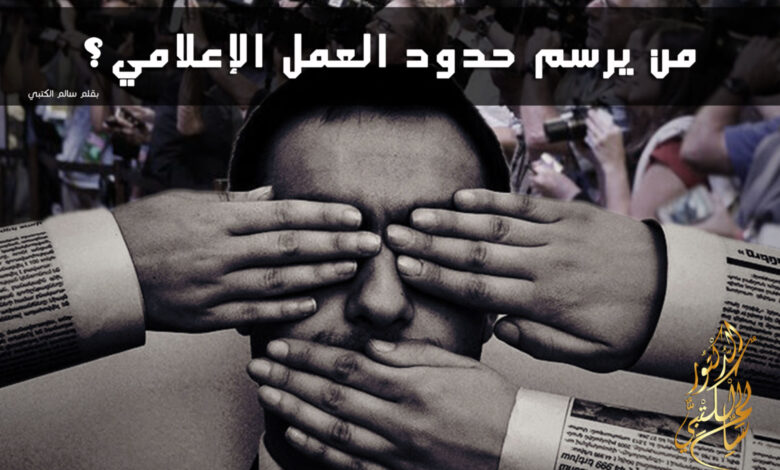
There is a claim that the media is a constitutional authority that is complementary to State authorities, and there is a wide debate about this legal and constitutional characterization. The problem is not whether the media is a power or not, and let’s not talk about the negative effect of the media in our Arab region since 2011, but the function of media itself, especially in terms of current violations.
What is the media? This question is central in any debate about the media in our time. What we watch on Arab televisions has nothing to do with the media. “Phone sex” channels are certainly not media. Neither are TV shows of sorcerers and charlatans. Telephone games programs that deceive callers using silly questions are not media. There is no true media content on Sunni, Shiite or Christian religious channels that promote sedition, extremism and incitement either.
According to the report of The Arab States Broadcasting Union of 2015, there are about 1400 Arab satellite channels. After about two years of this report the number might have doubled. Among Arab satellite channels are about 95 religious channels, but I think the figure is inaccurate. The non-religious channels that broadcast religious content are sectarian channels that provoke sedition in Arab countries through Arab satellites. As long as these sectarian channels are not subject to censorship, they make use of sectarian conflict in the region to promote terrorism and extremism.
Investing in religious and sectarian satellite channels is not an economic investment, as some would like to say, and not even a media investment of course, rather it is a political, ideological and intelligence investment par excellence. There is a struggle to control minds in our region between specific regional parties, particularly Iran which allocates billions to the propaganda and polarization of the Shiite and to stir up sedition in several Arab countries. Statistics reveal that investments in the field of sectarian religious channels amount to about 6 billion dollars.
These investments have nothing to do with the West, so that no one can allege the conspiracy theory and claim that the West intends to destroy our region through media wars of fourth generation. It is illogical to claim that the West spends one dollar to destroy an area where conflict, bloodshed, murder and slaughter are part of the daily life.
The report did not include a compute of the satellite channels of magic and sorcery, not because they are unknown but because in the Arab world we love to bury our heads in the sand. This kind of satellite TV has catastrophic results as it promotes ignorance and ideas of sorcery that prevail in many geographical areas in the Arab region. This is a fact that should not be hidden. Magic and sorcery are a popular trade in some of our Arab countries. Those who deny this fact have to check television ads in the dozens of satellite channels to realize the magnitude of the disaster we are experiencing. Otherwise, to whom these ads are directed?
When someone discusses terrorism, he puts a charge of responsibility, or resorts to justify terrorism by the absence of democracy and freedom of opinion. In fact, terrorism is a complex phenomenon, and we should not rely only on monitoring imams in mosques but we must also prevent incitement on satellite channels.
There is content in the satellite channels that do not meet the community’s interests and do not match science and logic. There are programs of competitions and programs that target the dreams of millions in a region where poverty is the most deadly and widespread social disease. Did anyone expect the magnitude of the loss caused by a program that invites its audience to send a word in order to enter into a lottery to earn millions? Is there a fundamental difference between such programs and the tricks of terrorist organizations that manipulate young people and make them blow themselves up in a mosque or church in order to get beautiful women in heaven?
I think that there is no difference in the psychological and social impact. The argument that this type of programs is a source of hope and optimism is in vain. These programs devastate the value of work, diligence, striving for success and achieving ambitions, and replace it by telephone messages that costs no more than a quarter dollar.
There is a real need to eliminate the culture of sorcery, charlatanry and the tricks of shrewdness typical of classical Arab movies. We want to build an Arab generation that is able to comprehend the circumstances of their countries and their challenges. Therefore, we need an advanced education that is based on critical thinking and dialogue not charlatanry and illusions.