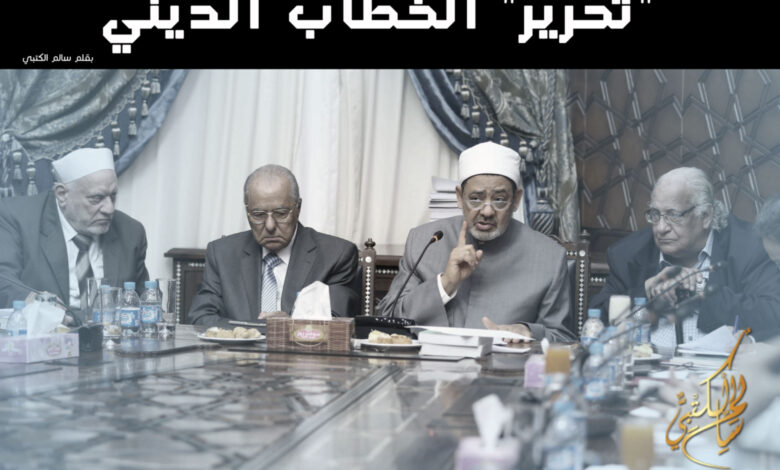
I have recently read some articles about restoring revising religious discourse, which spoke on an important conference that took place at Al-Azhar in Cairo. Some of those who were present in the conference called on taking the religious discourse back from extremists and semi-educated persons. We got used to many such calls in recent years.
Despite the importance of revising religious discourse, the priority now is to fight extremism and terrorism in an actionable manner. Every hour spent in discussions about the conditions of the religious discourse confuse young people who might find a simpler ‘solution’ in extremism. Extremists in the cyber space use technology to disseminate their ideas and recruit. They were able to fill the vacuum that religious institutions caused by abandoning their role and going to appear on TV programs only housewives or retired men watch.
Personally, I do not think religious discourse is kidnapped by these groups. Kidnappers ask for ransom or services or blackmail people. Some call for the release of prisoners to even attract attention to a certain cause that may be fair. However, they resort to illegal means.
Muslims realized that the religious discourse was controlled by the terrorist organizations—but too late—the same way they controlled some Arabic cities in recent years.
The point is that religious discourse has suffered, in recent years, a serious problem in defining what is required for its renewal. Conferences, lectures and seminars were organized and during these events, there were demands for renewal of the religious discourse. Intellectual conflicts were raised about renewal, modernization and other concepts. Then suddenly we woke up to discover that we are seeking restoration of something we do not have and which is ‘kidnapped’ by others.
But is religious discourse kidnapped or outdated? Or is the discussion just about semantics and does not reflect the existential crisis of Muslim nation.
Whether the religious discourse is kidnapped or not, the issue is no longer at the hands of Muslims, their scholars or clerics as long as terrorist and extremist groups are on the table. Finding alternatives to the kidnapped religious discourse is a responsibility of the Arab and Muslim world as some Western countries plot against Islam and Muslims.
Effectiveness of any efforts lies in keeping young people away from extremism and appealing to the new generation. Sterile discussions are not useful but they make people chose between accepting to live a miserable reality, escapism or taking revenge.
Before we can restore a sane religious discourse, hope should be restored, through future-oriented efforts, plans and programs. Actions must be taken to pave the ways of optimism for young people who are living in anxiety.