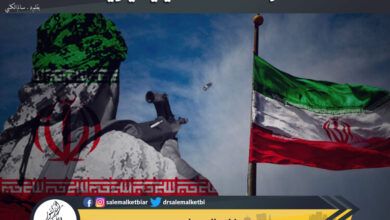
Last week, several calls were made to the Iranian people, including from US administration officials, Israeli Prime Minister Benjamin Netanyahu and his Foreign Minister Lieberman.
All the statements referred to the crimes committed by the mullahs against their people, and how they wasted billions in expansionist sectarianism in Syria, Iraq and Yemen. Since the United States withdrew from the nuclear agreement and before any sanctions, the Iranian people were left suffering until the currency and economy collapsed.
The statements, however, won’t have a significant impact on the course of events in Iran. Rather, the regime can use them to support its rhetoric, promoting the idea of Iran’s exposure to a “conspiracy”. The regime knows how to exploit Iranian cultural sensitivities to its advantage.
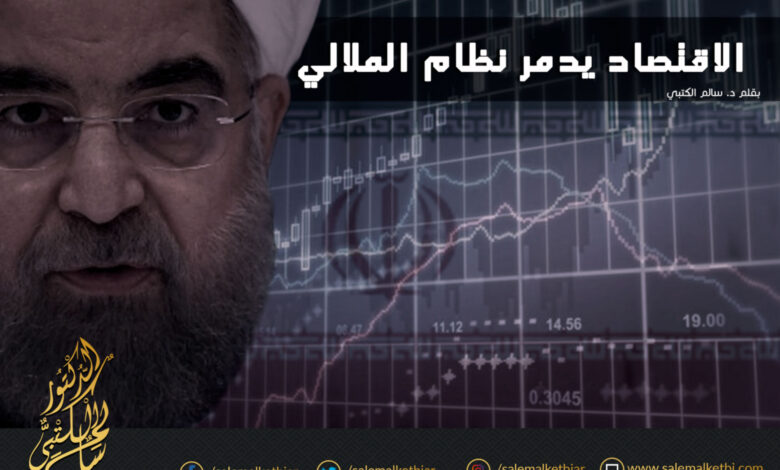
The collapsing economy will end the mullahs’ dreams, not politics. The protests have already reached most of Iran’s cities and regions. The protests intensified after the Grand Bazaar went on a strike, prompting the Iranian Shura Council to send a strong and sharp warning message to the Iranian president.
There is a remarkable move by two-thirds of the Iranian MPs, who addressed President Hassan Rouhani, asking him to change his economic team because of the “bad results” achieved by the government.”The bad results of senior economic officials in recent years have increased citizens’ mistrust over decisions that have been made or implemented in economic matters,” the letter said. The letter was written by 187 deputies out of 290 in the Shura Council, calling Rouhani to make an urgent move to bring about a change in the leadership of the economic team and that an overhaul must bring “dynamism” and an “understanding” of the economic situation before the Shura Council takes a decision in this regard. An expected parliamentary intervention was hinted at if Rouhani makes no move. It should be noted that the Constitution grants the Shura Council the power to dismiss ministers or declare by a two-thirds majority the incapacity of the President of the Republic paving the way for his possible dismissal by Iran’s supreme leader.
The economic measures clearly failed to face the sanctions that have not yet begun. What is happening is pre-emptive psychological echoes of the unprecedented sanctions as promised by President Trump. The Iranian government wants to face the sanction with allocation of hard currency to importers of commodities and through imposing a ban on hundreds of imported goods, including automobiles, leading to a rise in the prices of many products and to the market paralysis. Citizens started to withdraw their savings and buy gold, hard currency, property and cars in an attempt to protect their assets.
Rouhani’s economic team includes some vice-presidents and ministers in charge of the economic governor, as well as economic advisers to the president and head of the central bank.
Part of the accelerating events in Iran is related to the conflict between the Team Rouhani and the hardliners on the future of the regime and building a position on negotiations with the United States and the fate of the nuclear agreement, especially since President Trump has left the door open for talks with Iran in case of stopping interference in the affairs of the region. The Iranian crisis is made worse by serious doubts about the ability of Iran’s economy to resist tougher sanctions for a long time.
Iran’s options seem too limited to negotiate with the United States to keep the regime from collapsing, but the hardliners may believe that negotiations are within their own choice but not through President Rouhani.
The United States, for its part, wants to use the protests to the fullest extent in order to increase pressure on the regime to soften its political positions and to push the hardliners to yield substantial concessions to avoid the collapse of the system itself.
All in all, the economy will be the decisive blow to the dreams of the mullahs of Iran in continuing their neo-colonial dreams, and it’s only a matter of time. The timing depends on the game of power struggle and the pace of popular protests that could spread to the whole of Iran in the coming period, where it is expected to oscillate. Daily escalation is not a necessary condition, given the grip of the powerful regime and the violations of its militias against demonstrators.