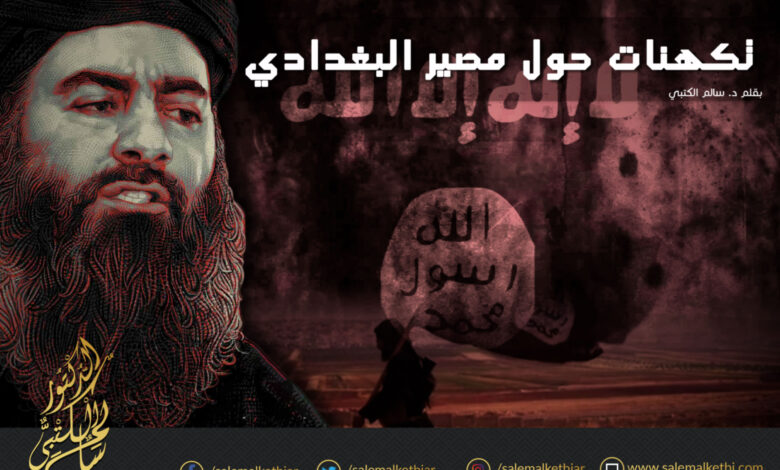
Many people interested in Middle East politics are wondering about the fate of the leader of Daesh, Abu Bakr al-Baghdadi, after the collapse of his caliphate and defeat of his militias.
Some reports said al-Baghdadi was killed in a Russian air strike last May. The raid targeted an organization headquarters south of the Syrian city of Raqqa. The raid was apparently so intense that it killed about 30 commanders and 300 terrorists. Al-Baghdadi was likely killed, Russian Foreign Minister Sergei Lavrov told Reuters.
But in September, a new audiotape attributed to al-Baghdadi was found and revealed specific facts that occurred after the Russian raid, raising doubts about the fate of the warlord. This recording has confirmed beyond any doubt that the channels of communication between al-Baghdadi and his militia leaders have been cut, and that he is being chased and looking for an opportunity to show up and raise the morale of his organization’s members.
Recently, a Turkish newspaper reported that the leader of Daesh was arrested and held in custody by US forces in Iraq, that the US secretly transferred al-Baghdadi to Syria and that he is currently being held at a US military base in Rumailan area in the Syrian province of Hasaka.
Although it is difficult to verify the report under the current circumstances, the Pentagon’s spokesman refused to comment on the report, raising further uncertainty and speculation about the authenticity of the report.
Analysis of past experience with similar cases can tell us something. The closest and most similar case was the puzzling killing of former al-Qaeda leader Osama bin Laden. Pulitzer Prize-winning journalist Seymour Hersh published information provided by a retired US intelligence official that strongly questioned the official US version of the story, prompting Washington to confirm it.
In an article on the “alternative history of the war on terror”, Hersh says that bin Laden has been held by Pakistani intelligence since 2006 and that he was killed in 2011 after a Pakistani intelligence official revealed his location to the Americans in exchange for a reward of $ 25 million. The US administration said that Bin Laden’s hideout was identified after tracking down one of his special envoys and that the al-Qaeda leader was killed during an exchange of fire with US attacking troops.
But was he? Back to al-Baghdadi, whether he was killed in a Russian or American raid or captured by US forces, what’s almost certain is that he has disappeared forever. In all cases, he’s no longer leading terrorist operations and that’s good.
In such cases, it seems that hunting the terrorist leader is like going after a valuable source of intelligence. Arresting him is more useful than killing him.
You cannot entirely give credit to any story that contradicted the official version. In many cases, the media entertains the idea of playing against officials and questioning their stories and statements, especially if the alternative account came from a reputable source.
Al-Baghdadi knows a lot and has been a mystery since the beginning. The man helped build Jaysh Ahl al-Sunna wa al-Jama’a after the invasion of Iraq until his arrest by US forces in February 2004. He remained in detention until December of the same year. He was then released to join al-Qaeda in Iraq under Zarqawi. He then led the organization after Zarqawi was killed in April 2010. Later, he split from al-Qaeda and announced his caliphate in June 2014.
It will not take so much time before the fate of al-Baghdadi is revealed officially. Many a political leader would want to be the one to do that.