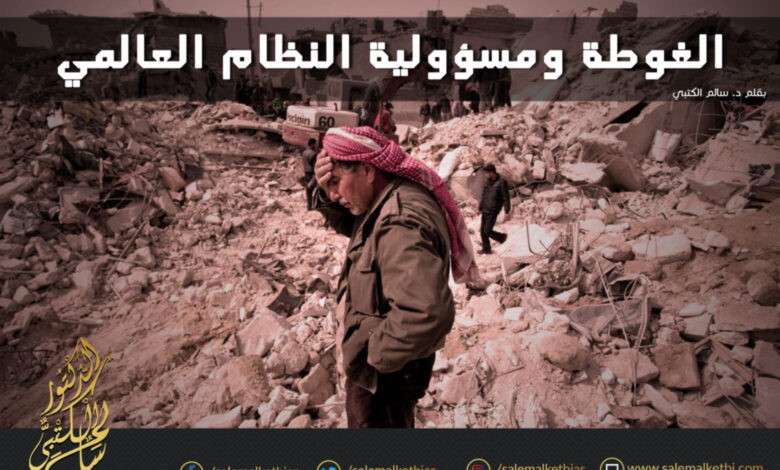
Ghouta is another failure in the international system’s record. The UNSC has long failed to set up resolutions to deal with the disastrous sufferings of civilians in eastern Ghouta. Citizens of the city are targets of the regime’s brutal shelling.
International powers exchange accusations of responsibility for the massacres committed by al-Assad’s regime. Staffan de Mistura, the UN Envoy to Syria, and the EU called on to stop bombardments in eastern Ghouta.
The Security Council members are standing idly by massacres and only express their positions. But verbal accusation cannot mitigate the impact of the human tragedy in Syria. The EU has blatantly expressed its inability to describe what is happening in Eastern Ghouta.
The international community has failed to implement laws and charters adopted by UN members. The international criticism of military interventions for humanitarian purposes has limited these involvements. Currently, these interventions are used to fulfil the ambitions of major powers. The UN was unable to address the attitudes of international and regional powers, attitudes that brought about chaos in the international order. The status quo of the UN has encouraged States and regimes to commit further crimes and violations against their people.
The UN must have addressed Tehran’s expansionist influence in the region to avoid Syria’s disastrous situation. International and national powers are in a steadfast competition to have a share in Syria. If the UN had addressed the Turkish intervention in Afrin, it would have saved the Syrian scene from slipping into more chaos, violence and murder.
Media reports said that Russia had deliberately postponed issuing a UNSC’s resolution on a ceasefire in eastern Ghouta. The delay was aimed at providing Assad’s forces and his allies with sufficient time to eradicate opposition fortifications. Trump called the situation in Ghouta an “affront to humanity.” The world is facing a moral dilemma that torpedoes any talk about human values.
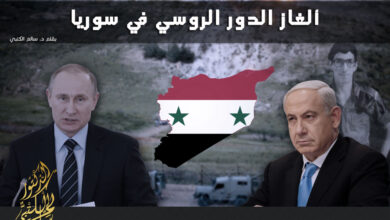
The Syrian conflict is one of the most complicated foreign policy problems. Syria was a mess yesterday. It’s a mess today. It’ll be a mess tomorrow, too. Iranian officials publicly assert that Iran is not leaving Syria. The US does not intend to withdraw as well. Turkey is keeping up its intervention in the Syrian territories. Russia remains as a partner in eradicating terrorism there.
Negotiations between the regime and the opposition seem to be a waste of time given the conflict of interest. Opposition factions are gradually shifting into proxy agents that serve wrapped up ambitions in Syria.
Eastern Ghouta won’t be the last scene of massacres and killing. Obviously, the last havens of terrorism will not collapse easily. The fate of the militias, troops, experts and advisers that make Syria’s territory a hell on earth remains unknown. Observers predict the outbreak of World War III from the Syrian conflict.