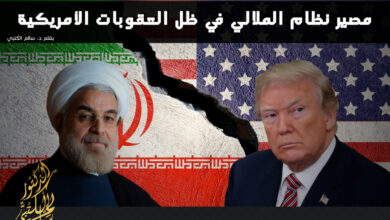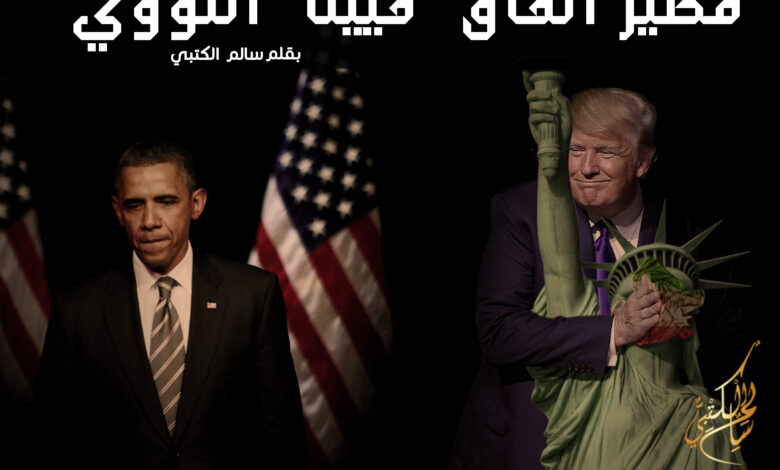
Iran is watching as the last office days of US President Barack Obama go by, waiting to see which position will the new president Donald Trump adopt regarding the Lausanne nuclear agreement signed between Iran and the P5+1 in April 2015.
The Wall Street Journal recently reported officials in the Obama administration talking about a new procedure the White House is considering in order to fortify the nuclear agreement with Iran. The move takes place in the context of speculations about initial appointments in the White House under the Trump administration. Gen. Mike Flynn, a candidate for the position of the new US president’s national security adviser, and Republican Rep. Mike Pompeo candidate for the function of director of the CIA, two of the hardliners in dealing with the Iranian issue, were nominated.
To protect the agreement signed with Iran, the Obama administration is considering measures to put the agreement into practice, and put the next administration in a clash with the powerful American parties with interest in enforcing it. One measure is to grant licenses to more US companies to enter the Iranian market and lift more sanctions on Iran. President Trump may see such moves as obstacles on the road to his potential policy toward Iran, so these steps may not barricade the agreement or prevent any counter-measures by the new US administration. This has pushed the Obama team to consider communication with the President Trump’s assistants to convince them about the negative consequences of overturning the agreement. However, such an approach depends on having accurate information to persuade President Trump’s team of the potential repercussions on the national strategic interests in case the deal collapses.
Of course, Iran is preparing for such an event, aware that President Trump will not resort to a direct withdrawal from the agreement, especially in light of Iran’s influential role in the Middle East. Alternatively, military escalation seems possible, albeit unlikely, from a US strategic viewpoint.
US research circles speculate a potential fight between the Trump administration and Iran. Some also think the nuclear deal may not collapse because of the Trump administration, but for other reasons. One is trying to open the door to negotiate on some terms of the agreement. Another is expanding the scope of US sanctions against Tehran in areas that do not fall within the terms of the deal, in an attempt to undermine it, driving Iran again into blockade and sanctions.
As the return of tension between Washington and Tehran is on the table, question are raised about the attitude of Iran towards the policies of the Trump administration, especially should Washington decide to adopt a more stringent and aggressive position, particularly regarding re-banning Iranian oil exports?
The impact of those scenarios on Iran’s mullahs, is that they will likely try to put the brakes on the momentum of fresh US administration, through a push-pull strategy and the distribution of roles among statement makers and positions takers—a language the mullahs speak fluently. Nonetheless, the Iranians may not succeed with a mobilized new administration that has wide support from inside the US to deal with challenging issues.
In the Arab and Gulf regions, the foreseen encounter would influence the current state of affairs as the Iranian factor is present in many equations. How will the expected changes in Iranian-American relations impact the Iranian strategy toward crises in Syria, Yemen and Iraq? How will the US-Gulf relations be affected by possible changes in the Iranian-American relations, and how will the GCC respond to shifting positions for the most beneficial strategic outcome?
In the Arab and Gulf regions the Vienna nuclear agreement is an application of the Obama administration’s strategy toward Iran; strategy precedes applications. It is therefore essential to identify the Trump administration’s strategy towards Tehran, so as to know its position towards the mullahs’ regime sponsoring regional and international terrorism and whether it will try to control, by different means, the expansionist ambitions of Iran or disregard these ambitions and simply set limits for mutual benefits and common interests.
We have to wait until Trump administration sets foot inside the White House and begin testing the waters between the United States under Trump and the mullahs of Iran. The GCC needs to examine the situation thoroughly and develop scenarios and alternatives. In order to avoid any surprises arising from the highly complex and tangled relationships, the Council countries must not exclude the catastrophic ‘black swan’ scenario.