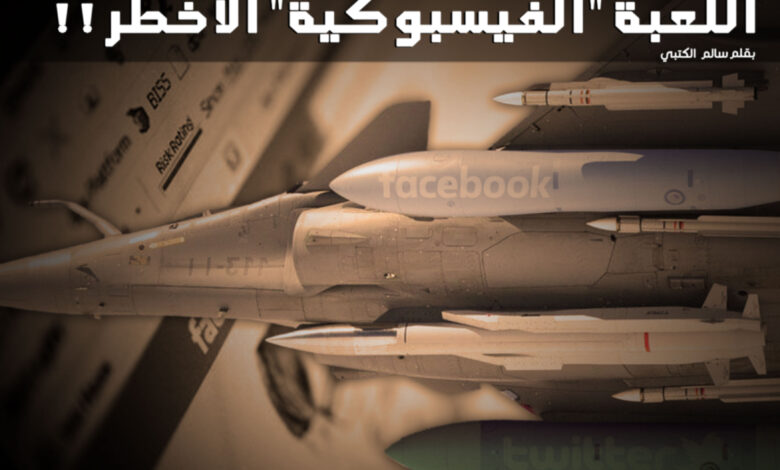
If you follow the controversy raging through the social media in the Arab world (Facebook and Twitter specifically), you can easily realize the Arab World is facing perils with dangerous strategic implications that most social media users are not aware of Many users of social media used to make fun of the call to avoid temptations and being misled by advocates of demolition and promoters of conspiracies in many Arab countries, and to feel contempt for the views warning against following disastrous trends. It is true that there are people and figures appearing on the mass media who warn of conspiracies and temptations in—what only can be described as—a ‘disastrous’ way, in that they do not respect the minds of the public and young people in particular, but their absurdity does not necessarily mean that the danger is not there. Underestimating the risk of the fourth generation wars, to which the media is central, is neglecting the future of countries and peoples. Warfare has evolved and strategic threats increased. New methods to implement geostrategic plans in arenas of control and influence are being used globally, but that does not mean that such or such country is specifically targeted by all these complications and entanglements. There are plans proceeding to redistribute interests and spheres of influence, depending on the emerging new strategical changes regionally and internationally. The plans are not linked to a specific time phase, not targeting a particular country, but are proceeded in ways specific to each stage as global powers then regional powers use emerging tools to implement these expansion plans. The confusion in the social media has definitely reached a critical level, danger level already, without any exaggeration, especially as some campaigns on Facebook have moved from bashing Arab states to distorting the reputation of armies and military institutions, following plans that appear simple and ‘primitive’ but that are in fact highly dangerous in the long run. We should not naively downplay the attempts to destroy the reputation and distort the image of the Arab armies through systematic Facebook campaigns. It is a matter serious enough that the objective of the campaigns is to bring down the morale of armies and to ‘kill’ national loyalties as part of a plan that started years ago to undermine the pillars of national states in the region. Some of us who do not know about what’s going on around us globally may not take it seriously. They might think that campaigns of satirizing some national armies have internal motives, or are due to the confusion between the civil and the military and other flimsy reasons to justify Facebook campaigns that mock military institutions. The role of some Arab armies in order to support the national state and to maintain cohesion and stability is neither new nor transient. It is a mistake now to assume that armies are here only to fight. This was true in the past, but the role of the military institutions has evolved tremendously as they are significantly contributing in the technological advancement projects that benefit national economies.
The destruction of countries has been the most dangerous event in the past few years. Conspiratorial plans often start by undermining and involving armies in internal conflicts. In case of failure, plotters have a Plan B—distorting the image and the reputation of the army to cause internal and social division. The issue is not about the role and responsibilities of the army, it is about the intentions and plans of other parties, armies and states. The dangerous game of Facebook campaigns that is being played these days harms armies, condescending them into irony and satirical material. Many participate in it, intentionally or not, unaware of what is actually going around, and the law cannot do much about that. Censorship cannot prevent it. What is needed now is not satirical media that deepen the wound and serve the interests of other national states and armies, but collective awareness and a professional media that can counter the waves of plots and schemes and put efforts, on a professional and personal level, to raise awareness of those issues.
One of the motives to make fun of discussions about fourth generation wars is that some journalists re-contextualized the issue into a humorous and risible one. In a research paper published by the center for study of future threats at the US Army, the wars of the fifth generation were described as hybrid wars that include a range of different fighting styles, including gang wars, acts of terrorism, conventional combat capabilities. They can be thought of as a developed model of gang wars using formations of small entities capable to use modern technology in fighting, communications and media. The entities practice martial arts, streets and city war, as well as tactics of guerrilla warfare and terrorism, added to everything that affects the strength of an opponent such as drugs, media manipulation, psychological and moral terrorism. I mentioned in a previous article that the distinctive feature between fourth and fifth generations of wars is the abnegation of national borders and state institutions, as well as recruitment of international alliances (sets of countries that have a common interest, goal and enemy).This is in addition to the increased reliance on propaganda and psychological warfare to destroy an opponent’s self-confidence, and to facilitate the task of dismantling armies and challenge their ability to cope with these gangs and entities. All of these manifestations are easily noticeable nowadays. Strategic threats Are no longer limited to terrorist organizations, but also include other practices that are not less dangerous than terrorism, such as attempts to undermine national armies, their reputation and status, to pave the way to attacking the State in later stages.