I followed much of what was written and published on the motives for the withdrawal of Russian troops from Syria recently, and the views and opinions varied in the interpretation and analysis of the surprising decision of the Kremlin, and most of these views focused on the impact of the Russian decision on the fate of Syrian President Bashar al-Assad, and reduced the whole crisis in questions along the lines of: who will succeed al-Assad? Will Russia abandon Assad or is it still supporting him? Does Iran has the ability to protect President al-Assad and retain him in the office, or will it leave him to his own destiny and give priority to its interests with the West?
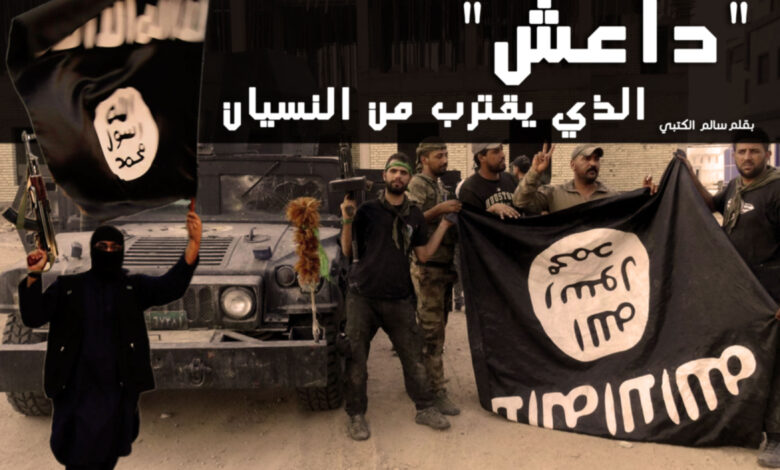
Amid the rubble of these analyzes I did not find someone who cares about the fate of the organization “Daesh”, which is supposed to be one of the immediate causes of the military presence of so many troops on the Syrian territory, whether American or Russian or otherwise. “Daesh” was absent and so were serious discussions about its fate, as if it has become a reality that should be recognized.
Now it has become clear to everyone that the Russian troops were not so much designed to fight “Daesh” and the rest of the terrorist organizations as they were seeking to ensure Russia’s strategic interests in Syria, whether by holding a “swap deal” with the West, whose two ends are Syria and Ukraine, or by ensuring the staying of the Syrian “system” whether represented in President Bashar al-Assad or an alternative person that would maintain the Russian interests in Syria, most importantly its military presence.
At the beginning of his military intervention in Syria, President Vladimir Putin said that the aim is to fight terrorism, while there are many reliable reports saying that Russian air strikes were directed primarily to the armed opposition groups, and the share of the organization “Daesh” of these strikes was much less, which pushed many experts to say that the organization is still strong after the end of the Russian troops’ mission in Syria, and that it even was not targeted by Russia.
All eyes are on “Geneva” negotiations and what is beyond them, but the question on the fate of “Daesh” seems absent from the minds of everyone, and this issue is really confusing. Have the major powers succumbed to the presence of the “Daesh” entity in the region, or does the mission of the organization and the role it is entrusted with persist and there is still an international need for its presence in the near term?
Several Syrian, regional and international parties are sitting at the negotiating table in Geneva, all looking for a political settlement of the conflict in Syria, but no one is bothering to think about the fate of “Daesh.”
Russia may have spoiled the “pot” that was prepared by the West in Syria to establish a buffer zone in the north that would be used to overthrow Assad, but the “stated” goal of fighting terrorism does not appear to have won a large share of the attention of Russian air strikes planners.
A lot of naive Arab analysts and writers cheered about Russia’s military intervention in its beginning, and attacked the international coalition led by the United States, and accused it of failing in the face of the organization “Daesh.” I do not know what these analysts say when they see President Putin coming out of Syria after he guaranteed the staying of Al-Assad and firmly established his feet that shook under the weight of attacks from the opposition and the organization “Daesh”?
We must realize that international relations are not managed through calculations of individuals or through the logic of whims, particularly at the level of Russian-American relations, because the two countries possess deep political and strategical legacies that make it difficult for either of them to manage its relations with the other with the logic of an amateur or under the pressure of temporary calculations and emotions. Russia is aware that what is not taken by force can be taken through negotiation, and that the negotiating table is only a natural extension of the battlefield, and that war is the other face of diplomacy, and so the decision to withdraw Russian troops from Syria seems to have political objectives that are more closely linked to Russian-American relations than they are with the field conditions in battlefields in Syria. So it does not seem strange that the Kremlin suddenly decided to leave Syria, although it did not attain any tangible achievement at the level of the stated goal of the military intervention (counter-terrorism), not to mention that it had left the situation of the organization “Daesh” unchanged in most parts of Syria.
Most Russian troops left Syria, and left open several questions that need to be answered, including: What is the fate of “Daesh”? Could Assad’s forces hold out in the face of the organization if it decided to restore the land lost under the Russian air strikes? What is the position of the United States and international allies about the new developments on the ground: Do they concede to the staying of Assad’s and to the control of “Daesh”? What are the possible formulas for political settlement in Syria? Would Assad accept the sharing of power and influence and the disintegration of the Syrian State? What is Iran’s position and can it protect Assad after the withdrawal of its Russian allies?
My personal conviction is that the fate of “Daesh” is not far from the fate of Assad, it is closely related to it, and therefore if the Syrian regime continues with its toughness, as happened at the beginning of the Geneva negotiations, during which it announced its intention to continue the war, this is not going to be silently accepted by the US and the international and regional sides, because this scenario means failure of efforts in combating “Daesh”, which is difficult to fight it in light of the confrontations between the Syrian regime and its opponents, whom Washington is supposed to be seeking to make them replace “Daesh” on the land controlled by the organization, since the American side does not want the campaign against “Daesh” to strengthen the position of the Syrian regime, and the staying of Assad does not encourage Washington and its allies too much to confront Daesh more effectively so that Assad does not benefit from any strategic gain achieved through eliminating the threat of the organization, which means that we are in the face of quite a vicious circle that may only have two exits; first, a political settlement that would lead to the termination of military operations between the regime and its opponents, and then the international coalition would be free to fight “Daesh”, maybe with a Russian-Irani support, the second exit is to establish a no-fly zone in northern Syria, an option that has been superseded by events in practice, and achieving it is fraught with complexities and difficulties.
We should not forget that the fight against the organization “Daesh” may no longer be a Turkish strategic priority in light of Ankara’s concern for the plans of establishing a Kurdish State within a Syrian federal State, and the influential meanings this entails in the Turkish National Security, so it is certain that we are not at the end of the Syrian crisis scenario, the coming days are still full with events in this regional complex file, and the accelerating changes seem to need a strong cooperation and coordination between Saudi Arabia and its allies in the Gulf and among Arabs in order to avoid imposed solutions from the outside, or that the crisis becomes unimportant in the international community’s calculations and gets forgotten, with all the serious risks involved in this possibility, both on the Arab national security, or at the level of the geographical extension of the organization “Daesh”.