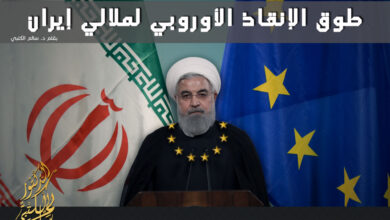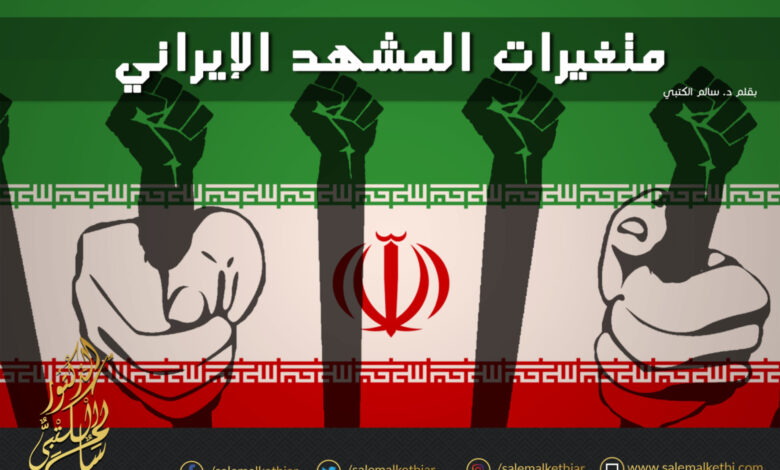
The Iranian popular demonstrations have declined in recent days. The Iranian regime claims that these demonstrations did not represent the Iranian people’s will.
But why have Iran’s demonstrations calmed down?
I said in a previous article that the Iranian regime wasn’t likely to fall under the pressure of demonstrations. The iron fist of the regime has killed more than 20 people and arrested thousands. It would take a series of violent bloody developments for the regime to fall. The huge network of interests among political and military leaders makes it hard for the Iranian people to overthrow the regime.
These demonstrations were not conducted by a leadership urging them to remain steadfast and to continue the struggle to obtain their rights. A factor that caused the demonstrations to calm down was the inability to measure the impact of the demonstrations and pressure the regime accordingly.
The iron fist succeeded in suppressing the voice of freedom. No reforms, not even serious promises of reform and countering corruption. The judiciary that’s supposed to stand for justice and fight corruption turned a blind eye on the use of violence and murder against demonstrators.
The second wave, after the demonstrations in 2009, could not overthrow the Iranian regime. The experience of some Arab countries in overthrowing their regimes couldn’t be reproduced in Iran. The theocratic regime brainwashed millions of Iranians, making the task even harder. The unconventional Iranian regime would not collapse under popular pressure.
Foreign interventions, specifically by Western powers, to support the demonstrators were one of the reasons the demonstrations failed. The Iranian regime used these interventions to promote the idea of a conspiracy. The mullahs easily claimed that the United States planed to provoke chaos in Iran and cause the regime to collapse.
The recent demonstrations were stronger than those in 2009 and had a better chance to topple the regime. The regime was, nonetheless, divided on the demonstrations. The former President Ahmadinejad was reportedly arrested following direct orders from the Supreme Leader Ali Khamenei. Ahmadinejad issued a statement holding President Rouhani’s government responsible for deteriorating living conditions in Iran. Khamenei slammed Ahmadinejad, describing him as an “opponent” who did nothing when he was in office. “Those who had all the country’s facilities under their control […] aren’t entitled to play the role of opposition and talk against the country; rather, they should be responsive [now],” said Khamenei.
In retrospect, no protests could keep going on that don’t engage the intellectuals and the middle class. They turn into anger that can be easily suppressed with repression or time.
The crisis is still here, though. So maybe this is just the very beginning of the end for this regime.