The news of the lifting of international sanctions imposed on Iran have overwhelmed the media in the Arab world and in the whole world over the last days, and insights and analyzes varied in the interpretation of the Iranian regime’s behavior during the coming period. Analyzes even varied on estimating the winners and losers from lifting the sanctions on Iran, and some went to believe that the Gulf Cooperation Council countries come in the top of the losers from Iran’s return and openness to the world.
Such perceptions are premature visions of the current scene. I believe that the GCC countries are at the forefront of the winners, actually not in words, economically, politically and at the level of security, in the event of the return of “normal relations” between Iran and the world. However, this conviction remains restricted and subject to the application of the concept of “normal relations”, including rational political and security behavior and a foreign policy that is committed to the rules of legitimacy and law and international norms, comprising non-interference in the internal affairs of other countries, and a commitment to good neighborliness standards and other generally accepted frameworks within the system of international relations.
No one denies the enormous developmental yield on the Gulf Cooperation Council if Iran is committed to rational State behavior, but doubts are close to certainty that Iran will not be able to behave as a normal State in its foreign policy, at least for the foreseeable future, because this simply requires to get rid of all these “agents” and militias on which the mullahs have invested tens of billions of dollars of Iranian people’s money over the past decades and years. It is doubtful altogether, given that Iran’s foreign policy is based, mostly, on those “agents”. And what enhances this possibility is that the relationship between the two parties is not purely based on interests, but has ideological and intellectual roots that are difficult to terminate with a stroke of a pen, as they say.
What is also missed by some is that Iran may return to the international arena, but from the gate of harmonization of calculations between the major powers, and not out of conviction of the occurrence of a radical change or a qualitative shift in Iran’s political behavior, and there is a great difference between the two cases. In the first case, Iran’s interaction with its regional and international surroundings is dependent on the lasting of the reasons that made it join the world convoy, while the second case guaranties a natural interaction on its part with the world, without much dependence on the international equations governing the global system.
There is also a significant aspect, in some Arab and even Western analyzes, consisting in considering the lifting of sanctions on Iran as a “slap” to Israel, which is something not said by those who are aware of international politics, its foundations and ruling factors. Such analyzes are only a single aspect of miscalculations and inverted standards in some currents and parties in the Arab world when evaluating the results of any political event. The Lebanese Hezbollah, for example, fought an absurd war against Israel a few years ago, the price of which was the destruction of the economy and infrastructure of Lebanon and the killing and the displacement of thousands of civilians, but the party and his supporters considered that the final outcome is the defeat of Israel solely because Hassan Nasrallah, escaped from the Israeli air strikes, and remained alive, even though he remained in hiding during the periods of bombardment and even today!!
In parallel with that too, some were deeply offended, considering the lifting of sanctions as a kind of “American political villainy”, accusing the United States of failing to be faithful to their allies of the Gulf Cooperation Council countries, and this talk also would flatten things, empty them from their true meanings, and oversimplify international relations to the extent of naivety. The interests of States are not based on emotions, but managed according to precise standards and calculations. There may be no proof on that in the disagreement happening inside the United States itself about the consequences of the nuclear deal with Iran, which excludes the whole matter away from the idea of “conspiracy” and confirms that what happened is the point of view of the Obama administration, a view that has its justifications, with which we may agree or disagree, as is the case with the US homeland itself, but in all cases, we have to recognize that this view is based on “calculations”; which by extension dictates on us to build positions based on calculations for our countries, and not to wait until the “other” takes our interests into consideration, especially if visions and perceptions differ in understanding what is going on inside our geographical surroundings.
Perhaps the Obama administration has failed to build an effective strategy to deal with the Iranian regime, which is what actually happened, but that does not relieve us, as belonging to the Gulf countries, of the responsibility for not developing a unified strategy for dealing with Iran’s strategic challenge until now!! We even could not formulate a joint media strategy to face this challenge, and there are still differences that are clear to every insightful person, at the level of political and media discourse between the capitals of the six countries of the Gulf Cooperation Council (GCC), which eases the Iranian regime and is perfectly in its interests. Indeed, Tehran has, for a long time, sought to drive a wedge and cause divisions between the GCC countries and prepare the soil for the dismantling of the only collective Arab system able to undertake political action!!
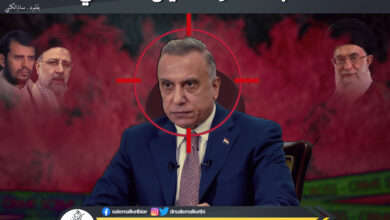
The foregoing does not mean that I stand within the ranks of the “realists” regarding the issue of lifting sanctions on Iran, or those who believe that its political behavior is changeable, but far from it, I fundamentally do not believe in the existence of radical differences among the mullahs of the Iranian regime, these are only masks and roles distributions, and no sane person can imagine that President Rouhani has succeeded on its own in passing the agreement which his predecessor Ahmadinejad failed to conclude. The issue is mainly linked to the calculations of the head of the system, the summit of its pyramid, Supreme leader Ali Khamenei, who gave the green light to the first and denied it to the second!!
There is no doubt that the construction of a coherent strategic vision on the hypothesis of the occurrence of a change in the Iranian regime’s behavior, depends on several factors. First the system’s ability to completely abandon the thought of revolution for the benefit of the thought of the State, which is unlikely for the time being, at least for an important part of the system institutions such as the Revolutionary Guards, who exercise their role with a logic of bullying and breach of international law, and perhaps the recent attack on the diplomatic premises of Saudi Arabia is a clear indication in this direction. The second factor is that Iran has made no change in its regional behavior, not a single mark appears on the possibility of ending its interference in the internal affairs of Iraq, Syria, Yemen, Lebanon, Bahrain, and even Nigeria and other countries that could not all be mentioned here.
What is happening now is only a new episode within the series of international politics. Iran, which has been, for decades and years, playing the role of the regional policeman, and of the American bulwark in the face of the Communist flood, had become for almost a similar number of years, hostile to the ally of yesterday, which turned into today’s enemy, and Tehran became closer to the Kremlin than the White House, and is now returning arm in arm with Russia to shake hands with that which, perhaps a few hours ago, it was viewing as “the biggest Satan”!! This is what is happening in public, but secretly, Tehran has kept a thin relationship with Washington over the past years, despite media and political hype, and in this part specifically, one should not ignore the services provided by Iran to US forces in Afghanistan and Iraq, in order to overthrow its biggest rivals (The Taliban Movement and Saddam Hussein’s regime).
In summary, the calculation of interests dictate to the West to open its arms to Iran at the current stage, and the Gulf Cooperation Council countries and the rest of the Arab States have to recognize their interests and build alliances in accordance with this. There is no time to enjoy the sights of US-Iranian hugs, and also there is no time to wait for those that would save the rights of our States, their sovereignty and the gains of their people. We, in the Gulf, best know the mullahs’ abilities to change masks, and the people of Mecca best know its twists and turns, as the Arab saying goes.