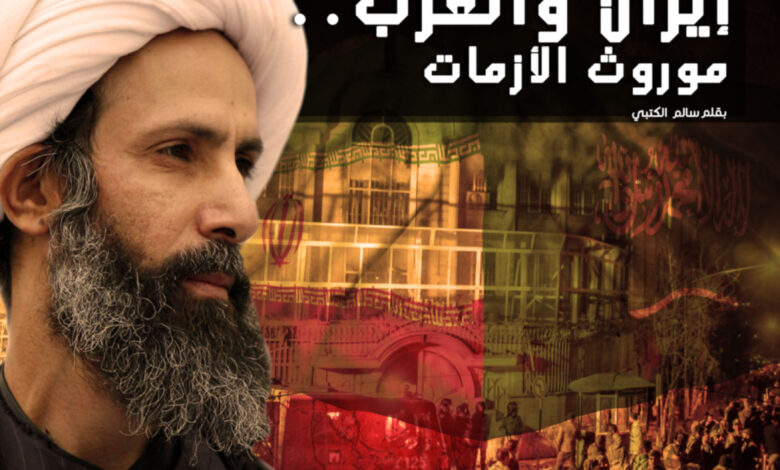
The background of the latest crisis between Saudi Arabia and Iran is multidimensional. Surely, the execution of the Shiite religious scholar Nimr Al Nimr and the barbaric attack on the Saudi compounds in the Iranian capital Tehran under police supervision are nothing but the iceberg of the current crisis.
Iran reacted in a very odd and naïve way because Nimr Al Nimr is a Saudi citizen not an Iranian and because he was not the only one to be executed. Forty six persons were executed, forty three among them were Saudi and none of them was Iranian. Iran has foolishly underestimated the consequences of its intervention in Saudi internal affairs and thought that allowing the attack on the Saudi diplomatic compounds will go unnoticed and that the Saudis would not stick to their firm foreign policy adopted since King Salman’s accession. The Kingdom has confirmed this policy through its stances and actions, like the military intervention in Yemen to restore constitutional legitimacy there.
One important dimension of this dispute which exposes the Iranian intentions and purely sectarian reasons for being hostile to the Arab countries. Iran has not denounced the execution of dozens of people found guilty of terrorism. Iran is not moving based on its principle or a firm constant political stance against capital punishment as some may believe. Capital punishment is a monotonic practice to the Iranian regime that executes its opponents shamelessly. Iran focused on the religious scholar Nimer al Nimer and overlooked the others executed with him, and tried to profit from his execution to urge the Shiite Saudi citizens against their country and government. Not only that, it has tried to present itself as the protector of the Shiite worldwide.
Iran’s claim to be the lawyer of the Shiite and their first defender is an absolutely claim. First of all, it is not qualified to play this religious role, because its theocratic regime based on the theory of “Wilayat al Faqih” with little supported from the majority of the Shiite. Besides, claiming that Iran is the destination of every Shiite in the world is a totally false claim.
Iran has violated the obligations provided for in the Vienna Convention on Diplomatic Relations and intervened in the Saudi internal affairs showing no respect to Saudi Arabia and its sovereignty. Iran, which is used to directly violate the sovereignty of countries like Iraq and Yemen, tried to threaten and put pressure on Saudi Arabia to not execute Nime Al Nimer.
It is undeniable that Iran has executed many Sunni religious scholars among the Arabs of the Ahvaz, and no Arab or Muslim country has denounced their execution verdicts pronounced by revolutionary or religious Iranian courts out of respect to the Iranian sovereignty. So taking this into consideration, the Iranian stance towards the execution of Nimer al Nimer can be nothing else but an intervention in the internal Saudi affairs and an attempt to practice a religious custody over the citizens of another state and practice a kind of political custody over this state itself!
Another fact revealed by the current Saudi-Iranian conflict has to do with the crisis of sovereignty in the Arab world. In several Arab countries now, there is no state as a result of the Arab Spring. It is very well known that when there is no state, there is no way to talk about sovereignty. Consequently, Iran has sieged the opportunity and moved freely across these countries to impose itself and cause unrest.
But the Iranian policy makers have forgotten that attacking diplomatic compounds, in which it has a long record as we all known, would never be let to go unnoticed by Saudi Arabia especially that this is not the first time. Before, the Saudi diplomats were subject to Iranian attacks in Washington, Karachi, Beirut and Tehran. Not only that, the Army of the Guardians of the Islamic Revolution has organized a plot to assassinate Saudi Foreign Minister Adel Al Jubeir, when he was serving as an ambassador in the USA.
Iran has failed to respect the principles of mutual respect and non-intervention in internal matters. It does not respect the sovereignty of the Arab countries, as it is the in Iraq, Syria, Lebanon, Yemen and Bahrain. The Iranian politicians have openly show off that they occupied Arab capitals and turned one of them (Baghdad) into a capital of the Pursian empire.
If Saudi Arabia has not responded that would not calm or absorb the Iranian alleged “rage” over Nimer al Nimer execution as some would believe. Adopting this stance would have opened the doors of hell on the Arab countries, because Iran would not have contented itself to attacking the Saudi diplomatic compounds.