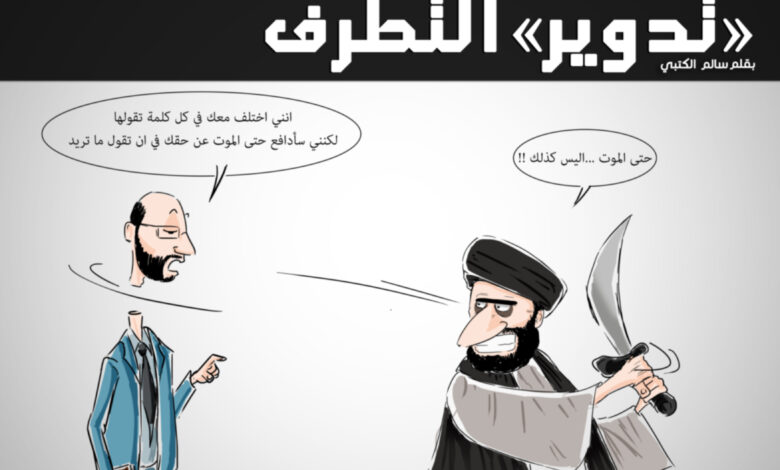
Lately, I have been immersed in reading on the roots of violence and terrorism in the Arab and Muslim world. The informative material that I read made me realize one thing for sure. It is not ideas and views on ways to deal with extremism and terrorism we are lacking in our region, what we need is to deal with scholarly research with the vigor and professionalism it deserves.
Some of these books were issued more than a decade ago – immediately after the 9/11 attacks – and comprised a clear road map about how to escape from the grip of extremism, terrorism, sectarian conflicts, and other vicious phenomena that are associated with the completely inaccurate understanding of Islam. Therefore, a few questions need to be addressed: For what reason did the ideas of extremism, terrorism and militancy theorists spread, not only within the Arab and Muslim world, but also inside Western countries where Muslim immigrants live? How were these ideas recycled, ‘recanned’ and exported, in all shapes and sizes, from one region or country into another? Have the sectarian problem in our region turned into a real impediment to progress and development, given the intellectual inertia and the infertile field for actual innovation and reforms?
In connection to the problem of sectarianism, violence and bloodshed, I tend to support the views that lawlessness, tolerating hate speech and failing to address abuses against others has opened the door to extremism and encroachment. This could reach a point where even the rights enshrined by religion can be violated, the convictions and beliefs of others undermined, eventually seeking to damage them physically and morally.
Whereas many political theorists are now talking about the notion of the erosion of national sovereignty as if it was a fact, it seems reasonable to consider the different levels and rates of corrosion. The theorists’ views – and the consequences of those views – must be reasonably scrutinized. Unlike Western countries, the sovereign national state in the Third World has roots that are ‘barely touching the ground’. Allowing the erosion of sovereignty in these countries would constitute a misadventure leading to the collapse of the state itself, as institutional, moral and legislative structures, among others, are already fragile.
The close relationship between the erosion of the nations’ sovereignty and extremism suggests that the second is sometimes a symptom of the first. Put another way, extremism and terrorism are indicators of the problematic definition of state sovereignty, at least in legislative and legal terms, more precisely in the absence of the necessary legal system to deal with an outbreak of a hostile and hate speech targeting other people of the same or a different doctrine.
Some states and institutions recycle extremism and deal with its symptoms superficially, rather than look for ways to eradicate it. Some countries even seek to recruit extremists, using them for tactical interests without the slightest regard to the interest of other countries and peoples with different, long-term, strategies. This has been the case in the Arab world, when certain regimes coexisted with Islamist movements in order to ward off what they perceived as dangers coming from other ideologies, thus providing an official cover for extremism to expand into terrorist intimidation and bloodshed. Meanwhile, other regimes merely recycled extremism as they did not try to stop or contain terrorist threats aiming at containing its danger or simply export this danger abroad without the slightest attention to the consequences of this ‘game’.!
These states may have abandoned their moral and legal responsibilities to promote coexistence, especially through the legal system, and instill it in society. What they did was make room for cultural and religious movements that oppose multiplicity, diversity and nurture militancy, exclusion, terrorism, hate and violation of others’ rights.
The aim of my article is not to hold States responsible for extremism and terrorism, or acquit theorists of militancy, hate groups, or takfiri and terrorist organization, from spreading this disease. Rather, the state should pay attention to the real responsibilities it assumes, spare no effort to exercise them, and not stand powerless as new actors promoted for their role in the New World Order enter the scene. The State is still the main entity that carries the ‘genes’ of stability and the protector of the citizenship principle.
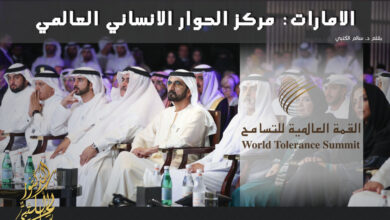
Finally, I express my deep appreciation of the efforts of our wise leadership, in the UAE, to strengthen the legislative and legal system for peace, coexistence and true citizenship. These efforts recently culminated in the anti-discrimination law, a model in the consolidation of the pillars of the state and closing gaps from which winds of hate discourse, sedition and sectarianism, can enter. I call on the Arab states to study these efforts and use them to promote the construction and consolidation of their sovereignty, and fortify stability and cohesion in the face of external and internal agendas.