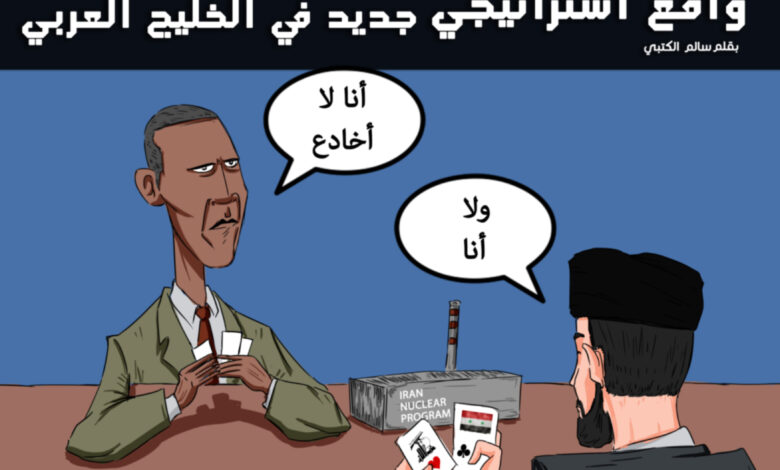
A final agreement on Iran’s nuclear program was reached between Tehran and the P5+1 on Tuesday. What is important in this context is the substance of this agreement and its details, not the agreement itself.
There is a road map signed by the head of the international Atomic energy Agency, Yukiya Amano, with the head of the Iranian negotiating team on a number of fundamental issues. There is agreement on the conditions for the lifting of sanctions and the UN ban on exporting weapons to Iran, and other crucial details. US President Barack Obama’s administration exceeded the first phase of the agreement with Iran, reaching the Vienna Agreement. What remains is the Congress test, which some bet will derail this agreement, especially after the Obama administration has lost hope in winning Republican support for the move, and turned attention to the Congress, which granted itself earlier this year the capacity to review the agreement. In practice, it will not be easy for the US Congress to block this agreement, as opponents need two-thirds votes to prevent the agreement, which requires a large number of Democrats not to support the president. This unexpected procedural and political issue came after the efforts made by the White House with Democratic lawmakers in Congress. Congress is even reluctant to take a vote on this agreement. To have a nuclear deal with Iran was not likely to be a subject of US widespread acceptance. This is what happened already, days ago; The Washington Post called it the worst deal in American diplomatic history. But these things should be dealt with carefully because the American media is good in the game of distribution of roles and uses it as pressure on the parties outside not inside. Some criticism of the campaign against the agreement might be directed to pressure the Iranians to accept compromises and show understanding towards the Obama administration’s position that the media attacks. This agreement is a historic test for the President Obama’s efforts to transform Iran into a ‘successful and natural and acceptable regional power’. This issue is difficult to measure even in the long term for the simple reason it is incompatible with the ideological thinking of the regime and its expansionist doctrine underpinning its political legitimacy and credibility amid its followers and supporters at home and abroad. The terms of the agreement announced so far involve several virtual gains for Iran, inspections were supposed to be carried out anywhere, anytime and without hindrance, and as provided for under the Additional Protocol to the NPT. But a final agreement grants the right to object to the inspection by Iran, making the inspection not a surprise but a routine procedure Iran can evade. Iran has also succeeded in escaping from the idea to disclose “all” its past nuclear activities, while Washington insists that the past helps understanding the intentions of the future. but Tehran has avoided that, and the US side even defended not allowing inspectors to meet nuclear scientists and take note of their plans and weapon facilities, saying there was no need for it, and that the focus should be on the future and not the past, emphasizing that Washington is ‘fully and absolutely aware’ of the details of the Iranian nuclear program. The US side believes that holding the Iranians to account and judging their intentions will come after the signing of the final agreement, but if Iran hid the past, it would not be difficult to hide the future. Iran was able to run marathon negotiations throughout the last two years using diplomatic powers to earn gains from the international group through this agreement, including lifting the arms embargo, even after five years, lifting the ban on airlines and the Central Bank and companies of oil, as well as not raising sanctions, and immediately receiving $150 billion, although it would intensify Iranian interference in Yemen, Lebanon, Bahrain, and help the Iranian regional expansion plans at the expense of Arab interests. Some say that this agreement will not make Iran and the United States close friends soon. But common interests pushed Ministers of Foreign Affairs John Kerry and Javad Zarif, to establish an effective and fruitful dialogue, despite differing rhetorics and views and even personality traits. US-Iran relations will not become “warm” overnight in light of the legacy of continued hostility for over four decades, as well as divergent views about a lot of regional and world issues. The agreement may not mean inevitable friendship soon but China and the United States became strategic partners before two or three decades. Trita Parsi, president of the Iranian-American National Council said in a press statement that it is possible to build confidence between the two countries as it was built between the foreign ministers Kerry and Zarif and the rest of the delegations of the two countries throughout different negotiation stations since the rise of President Hassan Rouhani to power. I therefore think that the American-Iranian rapproc hement is expected in a decade or less from now, and this would involve radical strategy changes in strategic equations and stability established for nearly two decades and more in the Gulf region. This requires a high degree of coordination and consultation between the GCC countries in order to preserve their interests in a context of radical shifts in strategic alliances between regional and international powers days ago. The Washington Post best described the deal by mentioning that that” it will guarantee to President Obama the great legacy he wants to leave behind, and will enhance the chances of Foreign Minister John Kerry of winning the Nobel Peace Prize, which he hopes to obtain, and ensures that Iran would develop a nuclear bomb.” The final agreement, according to the media, means the birth of a new strategic reality in the Gulf region.