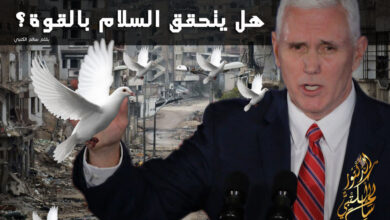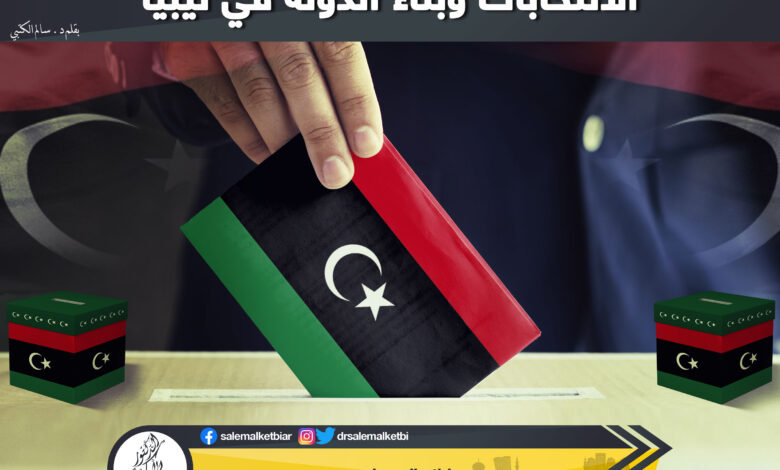
The recent elections in Iraq have not yet succeeded in bringing the country to the bare minimum of security and stability. There are also doubts in Libya about what will happen after the December 24 presidential and parliamentary elections. This is leading some scholars to question the effectiveness of elections and their role in post-conflict state-building.
Certainly, the electoral process is a manifestation of democracy, an integrated value system whose totality is reflected at the ballot box. Elections are the harvest of a cultural and value development of societies. Their success is not limited to procedural and regulatory aspects, which are essential pillars of transparency.
However, these are not the only guarantees from which the effectiveness of the electoral process can be drawn. Voting or being elected is, in my opinion, the final cog in a fundamental cultural process that may take some time for societies before it bears the desired fruit.
In societies that suffer from political fragmentation and sectarian polarization, or where the idea of a state has not yet matured to the point where it can overcome other loyalties such as sects, parties, or tribes, it cannot guarantee transparent and legitimate elections.
In societies that have long suffered from tyranny and dictatorship, elections can bear fruit only after a certain transition to eliminate the legacy of these sufferings, which leaves behaviors and practices that run counter to the norms required for a genuine electoral process.
Theory aside, the rejection of the election results in Iraq by sectarian political forces, for the simple reason that the Iraqi people have decided to reshape the political arena in their image, is palpable.
Libya is not far behind, as observers fear that the proliferation of weapons and mercenaries could affect the electoral process, which they believe could plunge the country into further divisions, unrest and chaos. It is common knowledge that any serious electoral process requires a strong presence of the state in the usual constitutional and political sense.
In other words, there should be deterrent laws that guarantee the integrity of the elections, prevent corruption and procedural violations, and provide the necessary guarantees of transparency in all monitoring mechanisms in all their forms. Thus, it may be theoretically correct to hold elections before the foundations of the state are stable and serve as the basis for nation building.
Realistically, however, this can only be achieved if there is an alternative environment for the role of the state, such as the monitoring of the entire electoral process by a neutral international body or bodies.
This assumes that integrity and transparency are guaranteed to some degree, which cannot be fully or absolutely guaranteed given the influence of tribal and regional characteristics on the transparency and integrity of election results. The electoral process is particularly dangerous when, as in Libya, it takes place in the aftermath of conflict.
Guarantees are difficult to provide given the unstable security situation and the fact that voters cannot cast their ballots in a secure environment. Moreover, elections are not free due to the presence of foreign mercenaries and terrorists in many Libyan regions and cities. Does this mean that elections in Libya or elsewhere are meaningless?
The answer is certainly no, because elections remain one of the least bad means to determine who governs Libya and to end the conflicts in this Arab country. It is illogical that the future of Libya continues to depend on eliminating the presence of mercenaries, terrorists, and weapons chaos.
One of the most important guarantees for building a state under such conditions is the presence of national armies that provide security and stability and ensure that the situation does not drift into absolute chaos that is difficult to control. The national armies have proven to be the cornerstone for maintaining the state structure in all internal conflicts.
A look at what is happening around us shows that chaos is often associated with the absence of a national army that can provide security and stability. In this context, it is important that the army is the most effective force on the ground. For example, the chaos in Lebanon has produced a militia that surpasses the Lebanese national army in terms of weaponry and capacity.
Electoral processes remain one of the most important steps in nation building. But it is not, in my opinion, the most important step if there are no rule of law institutions or political culture, and no conditions that ensure access to election results that truly reflect the will of societies.