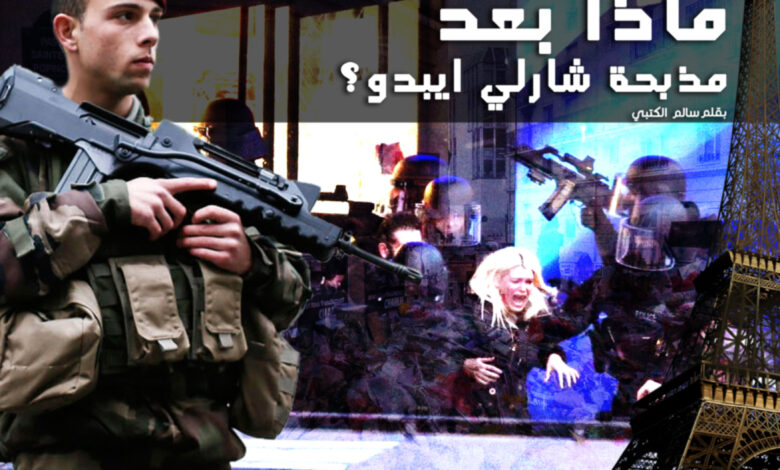
Just as the attacks of 11 September 2001 made a difference in American foreign policy, the Charlie Hebdo massacre on January 7 will be a turning point in European foreign policy. There are political and strategic consequences for this crime, which may contribute to the restructuring of the European Union’s foreign policy on several issues such as terrorism, immigration and Muslim communities over the coming months.
Some flaccid analyses tried to fill the voids in the Arab and foreign satellite channels. Broadcast hours were filled with analyses that do not contribute in the construction of a real understanding of what happened but cause confusion in the public opinion in various countries.
Some analysts inaccurately believe that the massacre of Charlie Hebdo reflects the risk of terrorist sleeper cells as French and American security agencies were aware of their presence. ‘Sleeper cells’ denotes unknown individuals not monitored by security services, who receive orders and instructions from the leaders of terrorist militias and organizations.
The criminal assault marked the return of Al-Qaeda to the forefront of events after many thought it was disintegrating and unable to launch new attacks. This attack confirms that al-Qaeda is still active and is waiting for an opportunity to carry out its operations anywhere. The attack confirms that the focus on countering Daesh should not be at the expense of watching other groups. Although Daesh controls large areas in Iraq and Syria, al-Qaeda in particular represents the most geographically distributed parent organization.
The attack also indicates that al-Qaeda’s split into a mosaic of dispersed groups, following the loss of central authority by Ayman al-Zawahiri, actually doubled the risk posed the organization.
The event revealed the limited international cooperation in the field of information exchange on terrorism and terrorists activities. It was reported that the perpetrators of the Charlie Hebdo massacre were listed as terrorists by the US whereas the French authorities did not deal with them the same way. There is a need to strengthen cooperation in this regard, not only between Western countries, but also between Arab and Muslim countries which are in urgent need to monitor and prevent terrorist activities proactively.