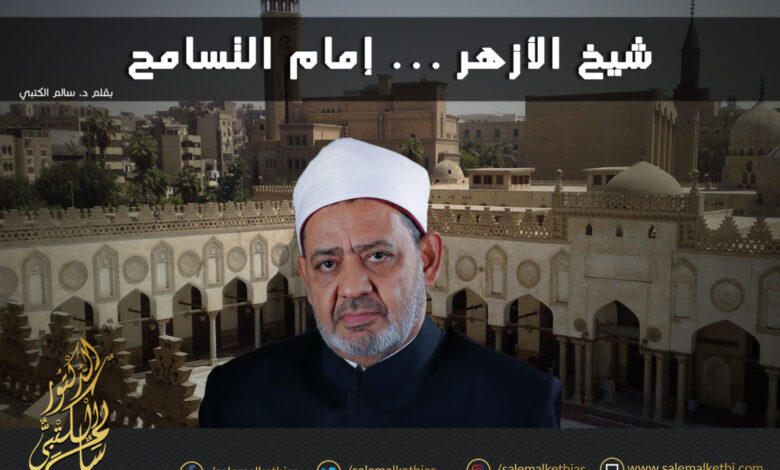
Grand Imam of al-Azhar Ahmed el-Tayeb, the head of the Muslim Council of Elders, has resolved an issue that sparked controversy in the social media in Egypt about a decision made by the disciplinary council at Al-Azhar University. The disciplinary board had decided to expel a student for conduct it deemed “incompatible with the ethics of the university, society and its traditions.” El-Tayeb had to put an end to the ensuing social media squabble.
The disciplinary board probably felt it had to make such a decision (to penalize the student, not jeopardize her future) to avoid facing a harsh attack from religious hardliners.
The Grand Imam urged the disciplinary board not to disregard that the student was of young age, and the impact of such a decision on her future. He added that the board’s duty is advice and guide before resorting to sanctions. The wise stance of the imam set the record straight to those who keep questioning the institution of Al-Azhar.
With advances in communications and technology, some issues can easily be “social-mediatized,” and constitute precedents of similar ones that follow. Therefore, it was important to intervene early so as no to give an excuse for some people to attack Islam and link it to extremism.
Some standards have to apply, though. The al-Azhar university is one of the oldest and more prestigious universities in the Islamic world. It must have rules that preserve its scholarly and religious prestige. If institutions do not enforce norms, the smallest controversies can turn into major conflicts and clashes between opposing sides.
The media outlets that made severe accusations against the University of Al-Azhar are the same who attacked the girl before the decision was made. Dubbed “the hug girl,” the girl was unfairly punished by the media with a wave of defamation even before the board made its decision. The defamation may have caused more severe psychological and social damage to the student than the disciplinary decision. The smear campaign perhaps even influenced the board’s decision.
The media framed the story reducing the student to a “hug girl,” and then accused the board of being severe with her.
Fortunately, El-Tayeb, the Imam of tolerance, intervened in a right time, to do what is best: caring for the interest the individual while protecting social norms and ethics. Moderation is an important value in Islam and tolerance is essential for any society to thrive—so essential that the UAE made 2019 the “Year of Tolerance.”
El-Tayeb’s intervention was the right answer to those who were promoting alien practices and encouraging people on Twitter and other social media platforms to go to streets and protest their own society’s values with public copycat hugs.
Arab and Muslim societies do not need more fanaticism.
The professional media should stop competing with the social media in fueling social strife. It should rather raise awareness of issues that matter in society in line with social norms and harmony.