* Shaheen Dedjoah, a former member of the Iranian negotiator nuclear team and former Iranian security adviser, approved he visited Tel Aviv in 2010, formally commissioned by the Iranian regime, and met with the Israeli Minister of Industry and officials in the Mossad, and presented a report on the results of his visit to Iranian officials. Dedjoah added in a press statement that he held talks with security officials and Israeli politicians in order to ensure Iranian interests, and submitted a report on the results of his visit to senior Iranian officials.
This remarkable statement was met with an official Iranian denial, as Tehran described the declaration as nonsense, and considered it a deliberate distortion from a person who is currently working with the US side. Personally, I was not surprised by the former Iranian official’s remarks. And to me, the Iranian denial is obvious. It is more than naive to expect Iran or another country to recognize such a matter, but evidence is too numerous to count on the Iranian-Israeli communication, and the verbal conflict between the two sides is a struggle for blackmailing the United States, no less and no more, and no one is surprised that the pampered daughter, Israel, is blackmailing the caring mother, and does exactly as Iranians do!
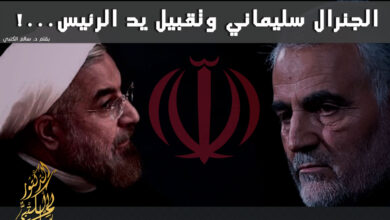
*Recently, in the Western media, analyzes and reports spread on the impact of attacks against the “Daash” organization. At that vary expectations and estimates of experts and specialists, but I have reserves towards those who try to convince me that the “Daash” organization has become as strong as the former Soviet Union, for example, as it is receiving blows in Iraq and Syria from different and possibly conflicting alliances, but they all agree on throwing bombs at it day and night, according to the claims of all those (!) The more serious problem is not the impact of these strikes or not, but in the necessity of thinking in the post “Daash”, and in trying to answer questions such as: What if the organization collapsed under the impact of these strikes, or more specifically, what if its main sponsors regionally and internationally decided to announce its collapse and dismantling after it has reached its strategic objectives? Here only everyone, especially in the Arab countries, has to seek an innovative strategy to deal with the post “Daash” risk and search about the fates of tens and hundreds of its fighters, who are accustomed to levels and patterns of living that are different than those of the elements of “Al Qaeda” or the previous generation of terrorists. Those fighters are living in luxury, and therefore one of their most important goals is to maintain their living standards and high incomes, but how and where the opportunities to achieve this are, are topics and axes for research and study on the part of specialists and research centers to prepare possible scenarios about that. In general, in this matter, there are constants and expectations. Its constants are any sectarian conflicts posed by Iran that would maintain a state of chaos and make terrorism a popular commerce even if the Revolutionary Guard decided to abandon the “Daash” organization and dismantle it and demobilize its leaders, who are working for the benefit of Gen. Soleimani and his fellow mullahs! If the role of “Daash” is ended, there will come out on us “Maash” or “Laash” or any circus player to announce the declaration of a new wave of terrorist acts and the launch of a new innovative generation of terrorist organizations. The issue has turned into a “mercenarism” that is hard to resist, there is money, women, the position and wealth and weapons. The new lords of terrorism with their own of baggage and equipment and influence provoke a heartbreak on the part of retired terrorists from Al-Qaeda, Islamic Jihad organization and others!
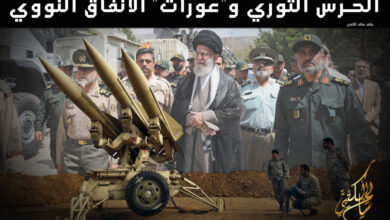
* There are some people who do not understand, or deliberately ignore the causes and motives of Iran’s insistence on penetrating Iraq’s national security and controlling the capabilities of this Arab people. Iraq is a top priority for Iran not only for reasons of geographical proximity, but for sectarian considerations, as Iran has succeeded in establishing many political parties and military militias associated to it in Iraq, the most recent of which is the popular mobilization Shiite militias, to the point that many experts say that the Iraqi decision-making real place is in Tehran. Iranian support for Shiite groups and militias aims primarily at achieving the political and strategic interests of Iran, especially if we take into account the fact that Iraq has always been a source of security and strategic threats to Iran before the overthrow of Saddam Hussein’s regime. It was even a regional and strategic competitor to Iran. Iraq represents a strategic economic and political importance to Iran. Its geopolitical and sensitive location in the body of the Arab nation and its role in creating regional balance push Iran to strengthen its influence and presence it in it, so that it manages to neutralize it, as a force to Arab national security, and then we find some naive or deceived people telling you that Iran defends the dignity of the Arabs in Iraq (!!) Removing Iraq from the regional security equation has been and remains a strategic Iranian target, and the rest come, unless we pay attention and wake up to the reality of what is going on around us and what is plotted against us. Is there anyone that still promotes the idea of the Iranian-Arab dialogue? A dialogue on what? I do not know, but I completely trust as do those deceived or hired people that Iran is not serious about building sound normal relations with the countries of the region, because when it acknowledges meddling in the affairs of these countries, and stresses the continuity of this intervention, it thereby eliminates any chance to build trust with Arab and Gulf countries. A country which boasts that strength and not a commitment to a policy of good neighborliness and respect for the sovereignty of states, is the guarantor of its own strategic interests in the region, cannot be an accepted neighbor until it abandons its obnoxious orientations.
* Many questions are being asked about the future of US-Saudi relations, especially during the visit of any Saudi official to Washington, as everyone competes in asking questions like, “Will the US forgo its alliance with Saudi Arabia? Has the US-Saudi relations honeymoon ended? Will…. etc.” The fact is that the political rules of the game of international relations no longer proceed in accordance with zero equations either” with or against, “or either an ally or an enemy. The variables are imposing new tactical equations. They already produced spaces and margins of a new movement between the two extremes (with or against). How an observer can believe that the United States could, with the stroke of a pen, write off a history of strategic alliance with Saudi Arabia in favor of a theocracy whose intentions cannot be trusted, and which is still building a great deal of its propaganda and credibility among its followers on marketing the illusion of anti-Americanism !!. What is closest to the truth is that what is happening both in the US-Saudi relations, or in other cases is a sort of re-stock arrangement or restructuring to make an agreement on new rules and new strategic interests as opposed to absolute ideas that controlled relationships between these parties for many years and decades, and in the end, the weights of the strategic interests remain the compass to track any international relations in the Twenty First century.