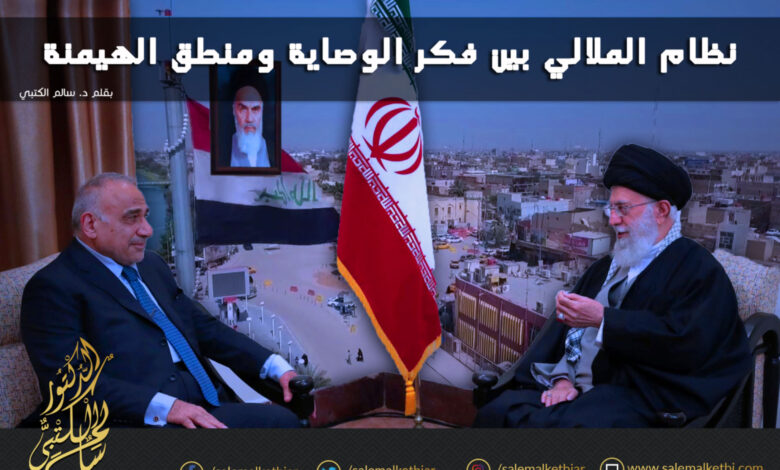
Iran has a vision for Iraq that is well articulated in the positions and statements of the leaders of the mullahs’ regime on various occasions.
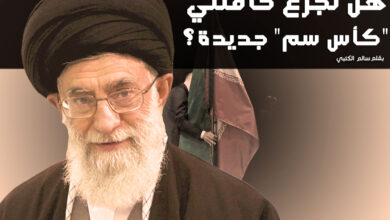
The latest such statement was made by Supreme Leader Ali Khamenei at a meeting with Iraqi Prime Minister Adel Abdul Mahdi, who recently visited Iran.
Khamenei called on the Iraqi side to ensure that American troops leave Iraq as soon as possible.
“The current Iraqi government, parliament and political leaders are not wanted by the Americans, so they are considering removing them from the Iraqi political scene,” Khamenei said.
There is much evidence of the intrusive role of Iran in Iraq’s internal affairs. But this particular example has striking implications.
Khamenei, who has been pushing his militias into Iraq for years, did not hesitate to ask the Iraqi neighbour to ask the US to withdraw its troops from his country. But he saw no problem with the presence of the IRGC in Iraq and Syria.
Khamenei’s remarks rhyme with what the former Iraqi Foreign Minister, Ibrahim al-Jaafari, said in 2016.
Al-Jaafari announced that the Commander of the Qods Force within the Iranian Revolutionary Guard, General Qassem Soleimani, was officially working in Iraq as a military advisor to the Iraqi government.
It was clear at the time that the former Iraqi government could not hide General Soleimani or deny his presence when he was boasting about his visits on the media.
He found that the assignment of the position of military adviser to an Iranian commander was an appropriate way out of this situation.
The mullahs believe that their presence in Iraq is normal. They see this Arab country differently from the reality that governs international relations and the norms of national sovereignty of states.
Ali Akbar Velayati, one of Khamenei’s advisors, said years ago that “no Iraqi force” could dismiss the prime minister from his post.
The Iranian vision for Iraq is also reflected in Khamenei’s speech at the same meeting.
Khamenei said: “America’s objective in Iraq goes beyond the mere military presence… They are seeking a government similar to the military governments that existed during the early period of occupation of Iraq.”
The prime minister advised Iraq to take action to encourage the Americans to withdraw their forces from Iraq as soon as possible, “Because wherever the Americans maintain a military presence, they are hard to remove.”
Without political bias, I am not in favour of the continued presence of American forces in Iraq.
What I am saying is that Khamenei’s point, that the long-term presence of foreign forces in any country makes their removal difficult, is quite realistic.
But this applies not only to American forces, but also to the presence of the Iranian forces in Iraq and Syria. Iranian militias are foreign forces too.
The mullahs’ regime has offered its full support to the US side in Iraq to overthrow Saddam Hussein’s regime. It then changed its program once its objectives had been modified.
For the regime, it is not the sovereignty of a neighbouring country that matters, but its own interests and strategic objectives. It did not oppose an American military presence, but refused the idea of the US staying for a long time. It was not to protect Iraq’s sovereignty, but for fear that Iraqi territory would be used as a springboard for military attacks against the Iranian regime.
Though it was not appropriate for the Iraqi Prime Minister to refer to such comparisons at the meeting with Khamenei, but the strange thing is that the Iranian leader went so far as to avoid seeing the facts of the Iraqi situation.
Iraq is struggling to recover in political, security and economic terms. But the mullahs want to hold Iraq hostage. This is contrary to Iraq’s reality, its history and all its human and material capacities.
One of the problems of the Iranian mullahs’ regime is that its leaders have a fossilized ideology. They are unable to see the true picture of the political environment around them. But what the Iraqi Prime Minister, Adel Abdul Mahdi, wants is to help build a new independent Iraq and restore normal communication with its Arab context.
Despite all the media talk about the supposed Arab-Iranian competition over Iraq, this Arab country is greater and more important than becoming the scene of foreign competition.
Iraq is able to govern itself in a way that is consistent with its history and the interests of its people. It will not be used as a stepping stone to a regime that wants to dominate the Arab world.