The Iranian regime’s ongoing pattern of rhetoric versus action has created a glaring juxtaposition between its stated intentions and its actual behavior. This incongruity, a consistent feature of its political conduct since 1979, underscores a deep-rooted inconsistency. From the era of Khomeini to the contemporary period, the regime’s leaders frequently emphasize the significance of maintaining positive neighborly relations, fostering regional collaboration, and ensuring security and stability. However, the prevailing reality within our region starkly contradicts these assertions, pushing against them with a contrasting and contradictory momentum.
Iran’s actions in the region reflect a complex blend of concealed and overt antagonism toward its neighboring countries. This disposition can be traced back to the inception of the “exporting the revolution” doctrine. Throughout, Iran has tenaciously pursued this agenda by orchestrating clandestine operations and engaging, both directly and indirectly, in the internal affairs of Arab Gulf states.
These actions encompass the provision of missiles and drones to Yemen’s Houthi group, along with suspected orchestration and support for attacks on oil facilities within Gulf Cooperation Council countries. Moreover, a recurring series of maritime assaults and disruptions targeting cargo and oil ships further compounds the region’s instability. Iran’s strategic influence has extended into nations such as Iraq, and this merely scratches the surface of its regional involvement.
It remains evident that the fundamental principles upheld by the Iranian regime have undergone minimal alteration. Any apparent shifts in their stance can be largely attributed to tactical maneuvers, the true value of which can only be gauged through their practical outcomes. Relying on empty rhetoric from Iran proves unwise, as the realm of politics is one where intentions and interpretations bear little weight. Instead, it is prudent to scrutinize official positions and government policies for a clearer understanding.
From an objective perspective, the recent strides towards improved relations between the Gulf Cooperation Council countries and Iran can be seen as a pragmatic maneuver aimed at fostering stability. The overarching objective here is to bolster security and stability within our region, a goal that aligns with Iran’s publicly professed interests in the same.
Nevertheless, a considerable challenge presents itself due to the Iranian regime’s adherence to an all-or-nothing principle, diverging sharply from conventional policy approaches. Unlike strategies that promote win-win scenarios conducive to authentic consensus-building for conflict resolution and the alleviation of tensions, Iran’s stance remains steadfastly binary.
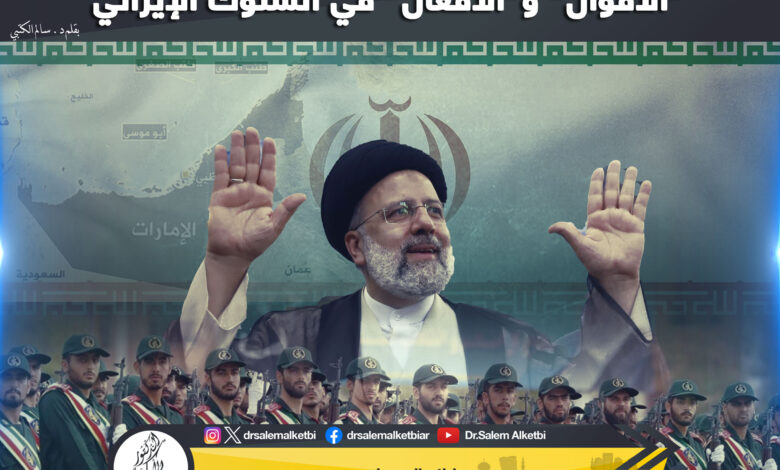
In light of this, the recent official reconciliation between the UAE and Iran, involving reciprocal high-level visits and the issuance of peaceful declarations heralding a new regional geopolitical landscape, might not come entirely as a surprise. Simultaneously, however, the Iranian Revolutionary Guard has embarked on military exercises on Abu Musa, an Emirati island currently under Iranian occupation. Additionally, Iranian media outlets have reported the deployment of naval units and forces around the Greater and Lesser Tunbs islands.
It is evident that the Iranian military deliberately chose to conduct these maneuvers around the Emirati islands, a choice made with a clear understanding of the impact it would have on the UAE and its populace. The implications and ramifications of this strategic move are readily apparent to even the most astute observers.
Is there a dichotomy within Iran’s approach — one where official participation in Gulf-focused endeavors coexists with an alternate path steered by the Revolutionary Guards, adhering to a different set of rules that seem detached from the recent shifts in regional geopolitics? In essence, do the actions of the Iranian Revolutionary Guards and their leadership operate autonomously, detached from the policies dictated by the Iranian government?
From my perspective as an observer, the hierarchical framework of the Iranian regime, comprising its diverse branches and institutions — both those rooted in revolution and those of an official nature — appear to be guided directly by the directives of the Supreme Leader, aligning closely with his mandates.
In reality, the alleged internal conflicts and discord between factions that some researchers and experts often highlight do not seem to hold true upon closer examination. At the crux of this situation lies a fundamental divergence in approaches, all steered under the overarching guidance of the Supreme Leader.
The “Eqtedar” maneuvers orchestrated by the Iranian Revolutionary Guard, taking place on Abu Musa Island and in close proximity to the Greater and Lesser Tunbs islands, communicate a set of unfavorable messages from Iran, countering the outwardly positive diplomatic overtures. These exercises, under the leadership of Revolutionary Guards Commander General Hossein Salami and Navy Commander Rear Admiral Alireza Tangsiri, seem to run counter to General Salami’s assertions of pursuing regional security and stability. His references to “sedition,” “hidden scenarios,” and “hostilities,” among other statements, weave a complex narrative open to multiple interpretations.
Particularly noteworthy are Rear Admiral Tangsiri’s remarks during these maneuvers, which unjustifiably incorporated the Emirati islands. He emphasized that “Our people attach immense importance to Iranian islands, and we hold the responsibility to defend them resolutely.” This adds another layer of complexity to the discourse surrounding the exercises.
He underscored this point by stating, “These islands are an integral part of our homeland’s territory.”
Furthermore, he pointed out that security within the Gulf region “serves the interests of us all,” and emphasized that “all nations prioritize safeguarding their borders.” It is intriguing to note, however, that he seemingly disregarded the fact that he was addressing these remarks from islands under foreign occupation. This oversight underscores the paradox of Iran’s stance, where conflicting words and actions provide fodder for any potential foreign schemes in the Gulf.
On one hand, the US government is diligently working to correct past policy missteps and regain its international standing. On the other, the Iranian regime appears to be strategically fanning domestic sentiments and reshuffling internal factions in response to the developments of the past couple of years. All of this unfolds against a backdrop of calculated escalation, contributing to a tension-filled chess game.
Nonetheless, it seems that Tehran might be overlooking a crucial fact within this calculated strategy: that its actions and rhetoric, while part of this orchestrated maneuvering, might inadvertently jeopardize the progress it has recently achieved in its attempts to reconcile with its neighboring countries.